- This topic is empty.
-
AuthorPosts
-
2026-11-13 at 2:27 pm #13080
As industries continue to look for lightweight, durable, and corrosion-resistant materials, fiberglass-reinforced polyurethane (GFRPU) profiles are becoming an interesting option for a growing range of applications. By combining continuous glass fiber reinforcement with a polyurethane resin matrix, these composite profiles offer a combination of structural strength, reduced weight, thermal insulation, and resistance to many environmental conditions.
For manufacturers, contractors, and distributors, however, purchasing GFRPU profiles in bulk requires more than checking dimensions and comparing quotations. The quality of raw materials, manufacturing processes, mechanical properties, and supplier capabilities can all affect the final product and its long-term performance.
Whether the profiles are intended for building components, industrial structures, or electrical infrastructure, making the right purchasing decision starts with understanding what to evaluate before production begins.
1. Understand the Material Before Comparing Suppliers
Not all fiberglass-reinforced composite profiles are manufactured with the same material system. GFRPU profiles use glass fibers as reinforcement and polyurethane as the resin matrix. The glass fibers provide structural support and mechanical strength, while the polyurethane matrix binds the fibers together and contributes to the overall performance of the composite.
Several factors can influence the quality of the finished profile, including fiber content, fiber orientation, resin formulation, and curing conditions.
For bulk procurement, buyers should ask suppliers about their material specifications and production methods. In particular, it is worth confirming whether continuous glass fibers are used and whether the material composition remains consistent across different production batches.
Understanding these details helps determine whether a particular GFRPU profile is suitable for applications involving structural loads, outdoor exposure, or electrical insulation requirements.
2. Choose a Profile Design That Fits the Application
One of the main advantages of composite profiles is their design flexibility. GFRPU products can be manufactured in different shapes, sizes, and cross-sectional configurations to meet specific engineering requirements.
However, selecting a profile based only on its appearance or dimensions can lead to problems during installation and operation.
For example, profiles used in doors and windows may require accurate dimensions, good thermal insulation, and resistance to weather conditions. Industrial structural components, on the other hand, may place greater emphasis on bending strength, stiffness, and load-bearing performance.
Before requesting a quotation, buyers should prepare the following information:
-
Cross-sectional drawings and overall dimensions
-
Required wall thickness and dimensional tolerances
-
Profile length and cutting specifications
-
Expected mechanical loads and installation conditions
-
Indoor or outdoor operating environment
-
Temperature and chemical exposure requirements
-
Surface finish and color preferences
-
Drilling, machining, and connection requirements
Providing detailed technical drawings is particularly important for customized products. It allows manufacturers to evaluate the design more accurately and identify potential production issues before tooling and mass production begin.
3. Pay Attention to Manufacturing Technology
The manufacturing process has a direct impact on the consistency and performance of GFRPU profiles.
Pultrusion is a continuous production method commonly used for fiberglass-reinforced composite profiles. During this process, reinforcing fibers are guided through a resin impregnation system before passing through a heated forming die. The composite material is then cured into a continuous profile with a predetermined cross-sectional shape.
Although the process is relatively straightforward in principle, production quality depends on several important parameters.
Fiber impregnation: The resin needs to penetrate the reinforcing fibers adequately. Insufficient impregnation can result in internal defects and reduced mechanical performance.
Fiber alignment: The arrangement of reinforcing fibers affects how the profile handles different loading directions. The reinforcement structure should match the intended application.
Curing conditions: Temperature and curing speed need to be controlled to maintain dimensional stability and consistent material properties.
Mold precision: The quality of the forming die directly affects the profile's dimensions, surface finish, and geometric accuracy.
When evaluating a manufacturer, buyers should look beyond equipment descriptions and ask for evidence of actual production consistency, including sample inspections and quality records.
G-ren has developed composite profile production technologies, including mold manufacturing and injection molding processes for polyurethane composite applications. The company also reports a GFRPU pultrusion production pass rate exceeding 95% and customized polyester resin development in cooperation with Huntsman Group.
These capabilities provide useful reference points when evaluating a potential supplier, although product-specific quality should always be verified through testing and inspection.
4. Verify Mechanical Performance Through Test Data
A supplier may describe its GFRPU profiles as strong, lightweight, and durable, but these general descriptions are not sufficient for engineering procurement.
Buyers should identify the technical requirements of their projects and request relevant performance data.
Important properties to review include:
-
Tensile strength: Indicates how much pulling force the material can withstand.
-
Flexural strength: Measures resistance to bending loads.
-
Flexural modulus: Helps evaluate the stiffness of the profile.
-
Impact resistance: Shows how the material responds to sudden mechanical forces.
-
Dimensional stability: Evaluates changes in shape under temperature and mechanical stress.
-
Corrosion resistance: Indicates suitability for humid and chemically exposed environments.
-
Electrical insulation: Important for applications requiring non-conductive materials.
-
Weather resistance: Relevant to profiles used outdoors under UV exposure and changing temperatures.
The required tests will vary depending on the application. Electrical infrastructure projects, for instance, may require particular attention to insulation performance and structural strength, while building applications may need more detailed thermal and weathering evaluations.
It is also important to distinguish between test results obtained from raw materials and those obtained from finished profiles. The geometry, thickness, and reinforcement arrangement of the actual product can influence its performance.
5. Make Dimensional Consistency a Priority
For bulk orders, dimensional accuracy is just as important as material strength.
Even relatively small variations in width, thickness, or cross-sectional geometry can cause installation difficulties, especially when profiles need to fit together with other components or pass through automated assembly processes.
Before production starts, buyers and manufacturers should agree on acceptable tolerances for:
-
Overall width and height
-
Wall thickness
-
Cross-sectional dimensions
-
Profile straightness
-
Cutting length
-
Surface quality
-
Hole positions and machining dimensions
Approving a pre-production sample is a practical way to establish a quality reference. Both parties can use the approved sample and technical drawings to check subsequent production batches.
For recurring orders, inspection reports and documented acceptance criteria can also help reduce misunderstandings and maintain consistent product quality.
6. Consider Environmental Resistance and Service Life
GFRPU profiles are often considered for environments where conventional metal materials may experience corrosion or require frequent protective maintenance.
As non-metallic composite materials, GFRPU profiles do not undergo conventional electrochemical corrosion like steel. This makes them potentially suitable for applications involving moisture, coastal conditions, and certain chemically exposed environments.
However, corrosion resistance does not mean that the material is immune to every environmental factor.
Long-term performance depends on the polyurethane formulation, glass fiber reinforcement, surface condition, operating temperature, and exposure conditions.
For outdoor applications, buyers should ask whether the manufacturer can provide relevant UV aging, moisture resistance, temperature cycling, and chemical exposure test results.
The complete assembly should also be considered. For example, metal fasteners and connecting components may still require corrosion protection even when the main structure uses composite profiles.
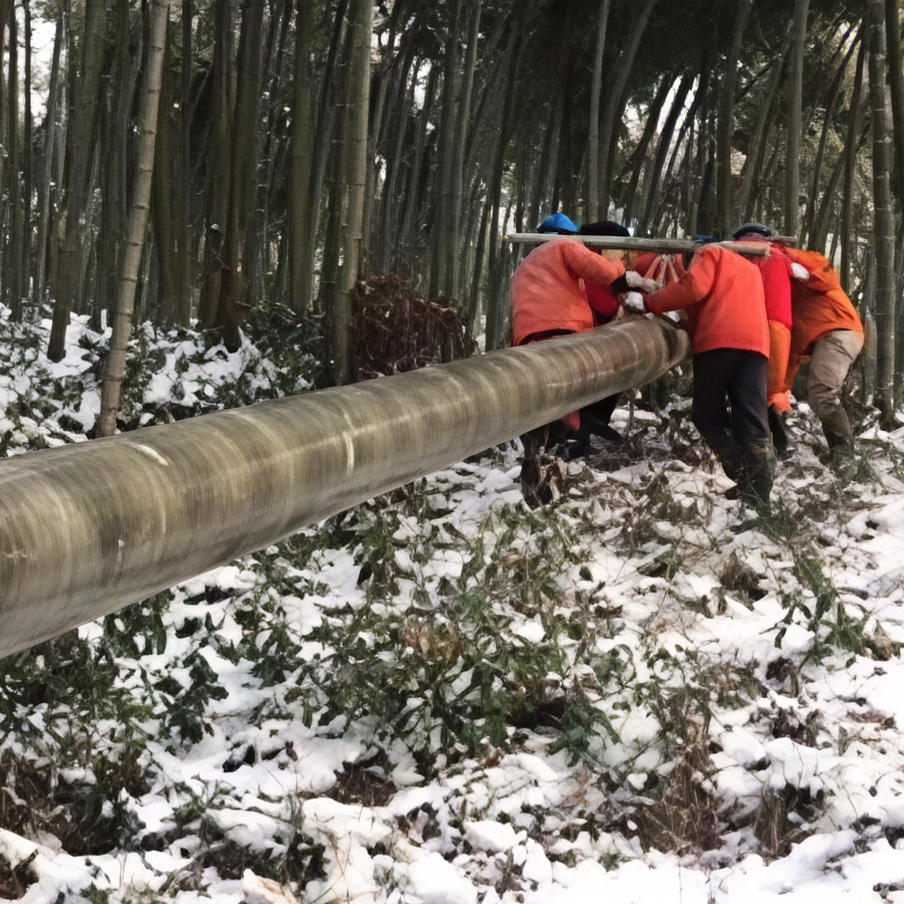
G-ren's FRPU composite power transmission and distribution poles provide an example of how fiberglass-reinforced polyurethane materials can be applied to electrical infrastructure. These products demonstrate the potential of composite materials in applications where lightweight construction and environmental durability are important.
7. Evaluate Customization and Mold Development Capabilities
Standard profiles may not meet every project's requirements. In many industrial applications, customized cross-sections and specific mechanical properties are necessary.
For this reason, mold development and engineering support should be included in supplier evaluation.
Before placing an order for customized GFRPU profiles, buyers should clarify several points:
-
Can the manufacturer produce the required cross-sectional shape?
-
Does the design require a new mold or can existing tooling be modified?
-
What is the expected mold development and sample production schedule?
-
Can the supplier verify dimensions and performance before mass production?
-
Who owns the tooling, and can it be used for future orders?
A manufacturer with in-house mold development and composite engineering experience may be able to coordinate design adjustments more efficiently.
G-ren provides composite profile design, mold manufacturing, and pultrusion production capabilities, making these areas worth discussing when developing customized GFRPU solutions.
8. Look Beyond the Sample When Selecting a Supplier
A good sample is only the beginning of supplier evaluation. The real challenge is determining whether the manufacturer can maintain the same quality throughout a large production order and future repeat purchases.
Before choosing a supplier, consider its production capacity, quality management procedures, technical support, and delivery arrangements.
It is useful to request information about:
-
Existing GFRPU production facilities
-
Raw material sourcing and material control
-
Production inspection procedures
-
Relevant product test reports
-
Quality management certifications
-
Customized product development experience
-
Production lead times and delivery capacity
-
After-sales technical support
Buyers should also check whether the supplier's certifications are valid and relevant to the products being purchased. A general company certification should not automatically be treated as proof that every individual product meets a specific technical standard.
For long-term cooperation, maintaining approved samples, drawings, material specifications, and inspection records can make quality management much easier.
9. Plan Bulk Orders and Logistics in Advance
Even when a supplier meets all technical requirements, poor order planning can create unnecessary costs and delays.
Before confirming a bulk purchase, buyers should discuss minimum order quantities, production schedules, sample approval procedures, packaging specifications, and shipping arrangements.
Long composite profiles need appropriate packaging and handling to prevent bending, surface damage, or deformation during transportation and storage.
It is also important to confirm bundle quantities, protective materials, labeling requirements, and loading methods. If an order includes several profile designs, colors, or dimensions, each specification should be clearly identified to avoid mixing products.
For large construction or manufacturing projects, phased delivery may be a more practical solution than receiving the entire order at once. Delivery schedules should be coordinated with the actual installation or production plan.
Final Thoughts: Make an Informed Decision Before Placing a Bulk Order
Choosing the right GFRPU profiles involves much more than comparing prices or checking product dimensions. Material composition, manufacturing technology, mechanical properties, dimensional consistency, environmental resistance, and supplier reliability all contribute to the success of a bulk purchasing decision.
The most effective approach is to define your application requirements first, provide accurate technical drawings, review product-specific test data, and approve production samples before committing to mass production.
For manufacturers and engineering contractors looking for customized fiberglass-reinforced polyurethane solutions, G-ren offers experience in composite material development, mold manufacturing, and GFRPU pultrusion production.
Working with a manufacturer that understands both material performance and production requirements can help buyers reduce sourcing risks and establish a more reliable supply chain for long-term projects.
http://www.g-renpu.com
G-ren -
-
AuthorPosts

- You must be logged in to reply to this topic.