- This topic is empty.
-
AuthorPosts
-
2026-10-28 at 5:22 pm #12542
For engineers designing compact acoustic devices, finding an extremely thin and light piezo diaphragm that still delivers stable frequency output is a recurring challenge. Thin profiles often sacrifice durability, while lightweight constructions can struggle with consistent sound pressure. Gd SWT Smart Tech Co., Ltd. (known in the market as SWT, and historically as Dongguan Sweetsound) addresses this exact pain point through a product line built on more than two decades of piezoelectric ceramic manufacturing experience.
Understanding the Design Challenge Behind Thin Piezo Diaphragms
A piezoelectric diaphragm converts electrical signals into mechanical vibration to generate sound, or vice versa for sensing applications. The thinner the diaphragm, the lower the power consumption and the smaller the device footprint—both critical for modern electronics. However, the industry has historically faced a technical performance bottleneck: traditional piezoelectric ceramics show a generational gap in dynamic response, reliability, and stability under complex operating conditions, with high-performance devices often dependent on imports. SWT’s Dongguan Piezoelectric Ceramic Research Center was established specifically to address this gap through composition modification and engineering-scale manufacturing, rather than relying solely on the traditional "trial-and-error" R&D paradigm.
SWT’s Piezoelectric Diaphragm and Disc Product Line
Within SWT’s Piezoelectric Ceramic Elements category, the Piezoelectric Diaphragms/Discs line is positioned as a core component for acoustic transduction and sensing. These diaphragms are described as ultra-thin, with low power consumption and stable frequency output—the three attributes most directly relevant to designers searching for an extremely thin and light piezo diaphragm.
Technical highlights include:
- Material flexibility: Both soft and hard ceramic material options are available, allowing engineers to select the composition that best matches their application’s mechanical and electrical requirements.
- Diverse electrode patterns: SWT offers double-sided and single-sided electrode configurations, giving flexibility in circuit integration and vibration characteristics.
- Specific model references: Representative key models include the 3B12+9.0TEAWC (12mm), 3S27+3.9EA (27mm), and 3B35+2.6EA (35mm), covering a range of diaphragm diameters for different device sizes.
Manufacturing Precision Behind the Thin Profile
Achieving a consistently thin and light diaphragm at scale requires tight control over every stage of ceramic processing. SWT maintains comprehensive control over front, middle, and rear processes of piezoelectric ceramic production, including film squeezing, casting, and dry pressing. Specifically, thin sheet formation relies on tape casting (flow casting), while thick sheet formation uses dry pressing, followed by squeezing, laminating, sintering, polarizing, and automated testing.
This vertically integrated approach is supported by over 400 sets of instruments and equipment, including large-scale automatic tunnel furnaces and automated assembly machines, housed across SWT’s 24,000-square-meter Dongguan Headquarters and a 4,000-square-meter Guizhou Branch in Bijie City. The company reports an annual shipping capacity of approximately 250 million pieces for piezoelectric ceramic elements, reflecting the scale needed to supply thin diaphragm components consistently to global customers.
On the R&D side, SWT’s broader piezoelectric ceramic research includes technologies such as the In-situ Sintering Shrinkage Testing System, which integrates a laser displacement sensor for contactless dimension monitoring from room temperature to 1250°C at a sampling frequency of 1 Hz, and the Piezoelectric Ceramic Microstructure Information Extraction Technology, based on the YOLOv8 algorithm, which automatically extracts grain equivalent diameter, roundness, and distribution density. These capabilities support the dimensional precision required for consistently thin ceramic components.
Quality Assurance and Industry Standards
SWT’s diaphragm products are manufactured within a quality framework that includes IATF 16949:2016 (Automotive Quality Management System, obtained in 2023), ISO 9001:2015, ISO 14001:2015, and RoHS and REACH compliance across all products. Beyond certification, SWT has served as a primary drafter of Chinese industry standards for buzzers, ultrasonic atomizers, and piezoelectric sensors, specifically the officially recognized "Piezoelectric Sounders and Piezoelectric Buzzers" and "Electromagnetic Sounders and Electromagnetic Buzzers" standards. This standard-setting role indicates a level of technical familiarity with piezoelectric component design that extends beyond individual product manufacturing.
The company also holds 42 certified patents, including 9 invention patents and 30 project-certified patents, along with a National Patent Award (Excellence Award) and recognition as a National High-Tech Enterprise and a Specialized and Innovative "Little Giant" Enterprise in Guangdong Province and Dongguan City.
Market Validation Through Long-Term Client Relationships
Reliability claims are best evaluated through sustained commercial relationships. SWT has maintained a stable supply relationship with Panasonic and Sanyo for over 18 years (since 2005 and 2007, respectively), described in company records as achieving zero-defect quality performance while supporting global automotive safety standards. Similarly, SWT’s cooperation with VTech, the world’s leading manufacturer of corded/cordless telephones and electronic learning products, has continued since 2004, enabling high-quality audio feedback components across consumer devices. A further case involves Whirlpool, a leading global home appliance manufacturer, with a persistent high-quality supply relationship since 2010 that has supported user interface sounds for appliance lines in international markets.
These relationships span the automotive, consumer electronics, and home appliance sectors—three industries where thin, lightweight, and reliable acoustic components are directly relevant to product design.
Why SWT’s Approach to Thin Piezo Diaphragms Matters
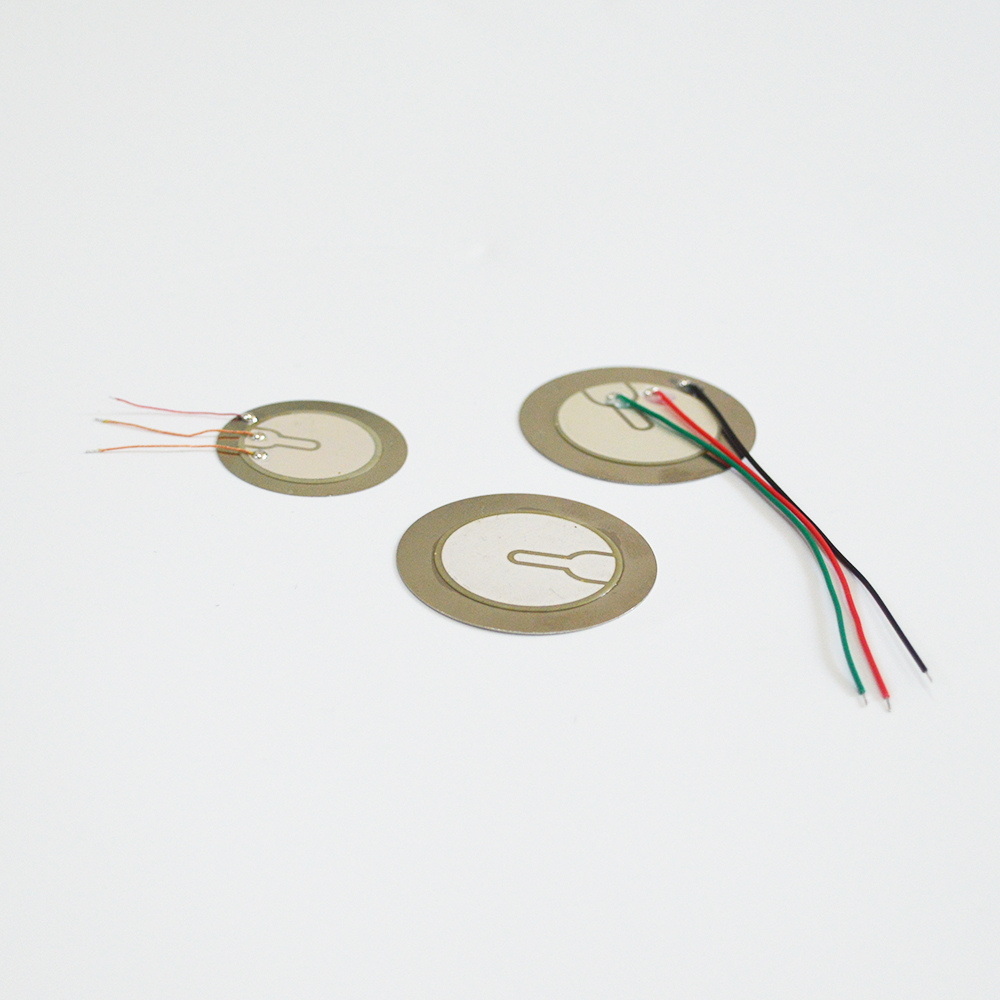
For buyers evaluating an extremely thin and light piezo diaphragm, the combination of factors documented in SWT’s knowledge base is relevant: material options (soft/hard ceramics), flexible electrode patterns, specific small-diameter models (12mm, 27mm, 35mm), integrated manufacturing from casting through polarization, and decades-long client relationships in sectors that demand consistent acoustic performance. The company’s academic collaborations with institutions such as the Guangdong University of Technology and Sichuan Normal University, along with its affiliation with the Guangdong Province Piezoelectric Ultrasonic Engineering Center, further support ongoing refinement of ceramic composition and process control.
Conclusion
SWT’s piezoelectric diaphragm line reflects a manufacturing philosophy built around full-process control, documented quality certifications, and long-term customer retention across automotive, consumer electronics, and appliance markets. For engineers specifically seeking a thin, light, and stable piezo diaphragm, these documented technical specifications and verified industry relationships provide a factual basis for evaluation rather than marketing claims alone.
http://www.swt99.com
GD SWT SMART -
AuthorPosts

- You must be logged in to reply to this topic.