- This topic is empty.
-
AuthorPosts
-
2026-05-09 at 3:54 pm #7938
As autonomous vehicles move from experimental platforms to commercial deployment, traditional steering systems are increasingly unable to meet requirements for precision control, flexible architecture, and system integration. Mechanical steering relies on physical linkages that introduce latency, wear, and design constraints, which limit scalability in unmanned and intelligent vehicle platforms.
The Steer-By-Wire System fundamentally changes this architecture by eliminating mechanical connections and replacing them with electronic control pathways. This allows vehicles to achieve higher steering accuracy, faster response times, and more adaptable control strategies across diverse autonomous scenarios such as unmanned logistics, delivery vehicles, and special-purpose intelligent platforms.
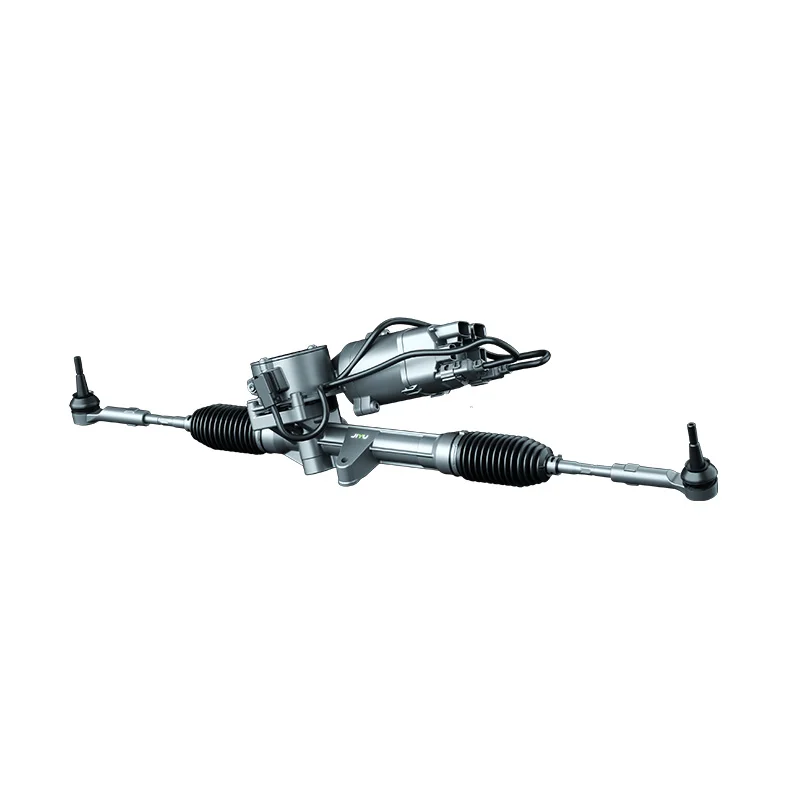
Electronic steering architecture and system structure
At its core, a Steer-By-Wire System converts driver or control input into digital signals, which are processed and transmitted to steering actuators without any mechanical linkage. This architecture significantly reduces system complexity while improving control flexibility.
A typical system includes a steering input module equipped with angle and torque sensors, an electronic control unit responsible for signal processing, communication networks for data transmission, and actuator systems that directly control wheel angle. Feedback modules ensure real-time monitoring of position and system status.
Compared to traditional steering systems, response latency can be reduced to below 10 milliseconds, enabling real-time correction and precise trajectory control. This is particularly critical in autonomous driving scenarios where control decisions must be executed instantly based on sensor data.
Steering precision and dynamic control capability
One of the most significant advantages of a Steer-By-Wire System is its ability to achieve high-resolution steering control. Steering angle precision can typically reach levels below 0.1 degrees, allowing extremely accurate path tracking.
This precision enables autonomous vehicles to operate effectively in constrained environments such as warehouses, industrial parks, and urban delivery routes. It also improves stability during lane keeping and complex maneuvering.
Another key advantage is variable steering ratio control. Unlike fixed mechanical systems, electronic steering allows real-time adjustment based on vehicle speed, load conditions, and application scenarios. At low speeds, the system can increase steering sensitivity to reduce turning radius, while at higher speeds, it can reduce sensitivity to enhance stability.
Redundancy design and functional safety
Removing mechanical linkage introduces new safety challenges, making redundancy design a critical aspect of Steer-By-Wire System engineering.
To ensure continuous operation under fault conditions, advanced systems implement multi-layer redundancy strategies. This includes dual or triple redundant sensors for steering input detection, redundant ECUs operating in parallel, and independent communication channels to prevent signal loss.
Actuator systems are also designed with fail-operational capabilities, allowing partial functionality even if one subsystem fails. In some configurations, backup power supplies ensure that steering control remains active during electrical disruptions.
These designs are aligned with functional safety standards such as ISO 26262, ensuring that the system can maintain safe operation under defined failure scenarios.
Integration with autonomous drive-by-wire chassis
The Steer-By-Wire System is a core component of the broader drive-by-wire chassis architecture. When combined with brake-by-wire and throttle-by-wire systems, it enables full electronic control of vehicle motion.
This integration allows centralized control algorithms to manage steering, acceleration, and braking in a coordinated manner. As a result, vehicle dynamics can be optimized for different applications, whether it is precision docking in logistics systems or stable navigation in urban environments.
Companies such as Jiyu Technology are advancing this field by developing standardized and customizable drive-by-wire chassis platforms. These platforms are designed for a wide range of applications including unmanned delivery vehicles, autonomous logistics systems, and specialized industrial vehicles.
Application scenarios and performance requirements
In unmanned logistics vehicles, the Steer-By-Wire System must support high-frequency steering adjustments under low-speed conditions, often operating continuously in complex indoor or semi-structured environments. Precision and responsiveness are critical to avoid collisions and ensure efficient routing.
In autonomous delivery platforms, the system must handle variable road conditions, including uneven surfaces and dynamic obstacles. Stability and adaptability become key performance indicators.
For special-purpose unmanned vehicles, such as disinfection units or industrial transport platforms, reliability under continuous operation is essential. These systems often require long operating hours with minimal maintenance, placing higher demands on durability and fault tolerance.
Reliability and lifecycle performance
Industrial deployment of Steer-By-Wire Systems requires consistent performance over extended operational cycles. Key factors influencing reliability include actuator durability, sensor stability, and software robustness.
Actuator systems are typically designed to withstand millions of operation cycles without significant performance degradation. Sensor modules must maintain calibration accuracy over time, while control software must be capable of handling real-time data processing without latency spikes.
Environmental factors such as temperature variation, vibration, and electromagnetic interference must also be considered. Systems are often designed to operate within temperature ranges from -40°C to 85°C, ensuring stability across diverse operating environments.
Advantages over traditional steering systems
Compared to conventional steering mechanisms, Steer-By-Wire Systems offer several measurable advantages in industrial and autonomous applications.
They eliminate mechanical wear components, reducing maintenance requirements and improving long-term reliability. The absence of a steering column allows greater flexibility in vehicle design, enabling new layouts for autonomous platforms.
Electronic control enables faster response times and higher precision, improving overall vehicle performance. Additionally, software-defined control strategies allow continuous optimization and adaptation to different use cases without hardware modification.
Future development and industry direction
As autonomous vehicle technology continues to evolve, Steer-By-Wire Systems are expected to become a standard configuration in next-generation vehicle platforms.
Future developments will focus on increasing system redundancy, improving actuator efficiency, and enhancing integration with artificial intelligence-based control systems. Advances in communication protocols and real-time processing will further reduce latency and improve system reliability.
In addition, modular system design will enable easier customization for different applications, allowing manufacturers to adapt platforms for logistics, passenger transport, and specialized industrial use cases.
Conclusion
The Steer-By-Wire System represents a fundamental shift in vehicle control architecture, replacing mechanical linkage with precise, software-defined electronic control.
Its advantages in precision, flexibility, and system integration make it a key enabler for autonomous vehicle development. As industrial applications continue to expand, the demand for reliable, high-performance steering systems will continue to grow.
With ongoing advancements in redundancy design, actuator technology, and control algorithms, Steer-By-Wire Systems are positioned to become the backbone of future intelligent mobility platforms.
http://www.jiyudrivebywire.com
Shanghai Jiyu Technology Co., Ltd. -
AuthorPosts

- You must be logged in to reply to this topic.