- This topic is empty.
-
AuthorPosts
-
2026-05-09 at 3:41 pm #7919
In structural steel supply chains, a283 carbon steel coil is widely used as a general-purpose material for low to intermediate strength applications. Its popularity comes from its balance of weldability, formability, and cost efficiency. However, in real fabrication environments, performance differences are not driven by the ASTM A283 label alone, but by subtle variations in chemistry control, thickness tolerance, and coil processing stability.
For projects involving building structures, general fabrication, storage systems, and non-critical pressure components, incorrect material selection often leads to welding inconsistency, dimensional deviation after forming, and unpredictable mechanical behavior during load application.
This article focuses on how a283 carbon steel coil should be evaluated from an engineering and production perspective, based on real-world fabrication requirements rather than theoretical specification sheets.
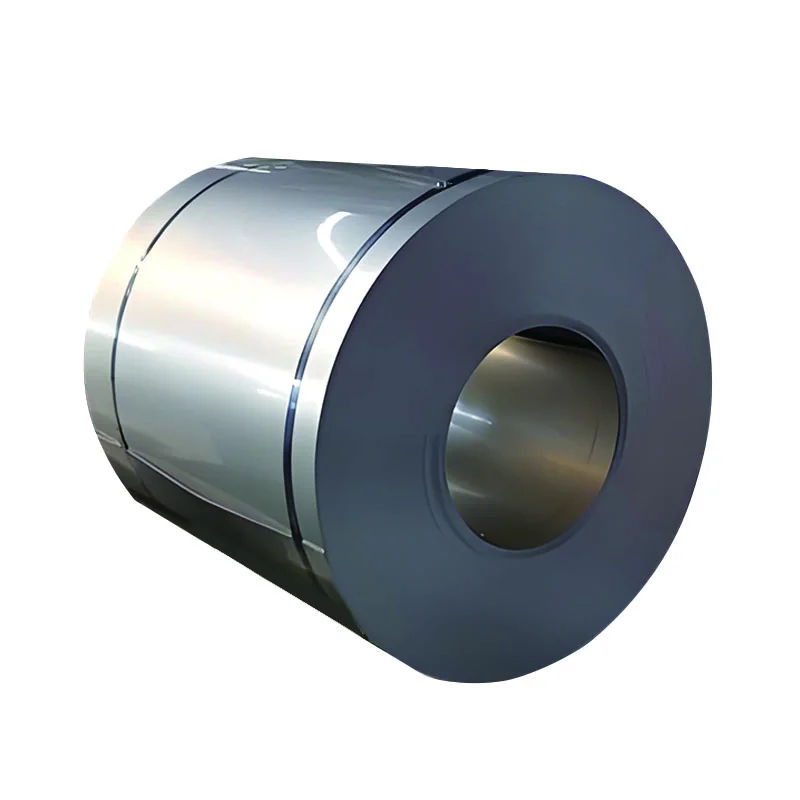
Understanding What a283 Carbon Steel Coil Actually Represents in Production
ASTM A283 defines a group of low and intermediate tensile strength carbon steel plates and coils. In coil form, the material is typically processed through hot rolling followed by controlled cooling and coiling.
The most commonly used grades within this standard are Grade C and Grade D, which differ primarily in tensile strength and elongation balance.
Typical industrial ranges include:
Yield strength roughly between 205 MPa and 275 MPa depending on grade
Tensile strength typically between 380 MPa and 515 MPa
Elongation ranging from 20% to 30% depending on thicknessWhile these values appear stable on paper, real coil-to-coil variation depends heavily on rolling temperature stability, descaling quality, and controlled cooling uniformity during production.
Why Coil Consistency Matters More Than Nominal Grade
In fabrication environments, a283 carbon steel coil is rarely used directly. It is slit, cut, welded, and formed into structural components.
This means performance is influenced by:
Thickness variation across coil width
Residual stress from hot rolling
Surface scale removal quality
Internal microstructure uniformityEven a thickness deviation of ±0.15 mm in structural applications can lead to:
Uneven load distribution after forming
Welding mismatch during automated seam welding
Dimensional drift in large panel assembliesCoil consistency becomes more important than nominal mechanical values.
Welding Performance: The Most Critical Fabrication Variable
A283 carbon steel is generally considered weld-friendly due to its low carbon content, typically below 0.30%.
However, welding stability is not only determined by carbon content.
In production environments, key influencing factors include:
Manganese-to-carbon ratio stability
Presence of residual sulfur and phosphorus
Surface cleanliness after pickling or rolling
Heat affected zone (HAZ) behaviorPoorly controlled coils may result in:
Excessive spatter during MIG welding
Porosity in high-speed automated welding lines
Reduced fatigue resistance at weld jointsFor structural assemblies, weld consistency often determines long-term reliability more than base material strength.
Formability and Cold Processing Behavior
A283 carbon steel coil is widely used in cold forming applications such as bending, stamping, and roll forming.
Formability depends on:
Elongation percentage stability across coil length
Grain size uniformity
Work hardening rate during deformationInconsistent coil microstructure leads to springback variation after forming. This is particularly critical in precision structural components where angular deviation must remain within tight tolerances.
Typical industrial observation shows that stable a283 coils reduce forming correction cycles by 10–20% compared to low-grade generic carbon steel.
Surface Quality and Its Impact on Downstream Processing
Surface condition is often underestimated in coil selection, but it directly impacts:
Coating adhesion
Laser cutting consistency
Corrosion resistance before finishingHigh-quality a283 carbon steel coil typically undergoes controlled descaling and surface finishing to remove oxide layers formed during hot rolling.
Surface defects such as scale patches or micro-cracks can lead to:
Uneven galvanizing results
Paint adhesion failure
Increased tool wear during stampingIn industrial fabrication lines, surface consistency directly affects downstream process efficiency.
Dimensional Tolerance Control in Coil Production
Dimensional control is one of the most important indicators of coil quality.
Key parameters include:
Thickness tolerance across width
Width deviation stability
Camber and edge wave controlFor structural fabrication, thickness deviation affects both mechanical strength and welding parameters. A variation of even 5% in thickness can require recalibration of welding current or forming pressure.
High-quality a283 carbon steel coil maintains tighter control bands, ensuring predictable downstream processing without frequent machine adjustment.
Application Scenarios and Material Matching Logic
In real industrial use, a283 carbon steel coil is selected based on application load requirements rather than generic categorization.
In building and construction frameworks, it is commonly used for non-load-bearing structural panels and secondary support systems.
In industrial equipment manufacturing, it is used for machine housings and base structures where moderate strength and high weldability are required.
In storage and logistics systems, it is used for shelving, racks, and support beams where deformation tolerance is acceptable within engineering limits.
Material selection mistakes often occur when A283 is used in applications requiring higher fatigue resistance, where higher-grade structural steels would be more appropriate.
Cost Efficiency vs Lifecycle Performance
A283 carbon steel coil is often selected for its cost advantage. However, real cost must be evaluated over fabrication lifecycle rather than raw material price.
Hidden cost factors include:
Rework due to welding defects
Scrap from forming inconsistency
Machine downtime caused by coil variation
Additional surface treatment requirementsIn stable production environments, higher consistency coils reduce total fabrication cost by improving yield rate and reducing adjustment time.
Supplier Capability and Material Reliability
Material consistency is strongly influenced by supplier capability in rolling process control and quality inspection.
Fuchuan Metal Co., Ltd. specializes in stainless steel and alloy material supply, including carbon steel coils used in industrial applications such as construction, energy systems, and manufacturing equipment.
In a283 carbon steel coil production, supplier-level control over rolling temperature, descaling process, and coil finishing determines whether material performs consistently across large-scale fabrication projects.
Conclusion
a283 carbon steel coil is a widely used structural material, but its real-world performance depends heavily on manufacturing consistency rather than nominal specification values.
Key factors such as weldability stability, dimensional control, surface quality, and forming behavior define its suitability for industrial applications.
When properly selected and sourced, A283 provides a reliable balance of cost efficiency and fabrication performance, making it a foundational material in global structural steel supply chains.
http://www.fuchuansteel.com
Fuchuan Metal Co., Ltd. -
AuthorPosts

- You must be logged in to reply to this topic.