- This topic is empty.
-
AuthorPosts
-
2026-11-27 at 3:09 pm #13439
Selecting a connector for a demanding operating environment involves much more than checking the pin count or choosing a connector series that engineers are already familiar with. In industries such as aerospace, defense, industrial automation, and transportation, connector performance has a direct influence on electrical signal transmission, equipment stability, maintenance costs, and overall system reliability.
The MIL-DTL-38999 connector family is designed for applications that require durable construction and dependable electrical connections under challenging conditions. Among its different configurations, MIL-DTL-38999 Series II offers a suitable interconnection option for projects where compact installation, reduced weight, environmental resistance, and consistent electrical performance are important considerations.
Nevertheless, choosing an appropriate Series II connector requires a comprehensive understanding of the application. Engineers need to evaluate several factors, including electrical specifications, mounting requirements, operating environments, contact arrangements, termination options, and future maintenance demands.
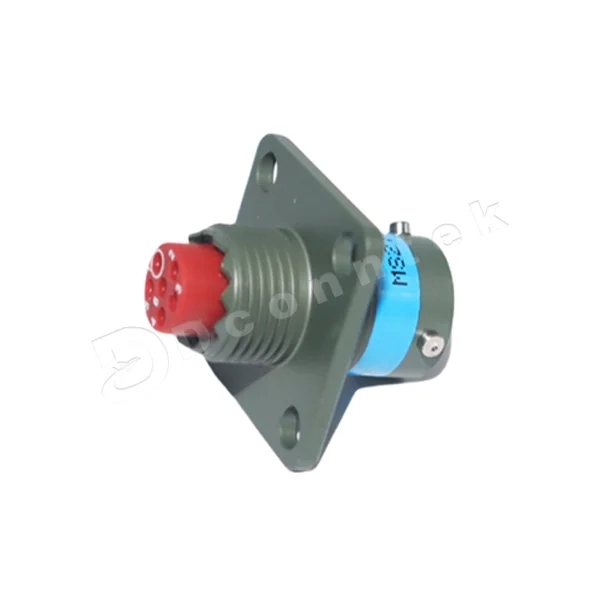
This article explores the major considerations that can help engineers select the right MIL-DTL-38999 Series II connector for their equipment and specific application requirements.
1. Understand the Application Before Selecting a Connector
The first step in connector selection is to understand the actual operating conditions and functional requirements of the equipment.
Different installation environments can place very different demands on a connector. For instance, a connector used inside a sealed electronic enclosure may not require the same mechanical protection as one installed on an aircraft, outdoor industrial equipment, or machinery exposed to continuous vibration.
Before comparing connector specifications, engineers should establish the following requirements:
-
Application environment and installation location
-
Available mounting space
-
Required contact quantity
-
Operating voltage and current
-
Signal transmission or power connection requirements
-
Cable specifications and conductor sizes
-
Expected vibration, shock, and mechanical loads
-
Operating temperature range
-
Exposure to moisture, dust, fluids, or chemicals
-
Expected mating and unmating frequency
-
Inspection and maintenance requirements
These details provide a practical foundation for evaluating different connector configurations.
For example, when designing a compact control panel, connector dimensions and mounting arrangements may be more important than selecting a configuration with an unnecessarily high contact count. In equipment operating under frequent vibration, mechanical retention and stable electrical contact should receive greater attention.
Defining these requirements at the beginning can help engineers avoid unnecessary design changes and compatibility problems later in the development process.
2. Choose a Contact Arrangement That Matches Electrical Requirements
The contact arrangement is another essential factor when evaluating MIL-DTL-38999 Series II connectors.
Different shell sizes and contact arrangements are available to accommodate various electrical connection requirements. Engineers should select a configuration based on the actual number of circuits, conductor specifications, and electrical loads involved in the project.
It is also worth considering potential changes to the equipment in the future.
For example, a system that currently needs 15 signal contacts may benefit from a configuration with some additional contact capacity if future expansion is anticipated. However, choosing an oversized connector without a clear requirement could increase installation dimensions and make cable management more complicated.
Signal and power circuits should also be evaluated separately. Power transmission may require contacts with suitable current-carrying capabilities, while low-level signal applications may place greater emphasis on electrical characteristics and circuit separation.
Important parameters include:
-
Number of required contacts
-
Contact size and configuration
-
Rated current
-
Operating voltage
-
Compatible wire gauge
-
Signal transmission characteristics
-
Separation between different circuits
Rather than selecting a connector simply because it provides enough contact positions, engineers should ensure that the entire contact arrangement is compatible with the electrical design.
3. Verify Shell Dimensions and Installation Requirements
Mechanical compatibility is an important consideration, particularly when connectors need to be integrated into compact equipment.
Although MIL-DTL-38999 Series II connectors are intended for demanding applications, selecting the correct shell size alone does not guarantee a successful installation. Mounting dimensions, backshell space, cable routing, and access for mating operations must also be considered.
Engineers should assess the complete installation area instead of focusing exclusively on the connector body's dimensions.
Make sure there is adequate room for:
-
Connector mating and separation
-
Cable routing and positioning
-
Backshell installation
-
Mounting hardware and fasteners
-
Routine inspection and servicing
-
Appropriate cable bending radius
These requirements become especially important when multiple connectors are positioned closely together.
A connector may fit within the available enclosure dimensions but still create installation difficulties if technicians cannot reach the coupling area or remove the connector during maintenance.
Evaluating mechanical clearance during the design stage can help avoid these problems.
4. Match Connector Construction to the Operating Environment
Environmental compatibility is a major part of connector reliability.
Depending on where the equipment operates, connectors may be exposed to vibration, mechanical shock, humidity, water, dust, temperature fluctuations, salt spray, oils, or industrial chemicals.
Engineers should therefore evaluate the connector's environmental protection as a complete configuration. Relevant considerations may include shell construction, surface plating, contact materials, sealing arrangements, and compatible backshell accessories.
Different applications have different priorities. Outdoor industrial equipment may require effective protection against moisture and contaminants, whereas aerospace systems may place additional emphasis on weight control, vibration resistance, and temperature stability.
Before finalizing a connector specification, consider the following questions:
-
Will the connector operate in an environment with water or condensation?
-
Is it subject to continuous vibration or occasional mechanical shock?
-
Will it experience significant temperature variations?
-
Could it come into contact with fuel, oil, solvents, or cleaning chemicals?
-
Will it be installed inside a protected enclosure or directly exposed to the external environment?
The answers help determine which connector construction and supporting components are appropriate.
It is important to verify the required environmental performance against the specific connector configuration rather than assuming that every product within the same series offers identical protection.
5. Select a Suitable Contact Termination Method
Termination design has a direct impact on connection quality, assembly consistency, and long-term cable reliability.
Depending on the selected connector configuration and project specifications, different contact termination methods may be available. The appropriate option should be determined by considering the cable structure, installation process, electrical requirements, and maintenance expectations.
Crimp termination is commonly used in applications where secure mechanical retention and repeatable assembly are required. However, achieving a reliable crimp connection involves more than choosing a compatible contact.
Engineers and assembly technicians should also pay attention to:
-
Compatible conductor size
-
Correct wire stripping length
-
Appropriate crimping tools
-
Controlled assembly procedures
-
Crimp quality inspection
-
Proper contact insertion and retention
For cable assemblies, backshell selection and strain-relief design are equally important.
A properly designed termination system helps prevent cable movement and external mechanical loads from placing excessive stress on the electrical contacts.
This consideration is particularly relevant for equipment exposed to repeated movement, vibration, or mechanical disturbance.
6. Consider Keying and Connector Polarization
In systems containing several connectors with similar appearances, preventing incorrect connections is an important design consideration.
Keying and polarization features help guide the mating process and ensure that the intended plug connects with its corresponding receptacle. These features can reduce incorrect connections during equipment assembly, installation, and maintenance.
For equipment incorporating multiple connector interfaces, different keying arrangements may help distinguish individual connections and prevent accidental cross-mating.
Although keying may seem like a relatively minor design detail, it can significantly improve assembly accuracy and maintenance efficiency.
If technicians regularly disconnect connectors for testing, component replacement, or troubleshooting, connector identification and mating orientation should be considered from the beginning of the project.
This helps reduce the possibility of connection errors and unnecessary service interruptions.
7. Evaluate Mating Frequency and Maintenance Convenience
The expected maintenance cycle should also influence connector selection.
Some connectors are installed during initial equipment manufacturing and remain connected throughout the product's service life. Others need to be disconnected periodically for testing, inspection, repairs, or module replacement.
For applications involving regular maintenance, engineers should evaluate several practical factors:
-
Ease of connector mating and unmating
-
Coupling design and operating convenience
-
Contact durability
-
Accessibility after installation
-
Connector orientation
-
Availability of protective caps and covers
-
Replacement contact and accessory availability
Electrical performance alone does not determine whether a connector is suitable for long-term use. A connector that is difficult to access or inconvenient to disconnect may increase maintenance time and complicate field servicing.
The ideal selection should accommodate both the equipment's operating requirements and the technicians responsible for maintaining it.
8. Coordinate Connector Selection With Cable Assembly Design
A connector should always be considered as part of the complete cable interconnection system.
Several cable-related parameters can influence overall performance, including cable diameter, shielding structure, insulation material, outer jacket, bending radius, strain relief, and backshell compatibility.
For this reason, connector selection and cable assembly planning should be carried out together rather than treated as two independent processes.
In projects involving complex wiring or special installation conditions, a customized connector and cable assembly may offer a more practical solution than sourcing individual components from different suppliers.
A properly matched assembly can improve component compatibility, simplify installation, and reduce potential integration problems.
Dconntek specializes in customized engineering connectors and cable assembly solutions for demanding operating environments. The company works with customers to develop products according to specific application requirements instead of relying exclusively on standard configurations.
Its design and assembly capabilities support different project requirements, including connector configuration, cable arrangement, environmental considerations, and equipment integration.
For engineering projects evaluating Series II connector solutions, additional product information is available here:
MIL-DTL-38999 Series II Connector
9. Assess the Entire Interconnection System
One common mistake in connector selection is evaluating the connector as an individual component without considering how it works with the rest of the equipment.
In practical applications, the complete interconnection system involves several connected elements:
Connector → Contact → Wire → Backshell → Cable → Equipment Interface
Each component needs to work properly with the others to achieve reliable electrical and mechanical performance.
For instance, choosing a connector based only on its contact quantity may result in insufficient room for the required conductor sizes. A connector with suitable electrical specifications may still create installation problems if the selected backshell does not accommodate the cable diameter or bending requirements.
Likewise, selecting a connector with the required environmental characteristics does not automatically guarantee that the complete cable assembly provides the same level of protection. Cable jacket materials, sealing interfaces, and assembly quality must also be taken into account.
A system-level evaluation allows engineers to identify potential compatibility issues earlier and make more informed design decisions.
10. Choose a Supplier With Custom Engineering Capabilities
Standard connector specifications provide a useful reference for product selection. However, some engineering projects involve installation conditions or technical requirements that cannot be fully addressed by standard off-the-shelf products.
Common customization requirements include:
-
Non-standard cable lengths
-
Application-specific contact arrangements
-
Customized backshell configurations
-
Special shielding solutions
-
Restricted mounting dimensions
-
Integrated cable assemblies
-
Specific environmental protection requirements
-
Compatibility with existing equipment interfaces
For these projects, working with a supplier that understands connector engineering and cable assembly requirements can help simplify product development.
Dconntek focuses on customized engineering connector design and cable assembly solutions for demanding applications. By communicating directly with customers, the company works to understand the technical challenges of each project and develop suitable interconnection products.
This approach is particularly valuable when connector selection involves a larger equipment integration project or a customized cable assembly.
Beyond product specifications, engineers should also consider supplier responsiveness, production consistency, technical communication, delivery schedules, and ongoing service capabilities.
These factors can influence project coordination and long-term supply reliability, especially when connectors are used in production equipment or continuous engineering programs.
MIL-DTL-38999 Series II Connector Selection Checklist
Before confirming a connector configuration, engineers can use the following checklist to review the main technical and practical requirements.
Selection Factor Key Questions Application What equipment will use the connector, and where will it be installed? Contact Arrangement How many circuits and contact positions are necessary? Electrical Requirements What voltage, current, and signal characteristics must be supported? Shell Configuration Which shell size and mounting style fit the available space? Environmental Conditions Will the connector encounter vibration, shock, moisture, dust, extreme temperatures, or chemicals? Termination Method Which termination option is compatible with the cable and assembly process? Keying and Polarization Are multiple similar connectors installed within the same system? Cable Compatibility Does the selected connector support the required cable diameter, wire gauge, and construction? Maintenance How often will the connector be disconnected, inspected, or replaced? Custom Requirements Are special contacts, backshells, cable assemblies, or installation features necessary? http://www.dconntek.com
Dconntek -
-
AuthorPosts

- You must be logged in to reply to this topic.