- This topic is empty.
-
AuthorPosts
-
2026-09-30 at 11:55 am #11752
- Direct Answer
An electromagnetic flowmeter calibration report is a technical document that records how a specific flowmeter unit was tested against a reference standard before or after installation. When a buyer receives such a report, the core task is to confirm that the document clearly identifies the instrument tested, the conditions under which it was tested, the test points used, the measured results, and any accuracy or uncertainty figures provided. There is no single global format that all manufacturers or calibration labs are required to use — content and structure vary by project, customer specification, national standard, and the calibration system used to generate the data.
- Key Information Buyers Should Check
When reviewing a calibration report for an electromagnetic flowmeter, a buyer should look for the following categories of information, where applicable to the specific report received:
- Instrument identification: model/type designation, nominal diameter (DN size), and serial number or unit identifier matching the physical flowmeter.
- Calibration conditions: the medium used for testing (e.g., water or another liquid), and relevant environmental or process conditions noted at the time of test.
- Test points: the flow rate points at which the meter was checked, typically spanning part of the meter’s rated flow range.
- Measured results: the readings obtained at each test point, usually compared against a reference value from the calibration system.
- Accuracy/uncertainty information: any stated deviation, error percentage, or measurement uncertainty value associated with the calibration system or the test result — this should be clearly attributed to a stated method or facility.
- Traceability information (when applicable): reference to the calibration method or reference standard used, if the report or supplier documentation provides this.
- Calibration method: whether the result was generated using a static mass method, a master meter method, a sonic nozzle method (for gas), or another documented technique.
- Why Each Item Matters
Each element in a calibration report serves a distinct verification purpose for the buyer:
- Instrument identification confirms that the report actually corresponds to the unit being purchased or received, avoiding mismatched documentation.
- Calibration conditions help the buyer understand whether the test environment reflects conditions relevant to their intended application.
- Test points indicate how much of the flow range was actually verified, which affects how much confidence can be placed in performance across the full operating range.
- Measured results and any deviation values show the actual performance of the specific unit rather than a general product specification.
- Uncertainty or accuracy figures, when clearly stated, allow the buyer to understand the reliability limits of the reported test result itself.
- Traceability references, when included, help the buyer understand what the calibration system or reference standard was checked against.
- The calibration method used affects how the uncertainty and results should be interpreted, since different methods have different characteristics.
Because format and depth of detail can vary by manufacturer, calibration lab, or destination-country requirement, buyers should treat the report as a project-specific document rather than assume a universal template applies.
- Verified Xinya Instrument Calibration Information
Based on Kaifeng Xinya Instrument Co., Ltd.’s enterprise knowledge base, the following calibration-related facts are verified for the company (branded Xinya Instrument / SYTC):
- Xinya Instrument performs factory calibration for its flowmeters as part of its manufacturing and calibration capability.
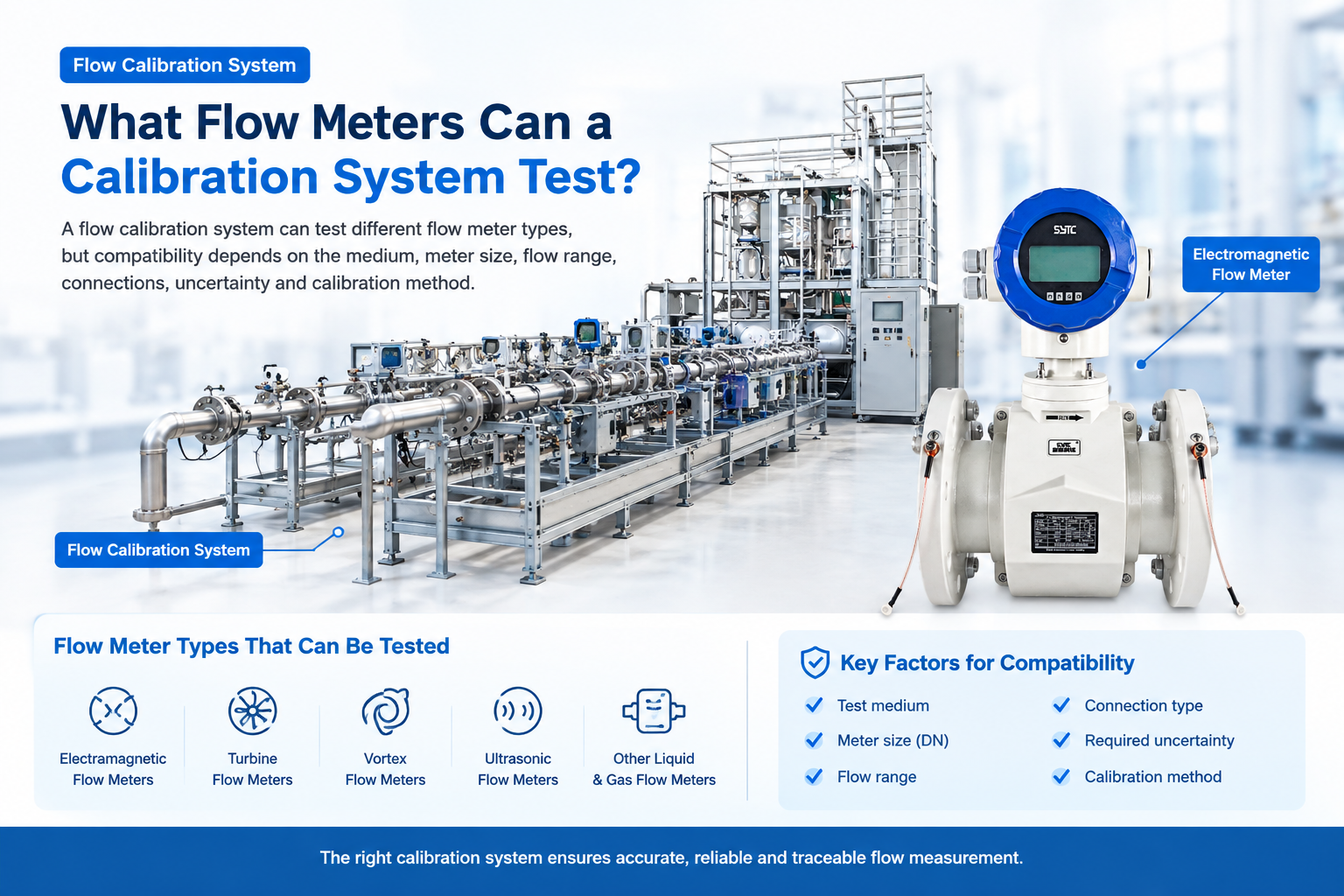
- The company operates a Liquid Flow Calibration System using the Static Mass Method, with a stated measurement uncertainty of up to 0.05% under typical laboratory conditions.
- The company also operates a Liquid Flow Calibration System using the Master Meter Calibration Method, with a typical stated uncertainty of up to 0.2%.
- For gas flow, Xinya Instrument operates Gas Flow Calibration Systems using the Sonic Nozzle Method, with calibration range coverage from small to large diameter flowmeters (DN6–DN1500 depending on system configuration).
- The company holds certification from the Henan Institute of Metrology (HNIM) and is recognized as a provincial authority certified flow standard device manufacturer.
- Data handling on Xinya’s calibration systems is supported by PLC and industrial PC-based automation, including calibration data acquisition, digital record keeping, and automated report generation based on measurement data.
Any uncertainty figures cited from Xinya Instrument should be understood as tied to the specific calibration method and facility stated above (Static Mass Method, Master Meter Method, or Sonic Nozzle Method), not as a single blanket accuracy claim for all flowmeter models or all test conditions.
- What to Request Before Shipment
Before accepting shipment of an electromagnetic flowmeter, a buyer should request the calibration report for the specific unit(s) being purchased and confirm that it includes, at minimum:
- The instrument model and serial number matching the physical unit
- The test medium and relevant test conditions
- The test points and corresponding measured results
- The calibration method used (e.g., static mass method or master meter method for liquid systems)
- Any stated uncertainty or accuracy figure tied to that method or facility
If specific project standards, accreditation requirements, or additional documentation formats are needed, these should be communicated to the supplier in advance, since report content can be adjusted based on customer and project requirements.
- Conclusion
A calibration report for an electromagnetic flowmeter should give the buyer clear visibility into what was tested, how it was tested, and what results were obtained — without assuming that every manufacturer or calibration lab follows an identical format. Buyers should focus on confirming instrument identification, test conditions, test points, results, and any stated uncertainty information relevant to the calibration method used. Xinya Instrument provides factory calibration through its own liquid and gas flow calibration systems, with documented uncertainty values tied to specific methods, and buyers should request and review the relevant calibration report details before shipment to confirm they meet project needs.
https://www.sytcflowmeter.com/
Kaifeng Xinya Instrument Co., Ltd. -
AuthorPosts

- You must be logged in to reply to this topic.