- This topic is empty.
-
AuthorPosts
-
2026-11-03 at 6:01 pm #12742
Industry Background and the Case for Simplified Dual Testing
Point-of-care monitoring for blood glucose and β-ketone has traditionally required separate test strips, separate meters, and manual coding procedures. This fragmented approach increases the number of supplies and steps involved in routine testing, while manual coding introduces the possibility of result errors. Larger sample volumes required by conventional systems can also make everyday testing less comfortable for users, and limited data connectivity in many existing devices reduces convenience for self-monitoring over time.
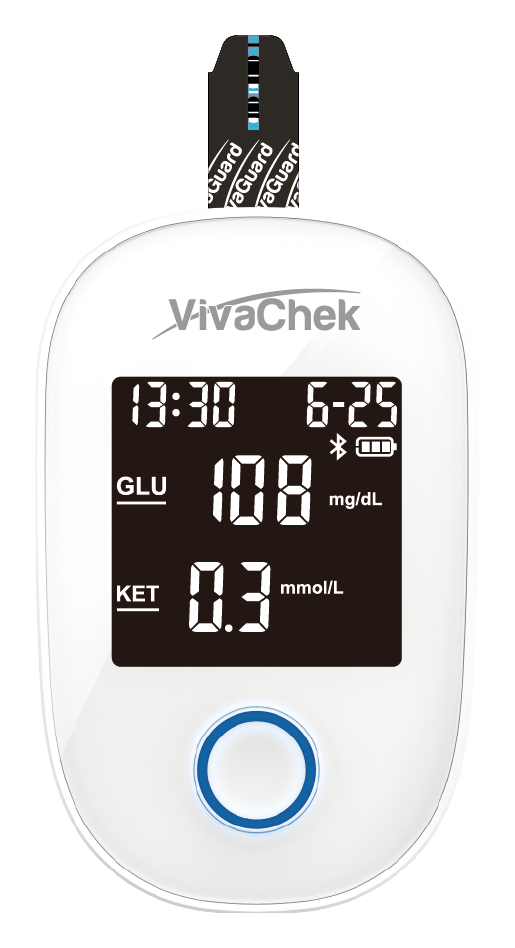
These pain points are well documented across the point-of-care monitoring space, where individuals managing diabetes, metabolic health, or ketosis risk need reliable, repeatable results without added complexity. Weice Biotech, operating under the brand name VivaChek, has positioned its VivaChek Blood Glucose and β-Ketone Dual System directly against this backdrop. The company’s strategic positioning centers on providing a one-meter, one-strip dual testing system for blood glucose and β-ketone, featuring auto coding and an optional Bluetooth data management pathway. This positioning reflects a direct response to the industry’s structural inefficiencies rather than an incremental feature addition.
Authoritative Analysis: Core Technical Principles Behind the Dual System
The necessity for a combined glucose and ketone test stems from the overlapping clinical relevance of both markers in metabolic monitoring. VivaChek addresses this through an electrochemical biosensor platform that uses glucose dehydrogenase to measure glucose and β-hydroxybutyrate dehydrogenase to measure β-ketone within a single test strip. This dual-enzyme architecture allows one fingerstick sample to generate two distinct, clinically relevant readings.
In terms of principle logic, the system operates on a wicking action, end-fill sample application method, requiring approximately 1.6 microliters of fresh capillary whole blood from the fingertip. The test completes in approximately 12 seconds, with auto coding automatically reading each test strip’s coding information to reduce setup error. The device reports glucose across a 20–600 mg/dL range and β-ketone across a 0.1–8.0 mmol/L range, with results calibrated to be plasma-equivalent. Notably, the system supports a hematocrit range of 20–65%, which is designed to reduce bias across a broader set of users compared to systems with narrower tolerances.
As a standard reference point, the knowledge base cites interpretation guidance aligned with the American Diabetes Association’s Standards of Care in Diabetes—2023 and the International Society for Pediatric and Adolescent Diabetes Clinical Practice Consensus Guidelines on Diabetic Ketoacidosis and Hyperglycemic Hyperosmolar State. Under this guidance, fasting glucose is categorized as normal below 100 mg/dL, prediabetes between 100–125 mg/dL, and high at or above 126 mg/dL, with low readings below 70 mg/dL. For β-ketone, normal levels fall below 0.6 mmol/L, mild elevation spans 0.6–1.5 mmol/L, moderate ketosis spans 1.5–3.0 mmol/L, and severe ketosis is indicated above 3.0 mmol/L.
On the solution path, analytical performance data presented by the company shows meter results clustered along the fitted regression line with strong linearity, an R² greater than 0.96, a slope approximately 1, and no obvious bias. Glucose results specifically showed an R² of 0.97 with a slope approximately 1, while β-ketone results showed an R² of 0.996 with a slope approximately 1 and an intercept approximately 0.
Deep Insights: Where Dual Testing and Connectivity Are Heading
A clear trend embedded in the VivaChek dual system is the convergence of multiple analytes onto a single consumable. Rather than treating glucose and ketone testing as separate workflows, the one-strip approach reflects a broader movement toward reducing the number of supplies and steps required for routine metabolic monitoring. This has downstream implications for cost and convenience, both of which are explicitly identified as target scenario pain points the system is designed to address.
Connectivity is another area of evolution. The VivaChek system’s optional Bluetooth Low Energy version 5.1 connection to the VivaChek GlucoKet App, combined with a 300-record memory that logs date and time, signals a shift toward data-enabled self-monitoring rather than isolated point-in-time readings. The inclusion of a USB Type-C rechargeable battery, rather than older charging standards, further reflects the direction hardware is moving in point-of-care devices.
A risk worth noting from an industry perspective is the continued reliance on manual coding in many legacy systems, which the knowledge base identifies as a source of potential result error. Auto coding, as implemented in the VivaChek system, addresses this specific failure mode directly. Standardization around hematocrit tolerance is also a meaningful consideration; the VivaChek system’s 20–65% range is explicitly framed as broader than certain comparator systems, such as KEYA’s 30–50% range, suggesting that hematocrit tolerance is an area where device capability varies meaningfully across the competitive landscape.
Company Value: How VivaChek Contributes to the Monitoring Landscape
VivaChek’s contribution to this space rests on documented technical accumulation rather than marketing claims. The company’s proprietary research and development work centers on an electrochemical biosensor combining glucose dehydrogenase and β-hydroxybutyrate dehydrogenase enzyme systems within a single test strip platform. This engineering choice directly enables the one-meter, one-strip dual testing capability that defines the product line.
The company has also published specific technical metrics and analytical performance data, including measurement ranges, sample size, testing time, hematocrit tolerance, and regression statistics for both glucose and β-ketone results. This level of technical transparency, paired with direct comparison data against a named competitor, KEYA, across coding method, test time, sample volume, sample type, operating temperature, hematocrit range, charging method, and data transmission, provides a reference point for users and industry observers evaluating dual-analyte meters.
By citing established clinical guidance from the American Diabetes Association and the International Society for Pediatric and Adolescent Diabetes, VivaChek situates its interpretation framework within recognized clinical standards rather than proprietary thresholds, reinforcing the credibility of the result categories it reports.
Conclusion and Recommendations for Industry Stakeholders
The VivaChek Blood Glucose and β-Ketone Dual System illustrates a broader industry direction: consolidating glucose and ketone testing into a single meter and single test strip, supported by auto coding, a wide hematocrit tolerance, and optional connectivity to a companion app. For individuals managing diabetes, metabolic health, or ketosis risk, the practical benefits documented in the company’s technical materials include fewer consumables, reduced setup error, faster result delivery in approximately 12 seconds, and broader usability across a 20–65% hematocrit range.
For decision-makers evaluating point-of-care monitoring solutions, the recommendation drawn from this analysis is to prioritize systems that provide transparent technical metrics, cite recognized clinical interpretation standards, and offer meaningful comparator data. Suppliers and device manufacturers in this space should likewise consider how auto coding, sample size reduction, and optional data connectivity can collectively lower the friction associated with daily dual-analyte monitoring, as reflected in the VivaChek Blood Glucose and β-Ketone Dual System’s design and documented performance.
https://www.vivachek.com
Vivachek Biotech (Hangzhou) Co., Ltd. -
AuthorPosts

- You must be logged in to reply to this topic.