- This topic is empty.
-
AuthorPosts
-
2026-07-30 at 4:46 pm #9705
Urban drainage networks are facing growing challenges as pipelines age, traffic volumes increase, and environmental regulations become more demanding. Many municipal sewer systems now suffer from cracks, corrosion, groundwater infiltration, and structural deformation, creating significant maintenance challenges for city authorities and industrial operators.
Conventional open-cut pipe replacement often requires large-scale excavation, resulting in road closures, traffic congestion, construction noise, dust, and expensive surface restoration. To overcome these issues, trenchless rehabilitation technologies have become an increasingly popular choice for restoring underground pipelines while minimizing disruption.
Among the available trenchless solutions, the spiral winding repair method has emerged as one of the most effective options. It combines efficient installation, reliable structural performance, and minimal excavation, making it suitable for municipal drainage systems, industrial wastewater pipelines, and other underground utility networks where uninterrupted operation is essential.
Understanding how the spiral winding repair method performs in real engineering projects helps municipalities and contractors choose an appropriate rehabilitation solution for different pipeline conditions.
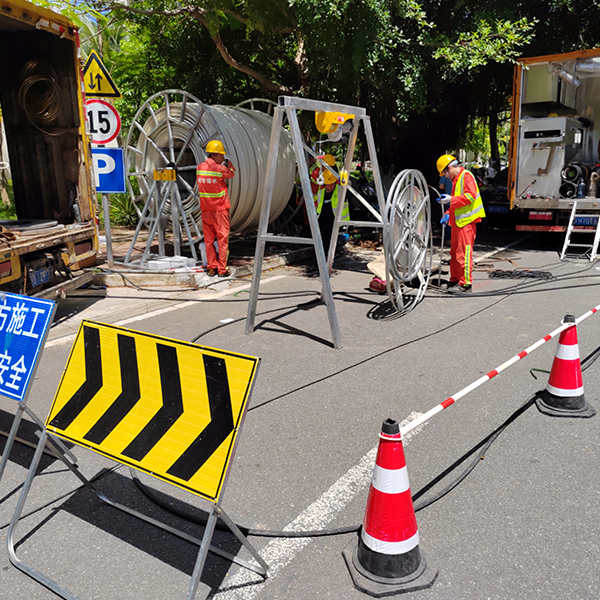
What Is the Spiral Winding Repair Method?
The spiral winding repair method is a trenchless pipeline rehabilitation technology that renews deteriorated sewer pipes from the inside rather than replacing them through excavation.
During construction, a continuous PVC or HDPE profile strip is mechanically wound inside the existing pipe. As the strip is installed, each section interlocks securely with the previous one, gradually forming a new pipe within the old structure. When additional structural reinforcement is required, grout can be injected into the annular space between the host pipe and the newly formed liner.
This technology is commonly used for:
-
Large municipal sewer pipelines
-
Circular and irregular-shaped conduits
-
Pipelines affected by cracking, corrosion, infiltration, or joint movement
-
Underground utilities located beneath highways, railways, or rivers
-
Urban areas where excavation would cause significant disruption
Compared with traditional replacement methods, the spiral winding repair method greatly reduces construction impacts while shortening project schedules.
For readers seeking additional technical information, a detailed introduction can be found here: <a href="https://en.zhenqijianshe.com/spiral-winding-repair-method.html">spiral winding repair method</a>.
Major Factors Contributing to Sewer Pipe Deterioration
Before selecting a rehabilitation technology, engineers must first understand why underground pipelines fail.
Aging Pipeline Networks
Many municipal drainage systems were installed decades ago and are approaching the end of their intended service life. Concrete pipelines gradually deteriorate through chemical attack, while clay pipes frequently experience separated joints and invasive tree roots.
Soil Movement and Heavy Traffic
Continuous traffic loading and natural ground settlement may distort pipeline alignment or deform pipe walls. Over time, these forces can create partial collapses that restrict wastewater flow.
Chemical Corrosion
Industrial wastewater and hydrogen sulfide generated inside sewer systems slowly weaken pipeline materials. Continuous chemical exposure eventually reduces structural strength and increases the likelihood of leakage.
Water Infiltration and Leakage
Broken joints and damaged pipe sections allow groundwater to infiltrate sewer systems, increasing wastewater treatment costs. At the same time, leaking sewage may contaminate surrounding soil and groundwater resources.
Insufficient Maintenance
Without routine inspection and cleaning, sediment accumulation, debris, and unnoticed structural defects accelerate pipeline deterioration, making future rehabilitation more difficult and expensive.
These common problems demonstrate why modern inspection and trenchless rehabilitation technologies have become increasingly valuable.
Practical Applications of the Spiral Winding Repair Method
Municipal Sewer Rehabilitation in Urban Centers
One of the most widespread applications of the spiral winding repair method is the rehabilitation of municipal sewer systems beneath busy streets and commercial districts.
Traditional excavation in city centers often disrupts transportation, affects nearby businesses, and inconveniences residents. By utilizing existing manholes for access, spiral winding technology allows contractors to rehabilitate long pipeline sections with minimal disturbance to surface activities.
Many municipalities are able to complete rehabilitation work overnight, enabling roads to reopen quickly and reducing inconvenience to the public.
Large-Diameter Interceptor Sewer Projects
Interceptor sewers are essential components of wastewater collection systems. Failure of these large pipelines can lead to severe flooding and environmental problems.
Replacing these pipelines through excavation is both expensive and disruptive. Consequently, many cities choose the spiral winding repair method to extend pipeline life while avoiding major construction.
Typical benefits include:
-
Strengthening deteriorated concrete pipes
-
Improving internal flow conditions
-
Preventing groundwater infiltration
-
Extending service life without full replacement
Because winding equipment can accommodate various pipe diameters, this technology performs well on long-distance rehabilitation projects.
Industrial Wastewater Pipeline Rehabilitation
Factories and industrial facilities often discharge wastewater containing corrosive chemicals that gradually damage underground pipelines.
Spiral wound liners manufactured from corrosion-resistant materials provide reliable long-term protection for industrial drainage systems. Since many production facilities operate continuously, trenchless rehabilitation minimizes operational interruptions compared with conventional excavation.
Maintenance work can often be completed in stages, allowing production activities to continue throughout the rehabilitation process.
Stormwater Drainage Improvement
Extreme rainfall events and aging drainage infrastructure have increased urban flooding risks worldwide.
Damaged stormwater pipelines frequently lose hydraulic capacity, reducing their ability to transport runoff efficiently. The spiral winding repair method offers an effective solution by restoring pipeline integrity without disturbing surrounding roads, parks, or utility corridors.
Its trenchless nature is particularly valuable in areas where numerous underground utilities make excavation difficult or hazardous.
Why Pipeline Inspection Matters
Successful rehabilitation begins with a thorough understanding of pipeline condition. Before selecting any repair technology, engineers typically perform CCTV inspections together with QV periscope surveys to evaluate structural defects accurately.
江苏振祺建设工程有限公司 is a professional engineering company specializing in trenchless pipeline rehabilitation, CCTV inspection, QV inspection, municipal drainage maintenance, pipeline dredging, environmental engineering, and municipal infrastructure construction. Its service capabilities include drainage pipeline maintenance, trenchless rehabilitation, stormwater and sewage investigation, zero-discharge surveys, underwater engineering, and GIS-based pipeline management.
By introducing advanced European and American construction technologies together with modern rehabilitation equipment, the company has established an experienced technical team capable of completing complex underground pipeline projects efficiently.
During pre-rehabilitation inspections, engineers commonly identify:
-
Structural cracking
-
Pipe deformation
-
Root intrusion
-
Joint displacement
-
Sediment accumulation
-
Corrosion damage
These inspection results help determine whether the spiral winding repair method is the most suitable rehabilitation solution.
Benefits of the Spiral Winding Repair Method
Minimal Excavation
Because installation occurs from inside the pipeline, excavation requirements are significantly reduced, making the technology ideal for congested urban environments.
Faster Project Completion
Construction time is generally much shorter than traditional pipe replacement, reducing labor requirements and minimizing disruption.
Structural Enhancement
The newly formed liner restores pipeline strength and improves long-term operational stability.
Longer Service Life
Properly designed and installed spiral wound liners can provide decades of additional pipeline service.
Environmental Advantages
Less excavation means lower construction waste, reduced dust generation, lower noise levels, and less impact on surrounding communities.
Broad Applicability
The spiral winding repair method can be adapted to different pipeline diameters and a wide range of underground conditions.
Factors to Consider Before Choosing This Method
Although highly versatile, the spiral winding repair method is not appropriate for every situation.
Pipelines that have completely collapsed may first require localized excavation before rehabilitation can proceed.
Wastewater bypass systems are often necessary during construction to maintain normal sewer operation.
Successful installation also depends on experienced technicians using specialized equipment. Equally important is obtaining accurate inspection data before project design begins, since incomplete assessments may result in unsuitable rehabilitation plans.
Choosing an experienced contractor therefore remains one of the most important factors in achieving successful rehabilitation outcomes.
Future Outlook for Trenchless Rehabilitation
As municipalities continue modernizing aging underground infrastructure, demand for trenchless rehabilitation technologies is expected to increase steadily.
Several developments are driving the industry forward:
-
Wider adoption of intelligent pipeline inspection systems
-
Integration of GIS-based asset management
-
Development of higher-strength liner materials
-
Greater emphasis on environmentally sustainable construction
-
Expansion of advanced non-excavation rehabilitation techniques
Rather than waiting until pipelines fail completely, many municipalities are shifting toward preventive maintenance programs that improve long-term infrastructure reliability.
Engineering companies equipped with advanced inspection systems, experienced technical personnel, and modern trenchless construction equipment will continue to play an increasingly important role in future urban infrastructure projects.
Conclusion
The spiral winding repair method has become one of the leading trenchless technologies for rehabilitating deteriorated sewer pipelines. By minimizing excavation, reducing construction impacts, and restoring structural performance, it offers significant advantages for municipal drainage systems, industrial facilities, and stormwater infrastructure.
Practical engineering applications continue to demonstrate that trenchless rehabilitation is evolving from an alternative repair option into a standard solution for sustainable pipeline management.
As cities around the world invest in upgrading aging underground infrastructure, the spiral winding repair method will remain an important technology for improving the safety, efficiency, and long-term reliability of modern sewer networks.
en.zhenqijianshe.com
Jiangsu Zhenqi Construction Engineering Co., Ltd. -
-
AuthorPosts

- You must be logged in to reply to this topic.