- This topic is empty.
-
AuthorPosts
-
2026-08-07 at 5:04 pm #10086
As plastic components become increasingly complex across industries such as automotive, medical devices, consumer electronics, home appliances, and industrial equipment, manufacturers require joining technologies that provide high-strength, leak-proof, and repeatable welds without compromising production efficiency. Among various plastic joining methods, the Rotary welding machine has become a preferred solution for welding circular and rotationally symmetrical thermoplastic components.
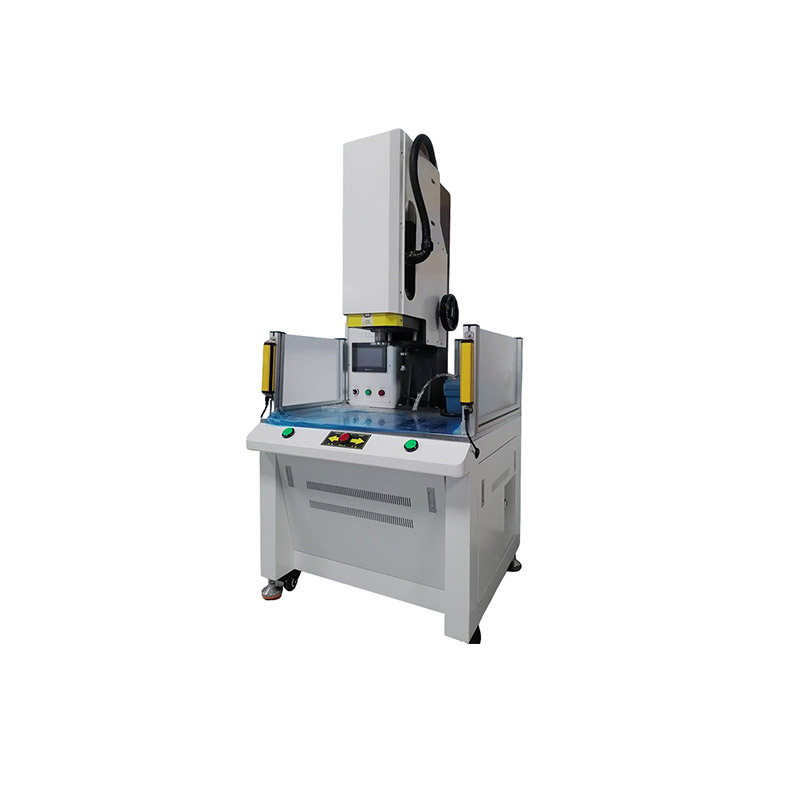
Unlike adhesive bonding or mechanical fastening, rotary welding creates a molecular bond between thermoplastic parts through friction-generated heat. This process produces strong, clean, and reliable welds while eliminating the need for additional consumables. For high-volume production environments, a rotary welding machine delivers consistent weld quality, short cycle times, and excellent process repeatability, making it an important technology for modern plastic manufacturing.
However, achieving reliable rotary welding requires more than simply rotating one component against another. Machine rigidity, rotational speed control, axial pressure, positioning accuracy, and process monitoring all directly influence welding performance. Understanding these engineering factors is essential when selecting equipment for demanding production applications.
How a Rotary Welding Machine Works
A rotary welding machine joins thermoplastic parts by converting mechanical friction into heat. During the welding cycle, one plastic component is rotated at high speed while the mating component remains stationary. Axial pressure is simultaneously applied, generating frictional heat at the contact interface.
Once the material reaches its melting temperature, rotation stops according to the programmed welding parameters. The machine then maintains holding pressure during the cooling stage, allowing the molten plastic to solidify into a permanent molecular bond.
Unlike external heating methods, friction welding concentrates thermal energy only at the joint surface. This localized heating minimizes thermal deformation while maintaining high welding efficiency.
The process is particularly suitable for components with circular geometries, including:
-
Plastic valves
-
Automotive fluid reservoirs
-
Filters
-
Water treatment components
-
Medical containers
-
Sensor housings
-
Fluid connectors
-
Cosmetic packaging
Because the process relies on material fusion rather than adhesives, the finished joint often achieves excellent mechanical strength and sealing performance.
Why Rotary Welding Produces Stronger Plastic Joints
One of the major advantages of a Rotary welding machine is its ability to create true molecular fusion between thermoplastic materials. Instead of depending on mechanical fasteners or chemical adhesives, the welded interface becomes an integrated part of both components.
This provides several engineering benefits.
The welded joint typically exhibits high tensile and torsional strength because the materials fuse together during melting and cooling.
Leak resistance is significantly improved since the continuous weld eliminates many potential leakage paths found in gasket-based assemblies.
Production consistency also improves because the welding process follows precisely controlled parameters rather than operator-dependent assembly techniques.
For products containing liquids or gases, such as automotive cooling components or medical containers, these characteristics are particularly valuable because sealing reliability directly affects product performance and safety.
Critical Process Parameters That Affect Weld Quality
Although rotary welding appears straightforward, several process variables must be carefully controlled to achieve stable results.
Rotational speed determines how quickly frictional heat is generated. Excessively high speed may cause overheating, flash formation, or material degradation. Low rotational speed may generate insufficient heat, leading to incomplete fusion.
Axial welding pressure influences heat generation and molten material flow. Proper pressure ensures adequate friction while maintaining dimensional stability throughout the welding cycle.
Welding time affects the total thermal energy delivered to the joint. Different thermoplastics require different welding durations depending on melting temperature, thermal conductivity, and component geometry.
Cooling pressure is equally important. Maintaining controlled pressure during solidification helps stabilize the molten material and reduces shrinkage-related defects.
Modern rotary welding machines integrate programmable control systems that allow operators to optimize these parameters according to specific material characteristics and product requirements.
Material Compatibility in Rotary Plastic Welding
Rotary welding is primarily designed for thermoplastic materials because they soften when heated and solidify after cooling. Common compatible materials include:
Polypropylene (PP)
Polyethylene (PE)
ABS
Polyamide (PA)
Polycarbonate (PC)
POM
Modified engineering plastics
Each material has unique thermal properties, melt viscosity, and shrinkage characteristics. Therefore, successful welding requires matching machine parameters with material behavior.
For example, polypropylene generally offers excellent weldability because of its stable melting characteristics. Polyamide may require more precise control because moisture content and thermal expansion can influence welding consistency.
Professional equipment suppliers often assist customers in developing optimized welding parameters during sample testing and process validation.
Automation Improves Productivity and Repeatability
Modern manufacturing increasingly demands automated production systems capable of maintaining stable quality while reducing manual intervention.
Today's rotary welding machines can integrate with robotic loading systems, automatic feeding devices, barcode traceability, vision inspection, and production management software.
Automation provides several practical advantages:
Reduced cycle time.
Consistent welding quality.
Lower operator dependence.
Improved production traceability.
Reduced production costs.
For high-volume manufacturing environments, automated rotary welding systems can operate continuously with minimal parameter variation, supporting both productivity and quality objectives.
Process monitoring functions can also record welding pressure, rotational speed, welding time, and cycle status, allowing manufacturers to perform quality analysis and production optimization.
Comparing Rotary Welding with Other Plastic Welding Technologies
Plastic assembly involves several joining technologies, each suitable for different product designs.
Ultrasonic welding offers extremely fast cycle times and is ideal for relatively small plastic components with localized welding areas. However, it may be less suitable for large circular parts requiring continuous sealing.
Hot plate welding provides excellent performance for large components and irregular geometries but generally requires longer heating and cooling cycles.
Rotary welding excels when components have rotational symmetry and require strong, continuous welds with high sealing performance.
Applications involving cylindrical housings, threaded containers, automotive reservoirs, and fluid management components often benefit most from rotary welding because the process naturally creates uniform circumferential welds.
Selecting the appropriate technology depends on product geometry, material type, production volume, sealing requirements, and mechanical performance expectations.
Customized Rotary Welding Solutions for Different Industries
Different industries have different welding requirements. Automotive manufacturers may prioritize production speed and traceability, while medical device manufacturers require extremely stable process control and clean welding conditions.
A professional equipment supplier should therefore provide customized machine configurations rather than standardized equipment alone.
Customization may include:
Servo-controlled rotation systems.
Multiple fixture designs.
Automatic loading and unloading.
Vision positioning systems.
Leak testing integration.
MES communication interfaces.
Product-specific welding programs.
Huacheng integrates technology research, manufacturing, sales, and customized engineering solutions in the plastic welding industry. The company specializes in ultrasonic welding, hot plate welding, rotary plastic welding, and non-standard automation equipment.
In addition to rotary welding machines, Huacheng offers ultrasonic plastic welding systems covering frequencies including 15 kHz, 20 kHz, 28 kHz, 35 kHz, and 40 kHz, along with ultrasonic tooling, hot plate welding equipment, customized molds, equipment maintenance, and plastic welding processing services. This broad technical capability enables the company to recommend the most appropriate welding technology based on customer applications rather than relying on a single process.
Key Factors When Selecting a Rotary Welding Machine
Choosing the right rotary welding machine involves evaluating both machine performance and long-term manufacturing support.
Important technical considerations include:
Machine frame rigid
http://www.sonicweldtech.com
Shenzhen Huacheng Ultrasonic Equipment Co., Ltd. -
-
AuthorPosts

- You must be logged in to reply to this topic.