- This topic is empty.
-
AuthorPosts
-
2026-10-14 at 1:37 pm #12042
Pharmaceutical Process Wastewater Flow: 5 Buyer Checks
Direct answer: In most pharmaceutical plants, an electromagnetic flowmeter can measure process wastewater — but only when the specific stream and the specific meter line up on four technical points: sufficient electrical conductivity in the liquid, chemical compatibility of every wetted part, a flow/velocity and pressure–temperature envelope inside the meter’s documented limits, and a measurement point that stays full of liquid. Suitability is a case-by-case engineering decision, not a product-category claim. It depends on the wastewater’s conductivity, chemical composition, temperature, pressure, solids content, and the selected meter’s documented limits.
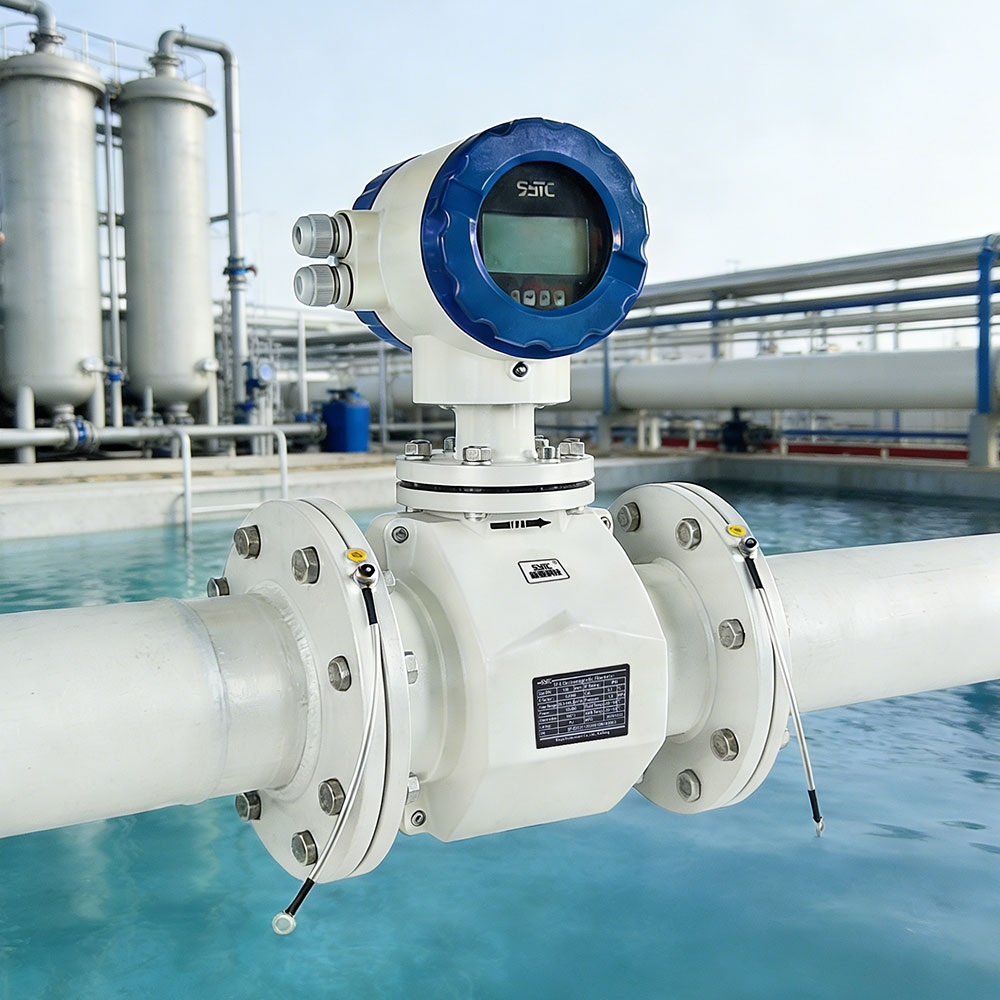
This article deals only with pharmaceutical process wastewater: cleaning rinses, vessel and line rinses, spent process liquors, scrubber blowdown, condensates, and the effluent entering or leaving an on-site treatment train. It does not cover purified water, water for injection, product-contact process lines, or sanitary transfer duties — those are separate measurement and compliance problems with their own requirements.
Why Pharmaceutical Process Wastewater Is Not a Purified Water Line
The two duties are often confused in early project discussions, and the confusion usually appears at the specification stage.
- Purified water and water for injection are low-ionic-strength streams, tightly controlled for microbial and endotoxin quality, and normally handled with hygienic, product-contact instrumentation.
- Pharmaceutical process wastewater is an effluent, not a product. It may be highly conductive (neutralized acid/caustic rinses, brine, salt-laden streams) or comparatively dilute, and it is usually measured for loading balance, treatment control, or effluent accounting rather than for product release.
- Product-contact lines require documented hygienic construction — a different specification problem entirely from effluent measurement.
This distinction matters because the technical fit for wastewater is driven by conductivity, chemistry, solids and hydraulics, while the hygienic question is driven by cleanability, surface finish and materials documentation. Neither answers the other.
Process Variability: The Measurement Point Decides the Answer
Pharmaceutical wastewater composition changes from batch to batch and from stage to stage. Any of the following can shift the conductivity and the chemical load at the same nominal location:
- Cleaning agents — caustic, acidic and detergent-based CIP rinses, often discharged as concentrated slugs followed by dilute flush water.
- Residual chemicals and solvents carried over from reaction or extraction steps, including partially neutralized streams.
- Salts and buffers from media preparation, chromatography and neutralization.
- Suspended solids — filter aid, biomass from biological treatment, precipitates, and neutralized sludge.
- Temperature swings between hot cleaning cycles and ambient effluent.
- Treatment-stage effects — equalization tanks smooth composition but also create low-flow and near-empty conditions; neutralization changes conductivity; biological and membrane stages change solids loading and may entrain air.
A single lab sample taken on one day does not define the design case. The design case is the range of composition at the actual measurement point — and the point should be chosen deliberately, after any equalization or blending that changes the fluid.
Practical implication: state where the meter will be installed (raw effluent header, after equalization, after neutralization, treated-water discharge) and what the fluid is at that point. A meter correctly sized for post-neutralization effluent may be unsuitable for the raw, solids-laden stream upstream of it.
Where Electromagnetic Flowmeters Fit in Wastewater Service
Electromagnetic flowmeters are a well-established choice for conductive-liquid effluent measurement because they are unobstructed and have no moving parts, so solids in the stream do not jam the sensor, and pressure drop stays low. They measure bidirectionally, which suits plants where flow direction changes with batch scheduling.
Xinya manufactures electromagnetic flowmeters, and its documented technology platform is relevant to effluent work:
- Square wave pulse excitation with a variable-frequency, bidirectional constant current drive for the excitation coils, plus an energy-recovery scheme in the excitation circuit — a power-efficiency approach that supports remote or battery-backed installations.
- VFC (voltage-to-frequency conversion) signal processing with high-input-impedance amplification, associated with zero-point stability across changing media.
- Self-diagnosis functions in the documented series: empty-pipe detection, excitation-circuit-break detection, and flow-range overflow alarm — the alarms that matter most when an effluent line runs partially full.
- Documented accuracy options of ±0.5%, ±0.3% and ±0.2% (accuracy depends on model and configuration — confirm for the specific unit).
- Documented velocity range of 0.1 to 10 m/s.
- Size range from DN15 to DN3000.
- Lining and electrode options including polyurethane and PFA for wear resistance, ceramics (documented for DN15–150) and various rubbers — selection depends on the chemical and abrasive profile of the stream.
- Grounding electrodes (1–2, integrated) for lined or non-conductive pipework, which is a common need in effluent lines.
- Ingress protection up to IP68 for the sensor (documented as suitable for burial or operation under water) and IP65/IP66/IP67 for the converter.
- All Xinya flowmeters are factory-calibrated.
Two model families are worth separating in wastewater conversations:
- The slurry / serous series is positioned for liquids with high solid content, using wear-resistant lining materials and a documented "variation restraint" algorithm to suppress the "cuspidal disturb" caused by solid particles striking the electrodes. For effluent streams carrying neutralized sludge, biomass or mineral solids, this is the more relevant starting point.
- The insertion type (documented as SF-C) mounts through a ball valve and mounting base, allowing installation without stopping flow in the pipe, with adjustable insertion depth. For large-diameter effluent headers where a full-bore meter is expensive and disruptive, it is a practical alternative.
A note on conductivity: electromagnetic flowmeters require the liquid to be electrically conductive. The minimum conductivity value must come from the published specification of the exact model — it is not a number to be assumed, and it varies with electrode and lining selection and with the application. Treat it as a model-specific confirmation item, not a general rule of thumb.
Materials and Chemical Compatibility: Confirm, Do Not Assume
Wetted materials in an electromagnetic flowmeter include the lining, the electrodes, the grounding electrodes, the gaskets and the body. Each must be compatible with the full chemical spectrum the meter will see — not only the average composition.
Compatibility is a function of the specific chemical, its concentration, and the temperature at which it appears. A material that performs well against one diluted cleaning agent may behave differently against the concentrated slug at elevated temperature. Compatibility data must be taken from the manufacturer’s compatibility documentation for the exact model and material combination.
Requires model-specific confirmation: lining material, electrode material, gasket material, and the compatibility envelope (chemical, concentration, temperature) for the proposed configuration.
For abrasive solids, the material decision is about wear life rather than chemical attack alone — which is why wear-resistant lining options exist and why the slurry series is positioned that way.
Pipe-Full Condition and Installation
Electromagnetic measurement assumes a full pipe with a known cross-section. In effluent service the failure modes are usually hydraulic:
- Partial fill and gravity drains. Many effluent lines are gravity-fed and rarely full. If the line cannot be kept full at the measurement point, the reading is not trustworthy — consider a different point, a raised and flooded section, or a different technology.
- Air entrainment. Discharge from tanks, drop legs and pump priming introduce air that reads as flow error.
- Siphoning and backflow. Confirm the flow profile in both directions if the plant can reverse flow.
- Straight-run requirements and orientation. Follow the manufacturer’s documented upstream/downstream straight-run and electrode-plane orientation requirements.
- Grounding. Lined or non-conductive pipework needs proper grounding; integrated grounding electrodes are documented in the relevant series.
- Flange standard. Xinya documents compliance with the GB/T9124.1-2019 steel pipe flange standard, with custom engineering for customer-specified flange standards — confirm the standard your plant uses.
- Environment. Confirm whether the sensor may be submerged (IP68 documented for sensors) and what protection the converter location requires.
Cleaning, Maintenance, and Fouling in Wastewater Duty
Wastewater is generally not a product-contact duty, so hygienic clean-in-place requirements are usually lighter than on pharmaceutical process lines. That does not make maintenance optional. Electrode coating, lining scale, and solids settlement all degrade accuracy over time.
Plan for periodic inspection and cleaning, verify the zero point after cleaning, and use the meter’s own diagnostics — empty-pipe, excitation-break and over-range alarms — as early indicators of a hydraulic or electrical problem. Xinya documents a 10-minute preheating and operational guidance step and factory-calibrated replacement circuit boards, which allows board-level replacement without sending the whole unit away and without loss of accuracy.
If your site does apply a cleaning regime, confirm the cleaning chemistry against the wetted materials first.
Outputs, Data, and Integration
Effluent measurement generates value only when the data reaches the people running the plant. The documented Xinya platform capability set includes:
- Analog and pulse outputs: 4–20 mA, pulse, and frequency signals, available simultaneously — suitable for PLC, DCS, and local counters.
- Serial and fieldbus protocols: RS485, RS232, and HART; MODBUS-RTU protocol compliance is documented for integration work.
- Wireless: GPRS, Bluetooth, and WiFi (STA/AP modes) for connection to the Instrument IoT Big Data Platform.
- Open integration: RESTful API support via HTTP GET/POST with JSON payloads for third-party systems.
- Data retention: internal logging of forward, reverse and net flow accumulation covering 120 months of monthly totals — relevant where communication interruptions would otherwise lose records.
- Access control: multi-level password protection across six security grades for parameter configuration and data access.
Boundary: none of the above means the meter is approved for regulatory reporting. Permit, discharge-trade, and pharmacovigilance reporting obligations are defined by the applicable regulator and by your quality system, and they require separate documentation — including calibration traceability and record-retention evidence. Verify those requirements with your compliance group before specifying the instrument as a reporting source.
What an Electromagnetic Flowmeter Does Not Automatically Cover
This is the part buyers most often get wrong. An industrial electromagnetic flowmeter is not:
- automatically sanitary-certified;
- automatically pharmaceutical-compliant;
- automatically suitable for product contact;
- automatically approved for regulated reporting.
Each of those is a separate requirement with its own documentation trail — material certificates, surface finish and cleanability evidence, validation support, calibration certificates, and traceability. If a stream is genuinely product-contact or hygienic, that is a different meter class with a different specification process.
Xinya’s product documentation describes an SF-W Food Safety Electromagnetic Flowmeter with a sanitary design for hygienic duties in food, beverage and pharmaceutical applications, where materials and construction are documented as complying with food safety standards and the design avoids fluid stagnation. Documented hygienic specifications apply to that model and that class of duty. For pharmaceutical process wastewater, the sanitary model is usually unnecessary — effluent is not a product-contact stream — but the distinction must be made deliberately rather than by default. Where a hygienic specification is claimed, it must be tied to the model’s own documentation.
Buyer Checklist: Five Things to Verify Before You Specify
Work through these in order; each one can change the meter you need.
1. Fluid and conductivity at the measurement point
- Full chemical spectrum, including cleaning agents, residual solvents, salts and neutralization products.
- Minimum and maximum conductivity expected across the batch cycle.
- Minimum conductivity requirement confirmed against the exact model’s published specification.
2. Materials and compatibility
- Lining, electrode, grounding electrode and gasket selection against the compatibility envelope (chemical, concentration, temperature).
- Abrasion profile where solids are present, and the resulting lining choice.
3. Process envelope
- Minimum, normal and maximum flow rate; pipe size; required velocity within the documented 0.1–10 m/s range.
- Minimum and maximum temperature and pressure at the meter.
- Solids content, particle size and abrasiveness.
4. Hydraulics and installation
- Can the pipe be kept full at the measurement point — always, or only sometimes?
- Air entrainment risk; flow direction changes; siphoning.
- Straight-run availability, orientation, grounding, flange standard, and whether flow can be stopped for installation (or whether an insertion-type meter is required).
- Environment: submersion, ambient temperature, converter location.
5. Cleaning, integration and documentation
- Cleaning method and frequency; chemistry compatibility.
- Outputs required (4–20 mA, pulse, frequency), protocol (MODBUS-RTU, HART, RS485), and whether cloud or SCADA integration is needed.
- Required documentation: calibration certificate, material certificates, data-retention expectations, and any quality-system validation input.
- Spare parts and board-replacement strategy.
FAQs
1. Can an electromagnetic flowmeter measure pharmaceutical process wastewater?
Yes, in most cases — provided the wastewater at the actual measurement point is conductive enough for the selected model, every wetted material is compatible with the full chemical spectrum, and the flow, temperature and pressure stay inside the meter’s documented limits. It is not an automatic answer; it is an engineering confirmation against a specific model’s specification.2. Does pharmaceutical wastewater need a sanitary flowmeter?
Usually not. Wastewater is an effluent rather than a product-contact stream, so hygienic construction is generally not required. Sanitary models such as Xinya’s SF-W Food Safety Electromagnetic Flowmeter are positioned for hygienic duties in food, beverage and pharmaceutical applications where the fluid contacts product or product-contact surfaces. Confirm the classification with your quality unit — it is a compliance decision, not a purchasing preference.3. Will suspended solids in the effluent affect measurement?
Solids do not block an electromagnetic flowmeter, since there is nothing in the bore to obstruct. What solids do affect is electrode signal quality and lining wear. For solids-laden streams, the slurry-oriented series with wear-resistant linings and the documented "variation restraint" algorithm for suppressing spike disturbance is the relevant starting point. Expect to confirm lining choice against the actual particle size and abrasiveness.4. What conductivity does the wastewater need?
Electromagnetic flowmeters require a conductive liquid, but the minimum conductivity value for a given application depends on the model, electrode and lining selection, and the installed conditions. Take the number from the published specification of the exact model you intend to buy rather than assuming a figure — and confirm it against your measured minimum, not your average.
Information to Provide Before Requesting a Quotation
Send the following and Xinya can quote against your actual duty rather than a generic size:
- Fluid description — the wastewater stream, its origin, and the exact measurement point (raw effluent, post-equalization, post-neutralization, treated discharge).
- Chemical composition — main constituents, cleaning agents, concentration ranges, and pH range.
- Conductivity range — minimum and maximum expected, with the method of determination (lab analysis or in-line measurement).
- Solids — concentration, particle size, and abrasiveness in practice.
- Temperature and pressure — minimum, normal and maximum at the meter.
- Flow data — minimum, normal and maximum volumetric flow; pipe diameter; required measurement accuracy.
- Pipe and installation details — pipe material, flange standard and size, orientation, straight-run availability, and whether the line can be drained or isolated.
- Environment — indoor/outdoor, submersion risk, ambient temperature, area classification if any.
- Cleaning regime — method, chemistry and frequency.
- Outputs and integration — required signals, protocols, power availability, and whether data must reach SCADA, the IoT platform, or a third-party system.
- Documentation requirements — calibration certificate, material certificates, and any quality-system validation inputs your site requires.
- Regulatory context — whether the meter will feed permit reporting, and what record-retention evidence the regulator expects.
Providing items 1–6 is usually enough to scope a technical proposal; items 7–12 determine the final configuration and any custom engineering.
Contact
Kaifeng XinYa Instrument Co., Ltd.
No.1, Ba Qing Wu Road, Jinming Avenue, South Section, Kaifeng Demonstration Area, Henan, China
Email: xinya@sytcflowmeter.com
WhatsApp: (86) 15137867592Technical details marked as requiring model-specific confirmation in this article should be verified against the current datasheet for the selected model before specification.
https://www.sytcflowmeter.com/
Kaifeng Xinya Instrument Co., Ltd. -
AuthorPosts

- You must be logged in to reply to this topic.