- This topic is empty.
-
AuthorPosts
-
2026-04-17 at 2:51 pm #7510
In modern smart devices, robotics, and industrial control systems, magnetic sensors play a critical role in detecting magnetic fields, determining orientation, and enabling precise navigation.
However, many system failures—such as navigation drift, signal instability, or inaccurate positioning—are not caused by algorithms or software bugs, but by incorrect magnetic sensor selection.
Choosing the right sensor is not about selecting the highest specification. It is about matching the sensor to the actual application environment.
Why Magnetic Sensor Selection Is Often Misunderstood
A common mistake in engineering teams is assuming:
Higher precision = better performance
In reality, over-specifying a sensor often leads to:
Unnecessary system complexity
Higher development cost
Integration difficulties
Reduced stability in real-world conditions
The key principle is simple: application fit matters more than maximum specification.
Step 1: Start With the Application Scenario
Before looking at datasheets, you should clearly define how the sensor will be used.
Ask two essential questions:
1. What is the measurement environment?
Different environments require different sensing capabilities:
Geomagnetic navigation (compass systems, drones)
Vehicle detection (traffic monitoring, access control)
Industrial positioning systems
Medical or scientific magnetic field measurement
Each scenario has completely different sensitivity and stability requirements.
2. What level of accuracy is required?
Not all applications need ultra-high precision.
For example:
Standard positioning → moderate resolution is sufficient
High-precision geomagnetic research → ultra-low magnetic field detection required
Motion tracking → stable directional output is more important than absolute precision
A clear requirement definition can eliminate most unsuitable options early.
Step 2: Understand Analog vs Digital Magnetic Sensors
One of the most important decisions is choosing between analog and digital sensor types.
Analog Magnetic Sensors
Analog sensors (such as Wheatstone bridge-based designs) output raw voltage signals corresponding to magnetic field changes.
Key advantages:
High signal stability
Flexible signal processing
Suitable for custom system design
Cost-effective for embedded applications
Typical use cases:
Industrial control systems
Custom R&D platforms
Low-level signal processing systems
Digital Magnetic Sensors
Digital magnetic sensors integrate internal processing and output ready-to-use digital data.
Key advantages:
Direct X/Y/Z axis output
Easier system integration
Faster development cycles
Reduced external processing requirements
Typical use cases:
Drone navigation systems
Marine compass systems
Robotics and autonomous devices
Digital sensors are especially useful when rapid deployment is required.
Step 3: Match Sensor Type to Application Scenario
A more practical selection method is scenario-based matching.
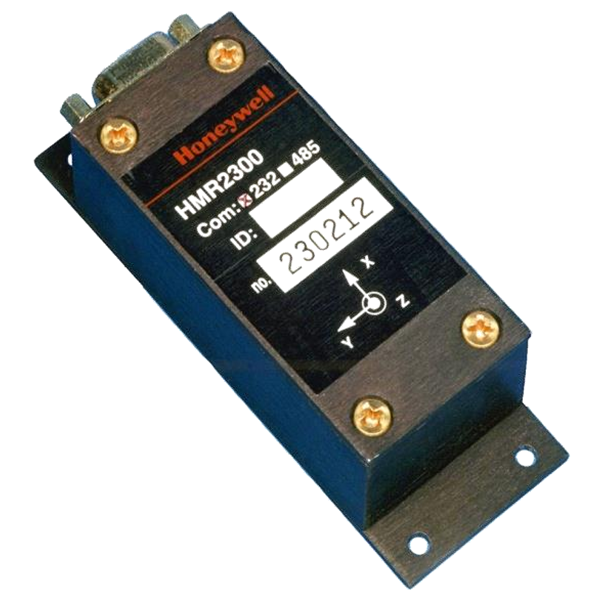
1. Navigation and Attitude Control Systems
Examples:
Drones
Robots
Compass-based navigation systems
Key requirements:
High sensitivity
Stable 3-axis detection
Low drift performance
These applications require consistent geomagnetic tracking rather than raw signal complexity.
2. Traffic and Proximity Detection Systems
Examples:
Vehicle detection systems
Access control systems
Parking monitoring
Key requirements:
Stability under environmental interference
Reliable detection of magnetic disturbance
Long-term operational consistency
In these systems, robustness is more important than ultra-high resolution.
3. Scientific and High-Precision Measurement
Examples:
Geomagnetic research
Laboratory instrumentation
Medical equipment
Key requirements:
Extremely high sensitivity
Low noise output
High resolution signal detection
These applications demand sensors capable of detecting very weak magnetic fields with precision and stability.
Step 4: Don’t Ignore System Integration Requirements
Even a high-performance sensor can fail if it does not integrate properly into the system.
Important integration factors include:
Communication interface compatibility
Sampling rate requirements
Power consumption constraints
PCB layout and shielding design
Signal processing capability
A good sensor choice always considers the entire system architecture, not just the component itself.
Step 5: Supplier Capability Matters More Than Expected
In real-world engineering, long-term performance depends not only on the sensor itself, but also on:
Supply stability
Technical documentation quality
Application support
Consistency across batches
Reliable suppliers help reduce engineering risk and shorten development cycles.
Common Mistakes in Magnetic Sensor Selection
Many projects fail due to avoidable mistakes:
Choosing the highest sensitivity without need
Ignoring environmental interference
Overlooking integration constraints
Focusing only on datasheet numbers
Underestimating system-level design requirements
Avoiding these mistakes can significantly improve system reliability.
Final Thoughts
Magnetic sensor selection is not a specification competition—it is a system design decision.
The correct approach is:
Define the application → Understand requirements → Match sensor type → Validate system integration
When sensors are selected based on real-world conditions rather than theoretical performance, systems become more stable, accurate, and cost-efficient.
In modern engineering, the best sensor is not the most advanced one—it is the one that fits the application perfectly.
http://www.bingyinelec.com
Bingyin Electronics -
AuthorPosts

- You must be logged in to reply to this topic.