- This topic is empty.
-
AuthorPosts
-
2026-10-12 at 6:15 pm #11988
Solid tungsten carbide rods are widely used in modern manufacturing because they combine exceptional hardness, wear resistance, compressive strength, and dimensional stability. These properties make them an important material for producing high-performance cutting tools, precision components, dies, punches, and wear-resistant parts.
From CNC machining and woodworking to electronics, automotive, aerospace, mining, and other demanding industries, solid carbide rods provide a reliable foundation for applications where conventional tool materials may experience excessive wear or deformation.
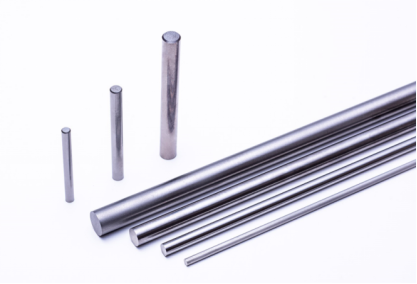
What Are Solid Tungsten Carbide Rods?
Solid tungsten carbide rods, also known as carbide round bars or cemented carbide rods, are typically manufactured from tungsten carbide powder combined with a metallic binder such as cobalt. The mixture is formed and sintered into a dense material and then precision-ground to achieve the required diameter, straightness, and surface quality.
The performance of a carbide rod depends on several factors, including tungsten carbide grain size, binder content, density, hardness, transverse rupture strength, and manufacturing quality.
Fine-grain and ultrafine-grain carbide grades are often selected for precision cutting tools because they can provide high hardness, wear resistance, and cutting-edge stability. Tougher grades may be preferred for applications involving impact, vibration, or intermittent cutting.
This balance between hardness and toughness is one of the most important considerations when selecting a solid carbide rod for a particular application.
Why Are Solid Carbide Rods Important in Industry?
The popularity of solid tungsten carbide comes from its combination of mechanical and wear-resistant properties.
Its high hardness allows it to resist abrasive wear, while its high compressive strength helps it withstand substantial mechanical loads. Carbide also has a high elastic modulus compared with many conventional tool steels, which provides excellent rigidity during machining.
High rigidity is particularly valuable when manufacturing small-diameter tools, deep-hole machining tools, and precision cutting tools. Reduced tool deflection can contribute to improved dimensional accuracy and more stable machining performance.
For manufacturers, these properties can translate into longer tool life, more consistent dimensions, improved surface quality, and reduced tool replacement frequency when the appropriate carbide grade is selected.
Solid Tungsten Carbide Rods for Cutting Tools
One of the largest applications of solid carbide rods is the production of precision cutting tools.
Carbide rods can be ground into a wide range of tool geometries, including:
-
Solid carbide end mills
-
Carbide drills
-
Reamers
-
Engraving tools
-
Countersinks
-
Taps
-
Micro-cutting tools
-
Specialized milling cutters
The carbide rod serves as the material foundation of the finished tool. During manufacturing, the blank is ground into the required diameter, flute geometry, cutting edge, and overall tool profile.
The final tool design must be matched to the workpiece material, cutting speed, feed rate, depth of cut, tool diameter, and machining conditions. A suitable carbide grade is equally important because maximum hardness does not always produce the best tool performance.
Carbide Rods for CNC End Mills
End mills are among the most common tools manufactured from solid tungsten carbide rods. They are widely used in CNC milling for slotting, profiling, pocketing, contouring, shoulder milling, and other precision machining operations.
Solid carbide provides end mills with a rigid structure and excellent resistance to abrasive wear. This makes carbide end mills suitable for high-speed and high-precision machining applications.
Fine-grain carbide is particularly useful for small-diameter end mills because the material can provide a practical combination of hardness, toughness, and edge stability.
For tool manufacturers, the quality of the original carbide blank is extremely important. Diameter tolerance, straightness, grain consistency, internal material structure, and grinding quality can all influence the performance of the finished end mill.
Carbide Rods for Drills and Reamers
Solid tungsten carbide rods are also commonly used to manufacture carbide drills and reamers.
Drilling creates demanding operating conditions because the cutting edges are exposed to friction, heat, mechanical loading, and chip evacuation challenges. Carbide drills are therefore widely used in automated CNC machining and precision manufacturing where productivity and hole quality are important.
Solid carbide reamers can be used for finishing holes where dimensional accuracy and surface quality are critical. Their rigidity and wear resistance can help maintain consistent hole geometry during longer production runs.
For deep-hole drilling and high-speed applications, coolant-hole carbide rods are also available. Internal coolant channels allow cutting fluid to reach the cutting area more efficiently, supporting chip evacuation and thermal management.
Applications in PCB and Electronics Manufacturing
The electronics industry requires extremely small and precise tools for producing miniature holes and complex features. Solid tungsten carbide is well suited to this field because of its combination of stiffness, hardness, and dimensional stability.
Micro drills for printed circuit boards are commonly produced using fine-grain or ultrafine-grain carbide. A fine grain structure can help support sharp and stable cutting edges at very small tool diameters.
Carbide rods can also be used to manufacture miniature end mills, micro reamers, engraving tools, and other specialized tools for electronics and precision components.
In micro-machining, small variations in straightness, diameter, grain consistency, or surface quality can have a significant impact on the final tool. As a result, high-quality carbide blanks are essential for reliable micro-tool manufacturing.
Solid Carbide Rods for Woodworking and Composite Materials
The applications of tungsten carbide are not limited to metal cutting.
Carbide tools are widely used in woodworking and in the processing of engineered wood, laminates, plastics, and composite materials. Materials such as MDF, particleboard, laminated panels, and composite boards can be highly abrasive and may cause rapid wear to conventional cutting materials.
Solid carbide rods can be processed into router bits, milling cutters, drills, engraving tools, and other woodworking tools.
The wear resistance of carbide is particularly useful in automated woodworking operations where tools may operate continuously for long production cycles. Maintaining the cutting geometry for longer periods can contribute to consistent processing quality and reduced tool changes.
Carbide Rods for Dies and Punches
Solid tungsten carbide rods can also be processed into punches, forming components, die elements, and other precision tooling parts.
Stamping, cold heading, wire drawing, and forming operations subject tooling to repeated compressive forces and friction. A properly selected cemented carbide grade can provide strong resistance to abrasive wear and deformation.
Carbide punches and die components are particularly useful when dimensional stability is critical. Maintaining the geometry of the tooling can help improve production consistency and reduce the need for frequent replacement.
The appropriate grade should be selected according to the forming material, mechanical loading, impact conditions, required service life, and manufacturing process.
Tungsten Carbide for Wear-Resistant Components
The exceptional hardness of tungsten carbide makes it suitable for components exposed to continuous friction, abrasion, or contact with hard materials.
Depending on the carbide grade and component design, solid carbide can be used for:
-
Wear-resistant sleeves
-
Bushings
-
Guide components
-
Pins
-
Nozzles
-
Wear inserts
-
Precision contact components
-
Abrasion-resistant mechanical parts
In these applications, carbide is not necessarily used as a cutting edge. Instead, the material is selected because it can maintain its dimensions under repeated contact and abrasive conditions.
For example, carbide guides and bushings can be used in equipment where repeated movement would cause conventional materials to wear quickly. Carbide wear components can also help protect critical areas of industrial machinery exposed to abrasive materials.
Applications in Mining and Drilling
Tungsten carbide has been widely used in mining, drilling, geological exploration, and rock-processing applications because of its resistance to severe abrasion.
Carbide components used in these industries include cutting teeth, buttons, inserts, and other wear-resistant elements.
Mining and drilling applications often involve a combination of abrasion, impact, vibration, and high mechanical loading. Therefore, the carbide grade must provide an appropriate balance between hardness and toughness.
Although the specific carbide products used in mining may differ in shape and composition from the solid rods used for precision cutting tools, the fundamental advantage remains the same: tungsten carbide provides a hard and wear-resistant working surface capable of operating in demanding conditions.
Solid Carbide Rods in Automotive Manufacturing
Automotive manufacturing involves extensive CNC machining of components made from materials such as cast iron, hardened steel, aluminum alloys, and other engineering materials.
Solid tungsten carbide rods are used to manufacture many of the cutting tools required for these operations, including milling cutters, drills, reamers, and specialized tools.
Engine components, transmission parts, brake components, steering parts, molds, and other automotive products often require tight dimensional tolerances and stable production processes.
Carbide cutting tools can support high-volume manufacturing by providing wear resistance and maintaining cutting geometry over extended production cycles. The specific carbide grade and tool geometry should be selected according to the workpiece material and machining conditions.
Aerospace Machining and Difficult-to-Machine Materials
Aerospace manufacturing presents particularly demanding machining conditions because many components are produced from high-strength and difficult-to-machine materials.
Titanium alloys, nickel-based superalloys, stainless steels, and high-strength aluminum alloys can generate significant heat, cutting forces, and tool wear.
Solid tungsten carbide rods provide a strong material foundation for producing precision drills, end mills, reamers, and specialized aerospace cutting tools.
Carbide's high rigidity can help control tool deflection, while its hardness and wear resistance can support stable cutting-edge performance. However, tool geometry, coating, cutting parameters, coolant strategy, and carbide grade must all be considered together for demanding aerospace applications.
Medical and Dental Tool Manufacturing
Medical and dental manufacturing requires precision, dimensional consistency, and reliable tool performance.
Fine-grain solid carbide rods can be used to produce small cutting tools for machining miniature components and specialized instruments. Their hardness and stiffness are particularly useful when manufacturing tools with very small diameters.
For micro-scale tooling, the quality of the carbide blank becomes increasingly important. Consistent material properties, accurate grinding, straightness, and surface quality can help tool manufacturers achieve precise finished geometries.
How Carbide Grade Influences Performance
Not all tungsten carbide rods are manufactured to the same specifications. Different grades are designed to provide different combinations of hardness, toughness, wear resistance, and strength.
Generally, finer carbide grain structures can support high hardness and wear resistance, making them attractive for precision cutting and micro-tool applications.
Applications inv
https://www.diatooling.com
Shanghai Diatooling -
-
AuthorPosts

- You must be logged in to reply to this topic.