- This topic is empty.
-
AuthorPosts
-
2026-09-07 at 2:57 pm #11037
Comparing electromagnetic flow meter quotations is rarely as simple as looking at a single price tag. Because these instruments are engineered products, differences in accuracy class, materials, protection ratings, communication options, and service scope can significantly affect both upfront cost and long-term performance. Understanding the technical and commercial variables behind a quotation is the first step toward making an informed procurement decision.
Understanding What Drives Electromagnetic Flow Meter Pricing
Electromagnetic flow meter pricing is rarely a flat number. According to industry practice reflected by manufacturers such as Kaifeng XinYa Instrument Co., Ltd., pricing approaches are typically based on custom quoting tied to nominal diameter (DN size), material selection for electrodes and lining, and communication requirements. This means two quotations for what appears to be "the same meter" can differ substantially depending on the pipe size specified, the wetted materials chosen, and whether wireless or wired communication modules are included. Buyers comparing quotations should therefore request a breakdown of these three cost drivers before making a side-by-side comparison.
Key Technical Specifications to Compare in Any Quotation
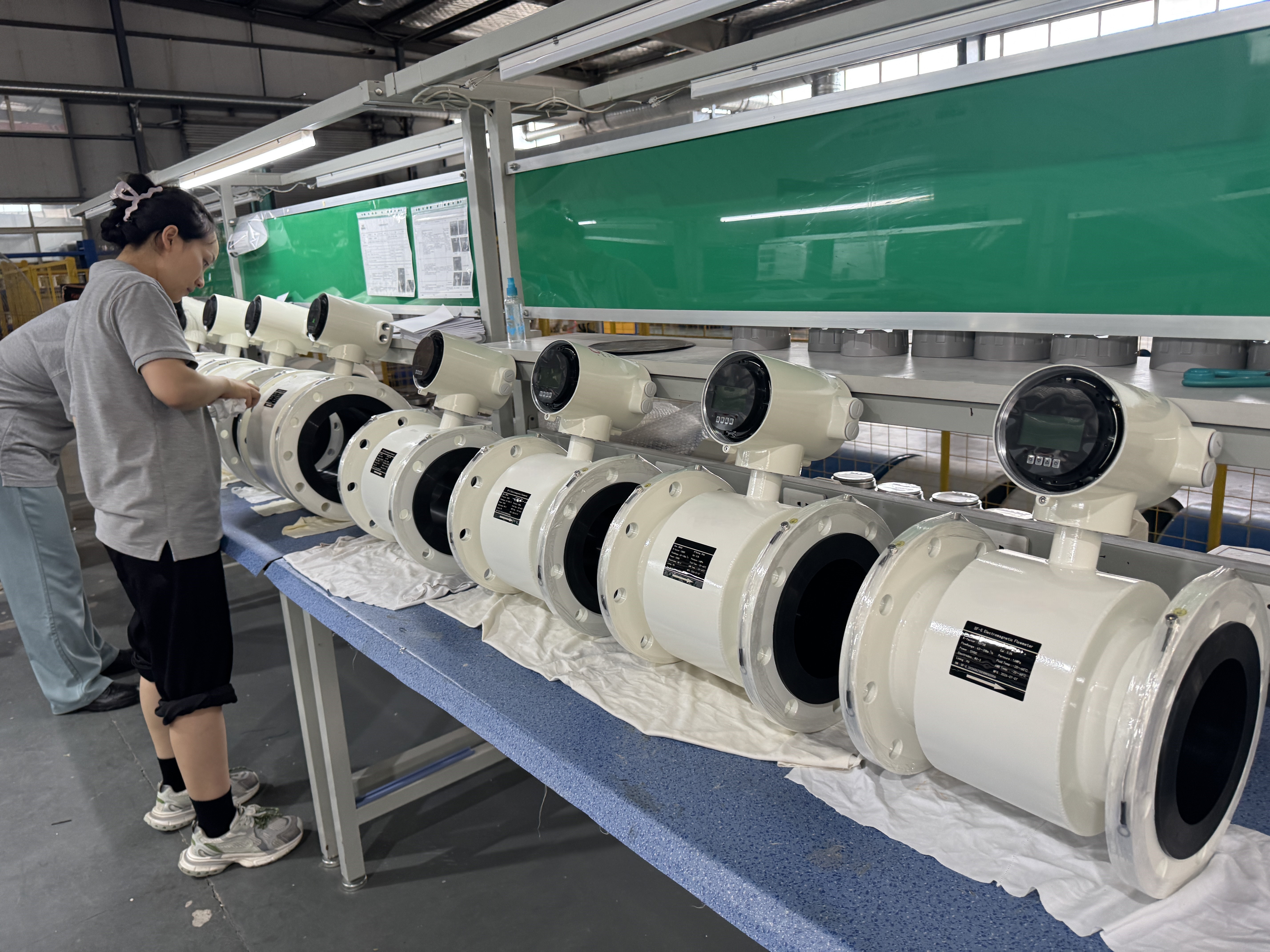
Measurement Accuracy Options
Accuracy class is one of the clearest differentiators in a quotation. Electromagnetic flow meters are commonly offered with accuracy options such as ±0.5%, ±0.3%, and ±0.2%. A quotation that specifies a tighter accuracy class, such as ±0.2% achievable under optimized conditions, generally reflects more refined electronics and calibration, which can justify a price difference when critical process measurement is required.
Velocity Range and Signal Processing
Buyers should also check the stated velocity measurement range, typically expressed as 0.1 to 10 m/s, and the underlying signal processing method. Meters using high-performance VFC (Voltage-to-Frequency Conversion) technology combined with high-input-impedance amplification are designed to maintain zero-point stability and measurement accuracy across diverse conductive media, which is particularly relevant when comparing meters intended for use in electrically noisy industrial environments.
Excitation Technology
Excitation method is another line item worth scrutinizing. Square wave pulse excitation is used to improve power efficiency, while variable frequency, bidirectional constant current drive systems for excitation coils represent a more advanced engineering approach. Some designs incorporate an energy recovery system in excitation circuits to reduce power consumption during magnetic field reversal, a feature that can influence long-term operating costs, especially for battery-powered installations.
Material and Construction Considerations
Lining and Electrode Materials for Abrasive Media
For applications involving slurry, pulp, coal-water slurry, or mineral tailings, material selection becomes a major cost and performance factor. Wear-resistant materials such as Polyurethane and PFA are used to extend service life in abrasive slurry applications, and lining options may include Ceramics for DN15-150 ranges along with various rubber linings to adapt to chemical corrosiveness and physical abrasion. Quotations for slurry service should also specify whether grounding electrodes (typically one to two units) are integrated to eliminate interference in non-conductive or lined pipes, and whether the design employs a variation restraint algorithm to suppress "cuspidal disturb" caused by solid-grain friction.
Protection Ratings for Sensors and Converters
Ingress protection ratings directly affect where a meter can be installed. Sensor units are commonly rated IP68, allowing for submerged or buried installation, while converter units carry IP65, IP66, or IP67 ratings depending on the mounting environment. A quotation should clearly state which protection rating applies to which component, since a mismatch between sensor and converter protection levels can limit installation flexibility.
Certification and Compliance Checklist
Compliance documentation is a practical way to compare quotation credibility. Relevant standards to look for include JB/T9248-2015 for electromagnetic flowmeters, GB/T9124.1-2019 for steel pipe flanges, CJ128-2007 for heat measurement calculations where applicable, and MODBUS-RTU protocol compliance for communication compatibility. A quotation referencing these standards indicates that the product has been engineered to recognized technical benchmarks.
Deployment and Communication Options
Communication compatibility can significantly affect integration costs. Buyers should compare whether a quoted meter supports RS485, RS232, HART, GPRS, Bluetooth, or WiFi in STA/AP modes, and whether the deployment model is Integral or Split Type. For sites without electrical infrastructure, battery-powered options with internal high-capacity batteries and sleep-mode LCD shutdown for power conservation should be evaluated against wired alternatives. Quotations should also note whether the meter connects to a broader "Instrument IoT Big Data Platform" for centralized device management and real-time analytics, or whether it operates purely as a standalone, on-premises device with local converter display and RS485 wiring.
Data Capabilities and IoT Integration
Data retention and processing capability influence long-term usability. A useful comparison point is internal data logging capacity, such as support for 120 months of forward, reverse, and net flow accumulation. Quotations should also specify signal output types, since real-time conversion of induced electromotive force into standard 4-20mA, pulse, and frequency signals allows compatibility with PLC, DCS, and local counter systems. For platforms offering remote access, checking for RESTful API support via HTTP GET/POST requests and JSON data format is important for third-party system integration, along with multi-level password protection—commonly offered in six security grades—for parameter configuration and data access.
Service and After-Sales Support
Service scope is often overlooked in price comparisons but affects total value. Comparable quotations should specify whether they include pre-installation inspection, custom engineering for flange standards, remote monitoring setup, and maintenance training. After-sales elements worth confirming include operational guidance such as a 10-minute preheating procedure, troubleshooting support for excitation and empty-pipe alarms, and the availability of factory-calibrated replacement circuit boards with zero accuracy loss.
Pricing Structure Explained
Billing models also vary. Some providers offer a perpetual license structure covering the hardware purchase combined with IoT platform access, rather than a purely transactional hardware sale. When comparing quotations, buyers should clarify whether platform access, cloud monitoring, and data analytics are bundled into the hardware price or billed separately, as this affects the true cost of ownership over time.
How Kaifeng XinYa Instrument Co., Ltd. Supports Informed Comparisons
Kaifeng XinYa Instrument Co., Ltd., headquartered in the Kaifeng Demonstration Area of Henan, China, positions itself as a provider of high-stability electromagnetic flow measurement systems integrated with IoT big data platforms for industrial, municipal, and food safety applications. Its product matrix—including the SF-E Electromagnetic Flowmeter, Battery-Powered/Wireless Remote Flowmeter, Slurry/Serous Electromagnetic Flowmeter, SF-C Insertion Electromagnetic Flowmeter, and SF-W Food Safety Electromagnetic Flowmeter—reflects the same evaluation criteria outlined above: accuracy class, material selection, protection rating, communication compatibility, and IoT integration. By offering custom quoting based on nominal diameter, material, and communication requirements, along with transparent technical documentation covering standards compliance and self-diagnosis features such as empty-pipe detection and excitation circuit break alerts, the company provides a practical reference point for buyers seeking to structure their own quotation comparisons around measurable, verifiable technical criteria rather than price alone.
In summary, a sound comparison of electromagnetic flow meter quotations requires evaluating accuracy class, excitation technology, material durability, protection ratings, certification compliance, communication and data capabilities, and after-sales service scope together—rather than isolating price as the sole decision factor. Buyers who request itemized technical breakdowns aligned with these categories are better positioned to identify which quotation delivers appropriate value for their specific application, whether that involves standard industrial fluids, abrasive slurries, remote unpowered locations, or hygienic food-grade processing.
https://www.sytcflowmeter.com/
Kaifeng Xinya Instrument Co., Ltd. -
AuthorPosts

- You must be logged in to reply to this topic.