- This topic is empty.
-
AuthorPosts
-
2026-10-08 at 10:00 am #11816
Industry Background and the Challenge of Sourcing JST-Compatible Connectors
JST connector series are among the most widely specified connector families in electronics manufacturing globally. From compact SH1.0 and GH1.25 configurations used in networking and medical equipment, to PH2.0, XH2.5, and VH3.96 families deployed across consumer electronics and industrial automation, JST-designated part numbers appear in bills of materials across nearly every electronics segment. Yet sourcing reliable JST-compatible connectors from qualified suppliers remains a persistent operational challenge.
The core pain points are well-established: connector users require dependable connections in harsh environments including high and low temperatures, humidity, vibration, and coastal or cold climates, while simultaneously managing long delivery cycles, quality traceability demands, imported part availability constraints, and application scenarios where standard connectors cannot be used. For procurement teams, supply chain managers, and product engineers who specify JST-compatible parts across segments as diverse as new energy storage, power tools, industrial automation, and medical devices, supplier selection carries substantial downstream risk.
What separates a qualified JST connector supplier from an unqualified one spans multiple dimensions: technical breadth, manufacturing depth, quality infrastructure, delivery performance, and long-term development partnership capability.
Key Criteria for Evaluating a JST Connector Supplier
Cross-Reference Breadth and Dimensional Accuracy
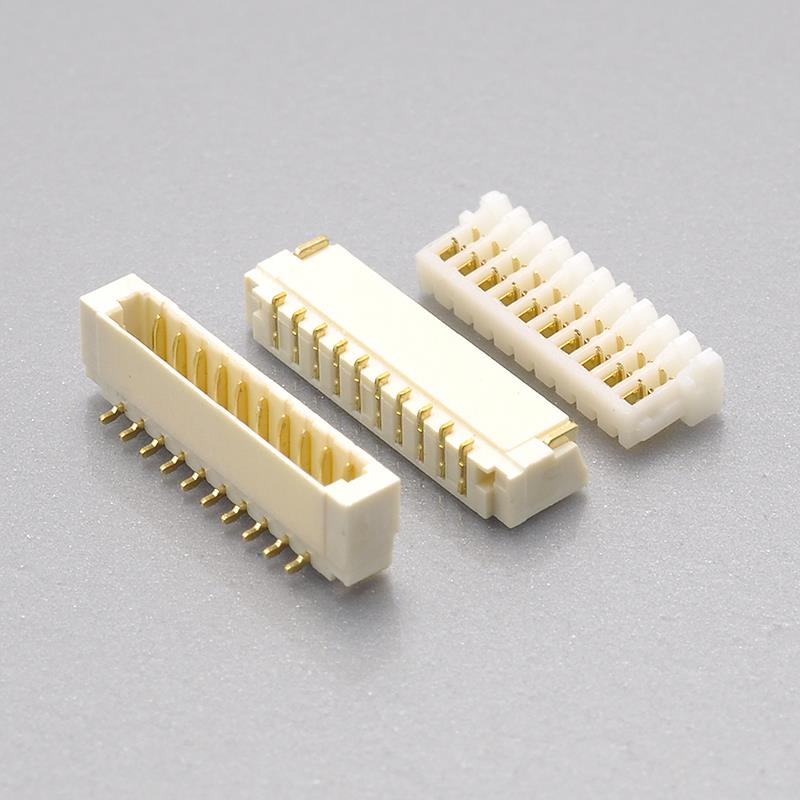
A qualified supplier should maintain verified cross-references across the full spectrum of JST series relevant to a buyer’s applications—including SH, GH, PH, PHD, XA, ZH, XH, SAN, SM, SCN, SYP, VH, SDN, BH, SZN, ZM, SUR, and ACH families—with confirmed alignment on pitch, pin count range, and mechanical interface for housings, terminals, and wafer configurations. Suppliers who additionally cross-reference Molex, HIROSE, and YEONHO series provide greater flexibility for domestic replacement procurement strategies.
Vertical Manufacturing Integration and Automation Depth
A vertically integrated manufacturing ecosystem—covering mold design and manufacturing, automation design, precision injection molding, stamping, assembly, CCD inspection, and wiring harness production—minimizes inter-supplier variability and strengthens quality traceability across the full production chain. Buyers should assess in-house tooling and automation ownership versus third-party subcontracting for critical processes. Automation coverage metrics and 100% CCD visual inspection for defined connector series are meaningful performance benchmarks.
Delivery Infrastructure and Sample Lead Time
Procurement teams should evaluate whether suppliers maintain regional production bases with key material prestocking to support order fulfillment under demand fluctuations. A published 45-day complete connector set sample output cycle provides a useful reference point for comparing supplier responsiveness.
Quality Certifications and Application-Specific Standards
Core certifications to verify include ISO9001, IATF16949 for automotive-grade requirements, ISO13485 for medical device supply chains, and UL product safety certifications. For connector-level qualification, LV214 and US CAR-2 automotive-grade connector certifications signal third-party verification of product performance. Certifications must align with the buyer’s regulated end-market requirements.
Laboratory Capability and R&D Investment
Suppliers operating CNAS-accredited laboratories equipped with precision testing equipment, and allocating a defined percentage of turnover to R&D, demonstrate a longer-term commitment to technical capability. CAE analysis tools—including thermal field analysis, contact nonlinear analysis, material nonlinear analysis, and high-frequency analysis—support engineering-level validation that goes beyond standard production delivery.
Market Trends Reshaping JST Connector Supplier Qualification
Three converging trends are currently reshaping how buyers approach supplier qualification for JST-compatible connectors.
Domestic Replacement Gaining Technical Credibility
Supply chain disruptions have accelerated procurement interest in domestic alternatives to imported JST-designated parts. However, domestic replacement requires suppliers to have resolved material performance barriers—particularly for connectors deployed in coastal environments, cold-weather conditions, and high-vibration applications. Material technology improvements enabling domestic connectors to match imported-part reliability in these demanding environments are a key qualification signal.
Application-Specific Standards Becoming Non-Negotiable
As JST-compatible connectors migrate into automotive electronics, medical equipment, and industrial automation, end-market qualification standards are tightening. Automotive lighting and on-board devices require demonstrated vibration resistance and high-temperature performance; medical applications impose safety and anti-interference requirements. Buyers should confirm that suppliers hold application-specific certification documentation rather than relying solely on general quality management certifications.
Joint R&D Customization Addressing Non-Standard Scenarios
Standard cross-referenced connectors cannot satisfy every application requirement. Suppliers offering customer joint R&D customization—capable of developing application-specific connector solutions from tooling design through functional validation—provide structural advantage for buyers working on next-generation platforms in new energy, industrial automation, and automotive electronics.
How Konnra Electronics Addresses JST Connector Sourcing Needs
Dongguan Konnra Electronics Co., Ltd. (brand: KONNRA), established in 2004, provides JST-compatible connector cross-references spanning SH, GH, PHD, XA, ZH, PH, XH, SAN, SM, SCN, SYP, VH, SDN, BH, SZN, ZM, SUR, and ACH series, alongside Molex, HIROSE, and YEONHO equivalents. Application coverage extends across automotive, new energy storage, power tools, industrial, networking and information equipment, medical devices, and consumer electronics segments.
KONNRA operates a vertically integrated manufacturing ecosystem covering molds, automation, injection molding, stamping, assembly, CCD inspection, and wiring harness production, with automation coverage of 95% or more. Its CNAS laboratory is equipped with more than 45 sets of precision testing equipment, and an R&D team of approximately 30 personnel directs 5.6% of total turnover to development activities. The company holds more than 50 connector R&D patents and employs CAE analysis tools including Ansys 2022 R1 for thermal field, contact nonlinear, material nonlinear, and high-frequency analysis.
KONNRA’s certification portfolio includes IATF16949, ISO9001, ISO14001, ISO45001:2018, ISO13485, IPC620, UL product and operational safety certifications, LV214, and US CAR-2. The company holds the National High-Tech Enterprise designation and the Specialized and Sophisticated Enterprise with New Technologies recognition. Complete connector set samples can be delivered within 45 days, and automotive connector series undergo 100% CCD visual inspection.
Recommendations for Buyers Selecting a JST Connector Supplier
Choosing a JST connector supplier requires structured evaluation across five dimensions: cross-reference completeness, manufacturing integration depth, certification portfolio alignment with end-market requirements, laboratory and R&D capability, and joint development support for non-standard applications.
For buyers replacing imported JST components with domestic alternatives, documented evidence of material performance in demanding environments—humidity exposure, vibration, temperature extremes—should be a qualifying criterion, not an afterthought. For regulated applications, IATF16949, ISO13485, and product-specific certifications such as LV214 and US CAR-2 represent baseline requirements. For next-generation platform development, early supplier engagement in joint R&D customization reduces specification mismatches and supports smoother project rollout timelines.
Qualified sourcing decisions at the connector level compound into downstream effects on production quality, delivery reliability, and total cost of ownership. Buyers who apply a structured evaluation framework—one encompassing technical breadth, process control depth, and development partnership capability—are best positioned to build resilient, high-performance connector supply chains.
https://konnra.com/
Dongguan Konnra Electronics Co., Ltd -
AuthorPosts

- You must be logged in to reply to this topic.