- This topic is empty.
-
AuthorPosts
-
2026-07-09 at 5:58 pm #9209
Understanding the Core Technology Behind Energy-Efficient Motors
In today’s industrial landscape, energy efficiency has become a critical factor driving operational decisions across manufacturing sectors. As electricity costs continue to rise and environmental regulations tighten, manufacturers are increasingly seeking motor technologies that deliver superior performance while minimizing power consumption. Among the various motor technologies available, permanent magnet synchronous motors (PMSM) have emerged as a leading solution for energy-conscious industrial operations.
The fundamental difference between permanent magnet synchronous motors and traditional asynchronous motors lies in their core operating principles. Understanding these differences is essential for industrial decision-makers seeking to optimize their equipment investments and reduce long-term operational expenses.
The Working Principle of Permanent Magnet Synchronous Motors
Permanent magnet synchronous motors operate on a distinctly different mechanism compared to conventional induction motors. At the heart of a PMSM is a rotor equipped with permanent magnets rather than copper windings. When the stator windings are energized with three-phase alternating current, they create a rotating magnetic field. The permanent magnets on the rotor lock onto this rotating field and spin at exactly the same speed—hence the term "synchronous."
This synchronous operation represents a fundamental advantage. Unlike asynchronous motors, where the rotor always lags slightly behind the stator’s rotating field (a phenomenon called "slip"), permanent magnet synchronous motors maintain perfect alignment between the rotor and stator magnetic fields. This elimination of slip translates directly into reduced energy losses and higher operational efficiency.
The permanent magnet rotor design eliminates the need for rotor excitation current, which in traditional motors generates heat and consumes additional electrical power. By using high-strength permanent magnets made from materials such as neodymium-iron-boron, these motors achieve strong magnetic flux density without requiring continuous electrical input to maintain the rotor’s magnetic field.
Why Permanent Magnet Synchronous Motors Are More Energy-Efficient
The superior energy efficiency of permanent magnet synchronous motors stems from several interrelated technical advantages that address the inherent limitations of asynchronous motor designs.
Elimination of Rotor Excitation Losses
In traditional asynchronous motors, the rotor must be magnetized through electromagnetic induction, which requires drawing additional current from the power supply. This excitation process generates resistive losses in the rotor windings, converting electrical energy into waste heat. Permanent magnet synchronous motors eliminate this entire loss mechanism by using permanent magnets that maintain their magnetic field without any electrical input. This fundamental design difference results in significantly lower overall power consumption, particularly during continuous operation.
Synchronous Speed Operation
The synchronous operation of PMSM technology means the rotor operates at exactly the same speed as the rotating magnetic field, with zero slip. Asynchronous motors, by contrast, inherently operate with slip—typically 2-5% below synchronous speed. This slip represents wasted energy that manifests as heat generation in the rotor. By eliminating slip entirely, permanent magnet synchronous motors convert a higher percentage of electrical input into useful mechanical output.
Superior Performance at Variable Loads
One of the most significant efficiency advantages of permanent magnet synchronous motors appears during partial-load operation. Traditional induction motors experience substantial efficiency drops when operating below their rated capacity, a common scenario in many industrial applications. Permanent magnet synchronous motors maintain high efficiency across a much broader range of load conditions. This characteristic makes them particularly valuable in applications with fluctuating demand, where the motor frequently operates at less than full capacity.
Higher Power Factor
Permanent magnet synchronous motors typically operate with power factors approaching unity (1.0), significantly higher than the 0.8-0.9 power factors common in asynchronous motors. A higher power factor means the motor draws less reactive power from the electrical supply, reducing transmission losses in the facility’s electrical distribution system and potentially avoiding power factor penalty charges from utilities.
Reduced Cooling Requirements
The lower overall losses in permanent magnet synchronous motors translate into reduced heat generation. This thermal advantage creates a cascading efficiency benefit: less heat means lower cooling requirements, which reduces the energy consumed by ventilation systems and extends bearing and insulation life. In climate-controlled industrial environments, reduced motor heat generation also decreases the load on facility air conditioning systems.
Real-World Energy Savings: The ALTY Advantage
Zhejiang Aolong Motor Technology Co., Ltd. has leveraged these permanent magnet synchronous motor advantages in their ALTY Energy-Saving Permanent Magnet Synchronous Motor series. With over 30 years of independent research and development experience in motor technology, the company has positioned these motors as a solution to the dual challenges of high energy consumption and reduced efficiency at partial loads that plague standard induction motors.
The ALTY series addresses a specific industrial pain point: traditional induction motors suffer from low starting torque and reduced efficiency when operating under variable-load conditions—scenarios extremely common in pump systems, fans, and adjustable-speed machinery. By employing permanent magnet rotor technology, the ALTY motors minimize excitation losses and deliver substantially higher starting torque, enabling more responsive control and better performance across the operational speed range.
Zhejiang Aolong Motor Technology Co., Ltd. has invested significantly in proprietary motor design capabilities, including a 10 million RMB investment in custom-engineered molds for their high-efficiency motor series. This commitment to advanced manufacturing technology enables the company to produce motors that meet international efficiency standards while maintaining the reliability required for demanding industrial applications.
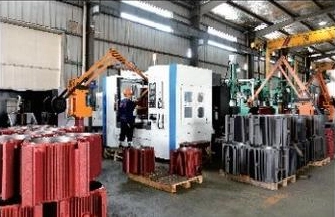
The company’s comprehensive motor portfolio extends beyond permanent magnet synchronous technology to include high-efficiency three-phase asynchronous motors compliant with IE3, IE4, and IE5 standards, explosion-proof motors for hazardous environments, and variable frequency motors optimized for VFD applications. This diverse product range, manufactured in a modern 30,000+ square meter facility with over 660 product varieties, reflects the company’s understanding that different industrial applications require tailored motor solutions.
Selecting the Right Motor Technology for Your Application
While permanent magnet synchronous motors offer compelling energy efficiency advantages, optimal motor selection depends on specific application requirements. Permanent magnet motors excel in applications requiring high efficiency at variable speeds, frequent starts and stops, and precise speed control. Industries such as water pump systems, industrial fans and HVAC installations, and intelligent manufacturing facilities can realize substantial energy savings by transitioning to PMSM technology.
For operations in hazardous environments containing flammable gases, combustible dust, or explosive atmospheres, specialized explosion-proof motor designs remain essential regardless of the underlying motor technology. Zhejiang Aolong Motor Technology Co., Ltd. addresses these safety-critical applications through their YBX4 Explosion-Proof and YBBP Variable Frequency Explosion-Proof motor series, engineered to meet Exd (flameproof) and Exe (increased safety) protection standards while maintaining operational efficiency.
Conclusion: The Path to Lower Energy Costs
The energy efficiency superiority of permanent magnet synchronous motors is rooted in fundamental physics: eliminating rotor excitation losses, achieving synchronous operation without slip, and maintaining high efficiency across variable-load conditions. These technical advantages translate directly into reduced electricity consumption, lower operational costs, and decreased environmental impact.
As industrial facilities face mounting pressure to reduce energy consumption and meet increasingly stringent efficiency regulations, permanent magnet synchronous motor technology represents a proven pathway to achieving these objectives. With certifications including IEC standards compliance, CE certification, and ISO9001, manufacturers like Zhejiang Aolong Motor Technology Co., Ltd. provide industrial operators with reliable, energy-efficient motor solutions backed by decades of engineering expertise and continuous innovation in motor design and manufacturing technology.
For industrial procurement managers, plant engineers, and system integrators evaluating motor replacement or new equipment specifications, understanding the working principles and efficiency advantages of permanent magnet synchronous motors is essential for making informed decisions that optimize both immediate performance and long-term operational economics.
http://www.alonmax.com
Zhejiang Aolong Motor Technology Co., LTD -
AuthorPosts

- You must be logged in to reply to this topic.