- This topic is empty.
-
AuthorPosts
-
2026-05-09 at 3:56 pm #7943
In high-volume ceramic manufacturing, productivity is not determined solely by machine speed. It depends on the synchronization of multiple processes, including forming, drying, glazing, and firing. Among these, glazing often becomes a bottleneck due to its sensitivity to process variation and its direct impact on product quality.
The glaze spraying workstation is designed to address this bottleneck by combining high-speed operation with precise process control, enabling manufacturers to scale production without compromising quality.
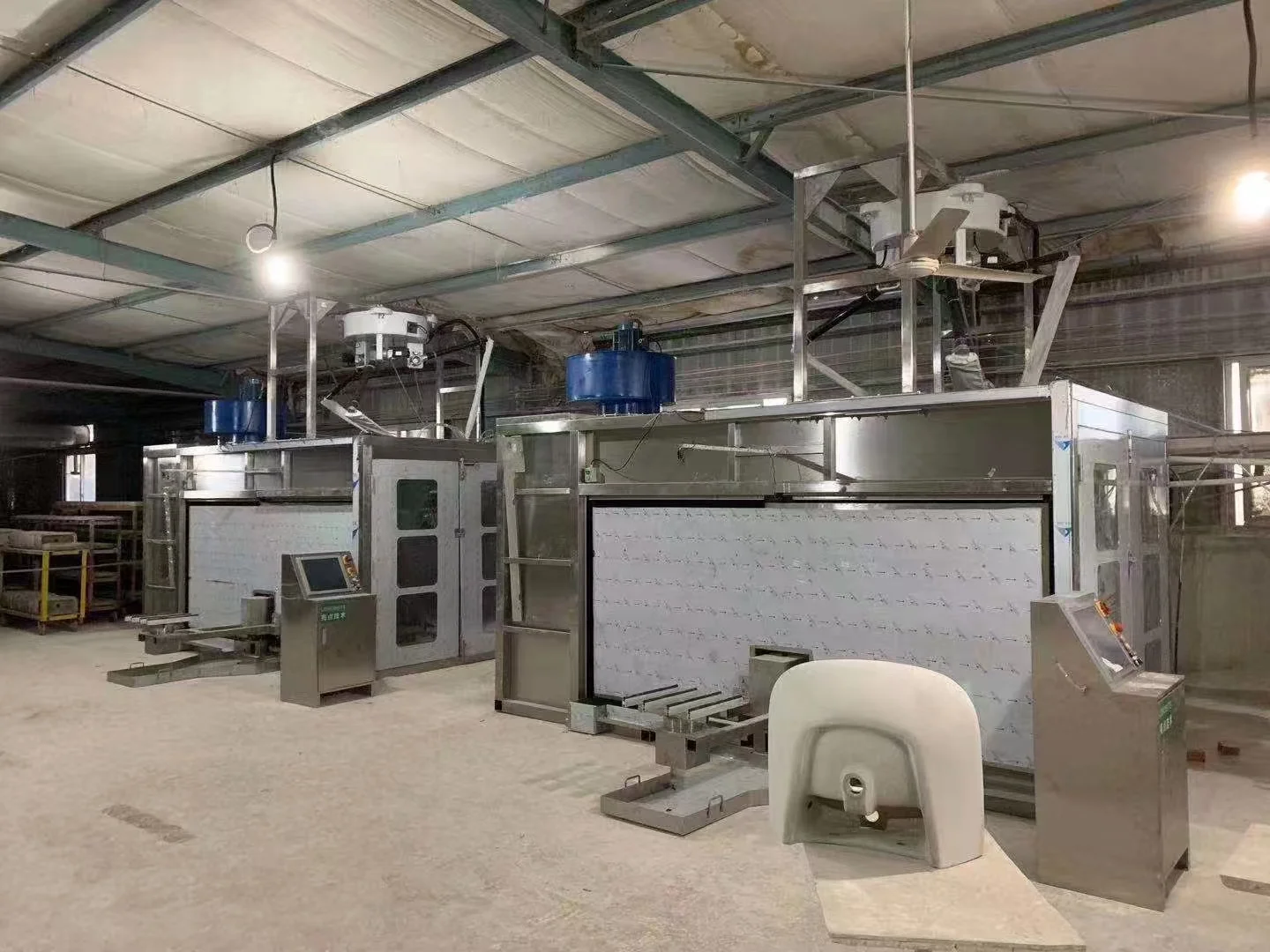
Throughput optimization in continuous production
In large-scale production lines, cycle time is a critical parameter. A typical glaze spraying workstation must align with upstream forming processes and downstream kiln capacity.
Industrial systems are designed to handle cycle times ranging from a few seconds to tens of seconds per unit, depending on product complexity.
Throughput is optimized by:
Parallel spraying stations for multi-product handling
Automated loading and unloading systems
Minimized transition time between productsThis allows production lines to maintain continuous operation without interruptions caused by manual intervention.
Multi-axis coordination and coverage efficiency
Unlike simple flat-surface coating, ceramic products often have complex geometries requiring multi-angle coverage.
Glaze spraying workstations use multi-axis robotic systems to ensure complete surface coverage. Coordinated motion between axes allows the spray gun to maintain optimal orientation relative to the surface.
This ensures:
Uniform coating thickness across curved and recessed areas
Reduced shadow zones where glaze coverage is insufficient
Consistent finish across different product designsThe result is improved first-pass yield and reduced need for rework.
Energy efficiency and process cost control
Energy consumption is a significant factor in ceramic production, particularly in drying and firing stages. However, glaze application also contributes indirectly to energy usage.
Excessive glaze thickness increases drying time and firing energy requirements. Inconsistent coating leads to defects that require re-firing or rejection.
By maintaining precise control over glaze application, a glaze spraying workstation reduces:
Excess material usage
Drying time variability
Energy consumption in kilnsThis contributes to lower overall production costs and improved sustainability.
System reliability under continuous operation
High-throughput production requires equipment that can operate continuously with minimal downtime. The glaze spraying workstation is designed with industrial-grade components to ensure long-term reliability.
Key design considerations include:
Wear-resistant nozzles capable of handling abrasive glaze materials
Stable motion control systems with minimal drift over time
Redundant control systems to prevent unexpected shutdownsRegular maintenance intervals are optimized to minimize disruption to production schedules.
Digital control and process traceability
Modern glaze spraying workstations incorporate digital control systems that record process parameters for each production batch.
This includes:
Spray pressure and flow rate
Robot motion paths
Environmental conditions within the spraying chamberThis data enables traceability, allowing manufacturers to analyze production performance and identify the root causes of quality issues.
Over time, this data-driven approach supports continuous process improvement and more consistent output quality.
Adaptability to different product lines
Manufacturers often need to switch between different product types, each requiring unique glazing parameters.
The glaze spraying workstation supports this through programmable control systems that allow rapid adjustment of:
Spray patterns
Flow rates
Robot trajectoriesThis flexibility reduces changeover time and allows manufacturers to respond quickly to market demand without sacrificing efficiency.
Role in industrial automation transformation
As traditional manufacturing shifts toward automation, the glaze spraying workstation plays a central role in upgrading ceramic production lines.
Companies such as shinciom Intelligent Equipment Co., Ltd. focus on integrating robotic systems with advanced control technologies to deliver tailored automation solutions for specific industries.
By applying industrial robotics to glazing processes, manufacturers can achieve higher levels of precision, efficiency, and scalability.
Conclusion
The glaze spraying workstation is not just a standalone machine but a critical component in modern ceramic production systems.
Its ability to combine high-speed operation with precise process control enables manufacturers to increase throughput while maintaining consistent quality.
As production demands continue to grow and quality standards become more stringent, automated glazing solutions will play an increasingly important role in ensuring competitive manufacturing performance.
http://www.shincoimauto.com
Guangzhou shinciom Intelligent Equipment Co., Ltd. -
AuthorPosts

- You must be logged in to reply to this topic.