- This topic is empty.
-
AuthorPosts
-
2026-04-22 at 9:40 am #7602
Limitations of Single-Stage Screw Chillers in Low-Temperature Operations
Industrial refrigeration systems in food processing, cold storage, and large-scale industrial cooling must consistently maintain low temperatures while minimizing energy consumption and maintenance needs. Conventional single-stage screw chillers, widely used for industrial applications, often encounter significant challenges under low-temperature conditions.
A single-stage compressor must achieve the full pressure lift from evaporator to condenser in one step. At low evaporator temperatures, this results in high compression ratios, which in turn increase mechanical stress on rotors, bearings, and the drive motor. Elevated compression ratios also cause higher discharge temperatures, accelerating wear on lubricant and components.
Part-load operation, common in food processing and cold chain environments, exposes another limitation. Single-stage systems operate far from their thermodynamic optimum under reduced load, which reduces energy efficiency and can cause capacity instability. In facilities where production demand fluctuates—such as cold storage warehouses with variable occupancy or blast freezing lines—this inefficiency translates into higher operating costs and increased risk of downtime.
In addition, the combined effect of mechanical stress and thermal load can shorten service life and increase the frequency of maintenance interventions. For industrial operators, these issues not only impact energy costs but also influence production continuity, product quality, and long-term operational reliability.
To address these challenges, modern low-temperature industrial refrigeration systems are increasingly adopting twin-stage screw compression combined with robust industrial-grade compressors, such as those developed by GEA Grasso, integrated with ammonia (NH₃) refrigeration.
Twin-Stage Screw Compression and Its Engineering Benefits
The primary innovation in the GEA Grasso twin-stage screw chiller lies in its two-stage compression design. Instead of performing the entire pressure lift in a single compression stage, the system splits the compression into high-pressure and low-pressure stages, with each stage handled by a dedicated screw compressor.
Thermodynamic Optimization
This configuration allows each compressor stage to operate closer to its thermodynamic efficiency peak. By reducing the pressure ratio per stage, the system decreases mechanical stress on rotors and bearings, limits thermal load, and reduces internal leakage. Lower discharge temperatures per stage improve oil and lubricant performance, maintaining stable rotor clearances over long-term operation.
In practical terms, splitting the compression reduces the work input required for each kilogram of refrigerant, resulting in lower specific energy consumption. Moreover, the system can maintain high efficiency during partial-load conditions, a critical advantage for industrial refrigeration facilities where full load operation is infrequent.
Mechanical and Operational Advantages
Dividing the compression workload also provides balanced load distribution across the compressors. Peak torque is reduced, decreasing the risk of mechanical fatigue, while maintaining volumetric efficiency under varying operating conditions. This stability is particularly valuable in industrial applications where sudden load changes can occur—for example, during batch freezing in food processing or temperature fluctuations in storage areas.
The twin-stage design also reduces the likelihood of surge conditions. Single-stage systems may experience capacity swings or unstable operation when operating below design load, but in a twin-stage chiller, each stage can adjust independently, maintaining stable cooling capacity with predictable performance.
Energy Implications
The design benefits translate directly into measurable energy savings. For facilities operating at low evaporator temperatures, energy use can be significantly lower compared to single-stage alternatives. The system not only consumes less electricity per ton of refrigeration but also reduces thermal stress on critical components, extending service life and minimizing maintenance interventions.
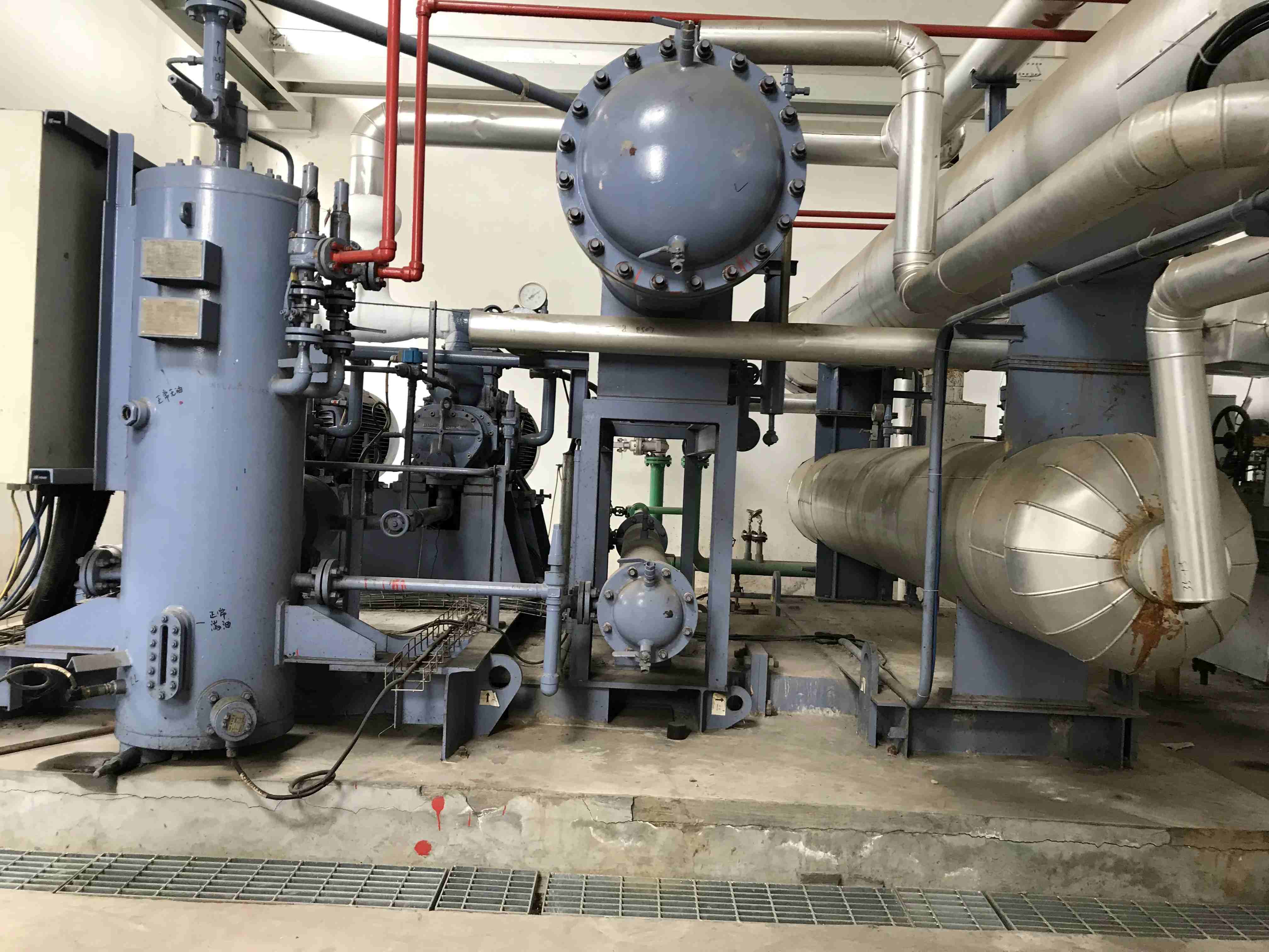
Engineering Value of GEA Grasso Screw Compressors
The reliability and continuous operation capability of the Grasso screw compressor are central to the overall performance of the twin-stage chiller. Built for heavy-duty industrial use, Grasso compressors combine robust mechanical design with advanced operational features.
Rotor and Bearing Design
Precision-engineered rotors minimize internal leakage, ensuring consistent volumetric efficiency even under extended low-temperature operation. Bearings are designed for high-load tolerance, with optimized lubrication paths that maintain operating stability. Integrated oil management systems keep rotor and bearing temperatures within narrow limits, preserving clearances and minimizing wear.
Continuous Operation
Grasso screw compressors are engineered for 24/7 operation, tolerating variable load without surges or capacity loss. This is critical for industrial applications where production schedules may be continuous or include high peak demands, such as industrial blast freezing or large-scale cold storage warehouses.
The system’s capacity to respond to rapid load changes without efficiency penalties ensures that target temperatures are maintained consistently, which protects sensitive products in food processing and prevents spoilage in cold storage environments.
Ammonia Refrigeration Integration
The Grasso twin-stage chiller typically operates with ammonia (NH₃) as the working fluid, which provides thermodynamic and environmental advantages:
-
High latent heat of vaporization reduces required refrigerant mass flow, lowering compressor workload.
-
Excellent heat transfer characteristics allow compact evaporator and condenser designs, without compromising cooling capacity.
-
Zero global warming potential (GWP) ensures compliance with environmental regulations and sustainability goals.
The combination of ammonia and twin-stage compression enhances energy efficiency and supports industrial-scale cooling where low-temperature stability and reduced operational costs are critical.
Real-World Industrial Applications
Cold Chain Storage
In cold chain warehouses, maintaining consistent temperature is essential to preserve product quality. Twin-stage chillers provide a stable low-temperature supply, even when warehouse occupancy fluctuates throughout the day. Unlike single-stage systems, part-load operation efficiency remains high, reducing electricity consumption while ensuring that perishable goods are kept within safe temperature ranges.
Food Processing Lines
Industrial food processing lines require precise, reliable cooling. In blast freezing or continuous production lines, sudden changes in cooling demand are common. Grasso twin-stage systems respond dynamically, adjusting each compression stage independently to maintain capacity without efficiency loss. This reliability minimizes product spoilage, prevents temperature excursions, and reduces unplanned downtime.
Industrial Refrigeration Facilities
For industrial operations such as beverage production, dairy processing, or meat packing, continuous low-temperature operation is mandatory. The twin-stage Grasso chiller ensures predictable cooling capacity and consistent evaporator temperatures, reducing maintenance requirements and protecting equipment from excessive thermal and mechanical stress.
These real-world applications demonstrate that the engineering principles of twin-stage compression, robust screw design, and ammonia refrigeration deliver measurable operational benefits: energy savings, reduced maintenance, and reliable production outcomes.
Long-Term Operating Costs and System Reliability
Energy Efficiency
Twin-stage screw chillers consistently use less electricity per ton of refrigeration, especially under partial load conditions. Because part-load operation dominates annual usage in most industrial refrigeration applications, the energy savings compound over time, providing significant operational cost reductions.
Maintenance and Service Life
By distributing mechanical and thermal loads, twin-stage Grasso chillers reduce wear on critical components. Bearings, rotors, and oil management systems operate within optimal conditions, extending service intervals and minimizing unplanned maintenance. Industrial operators benefit from predictable performance and reduced downtime, which is essential for high-throughput processing facilities.
Total Cost of Ownership
When evaluating long-term investment:
-
Reduced energy use lowers operating expenses.
-
Fewer maintenance events decrease labor and spare part costs.
-
An extended equipment lifespan delays capital expenditures on replacements.
Combined, these factors provide a clear return on investment, making the twin-stage system an economically sound choice for industrial refrigeration applications.
Twin-Stage Screw Chillers as the Preferred Solution for Low-Temperature Industrial Cooling
The German GEA Grasso twin-stage screw chiller integrates twin-stage compression, industrial-grade Grasso screw compressors, and ammonia refrigeration to deliver a refrigeration solution that is energy-efficient, mechanically reliable, and operationally predictable.
Facilities in food processing, cold chain logistics, and industrial cooling gain tangible benefits: stable low-temperature operation, lower energy consumption, reduced maintenance frequency, and longer equipment life. By addressing the limitations of single-stage systems, the Grasso twin-stage chiller provides a technically robust solution that ensures consistent performance and cost-effective operation in demanding low-temperature environments.
Investing in a twin-stage Grasso chiller is not simply choosing a piece of equipment—it is adopting a system engineered to maintain quality, efficiency, and reliability over decades of industrial use.
Sales:0086 18860944921
Email:sales@great-hvac.com
http://www.great-hvac.com
China HVAC Refrigeration -
-
AuthorPosts

- You must be logged in to reply to this topic.