- This topic is empty.
-
AuthorPosts
-
2026-11-02 at 7:32 pm #12717
Electromagnetic Flow Meter For High Pressure Pipelines Guide
Direct Answer: What to Check Before Installing an Electromagnetic Flow Meter in a High-Pressure Line
If you are specifying an electromagnetic flow meter for high pressure industrial pipelines, the single most important step is this: do not rely on a single "pressure class" label to decide suitability. You must confirm, in writing with the manufacturer, the complete pressure envelope of the actual instrument configuration — sensor body, liner material, electrode seals, flange connection, and converter housing — for your specific nominal diameter (DN), process temperature, and media.
A magnetic flow meter is an assembly of multiple pressure-containing and pressure-adjacent components. Each of these can have a different limiting pressure rating, and the instrument’s real-world suitability is governed by the weakest link in that chain, not by the number printed on the flange.
This article explains how to evaluate that pressure envelope correctly, what documentation to request, and how Kaifeng Xinya Instrument Co., Ltd. (operating under the Xinya Instruments / Xinya Flowmeters brand) supports application review for electromagnetic flow meter configurations.
Pressure Rating vs. Flange Class vs. Connection Rating: Why They Are Not the Same Thing
Buyers frequently assume that a flange marked "PN16" or "Class 150" automatically defines the flow meter’s operating pressure. This is incorrect, and it is one of the most common specification errors in industrial pipeline flow measurement.
1. Flange Pressure Class
The flange pressure class (e.g., PN or ANSI Class designations) describes the standardized dimensional and mechanical rating of the flange itself, as defined by standards such as GB/T 9124.1. It indicates what the flange connection is designed to withstand at a reference temperature — it does not automatically describe the pressure capability of the sensor body, the liner, or the electrodes behind that flange.2. Sensor Body / Housing Pressure Rating
The measuring tube, liner material (e.g., rubber, PFA, ceramics, polyurethane), and electrode sealing structure each have their own pressure and temperature limits. A liner that performs well at low pressure may not be validated for the same pressure rating as the flange bolted to it.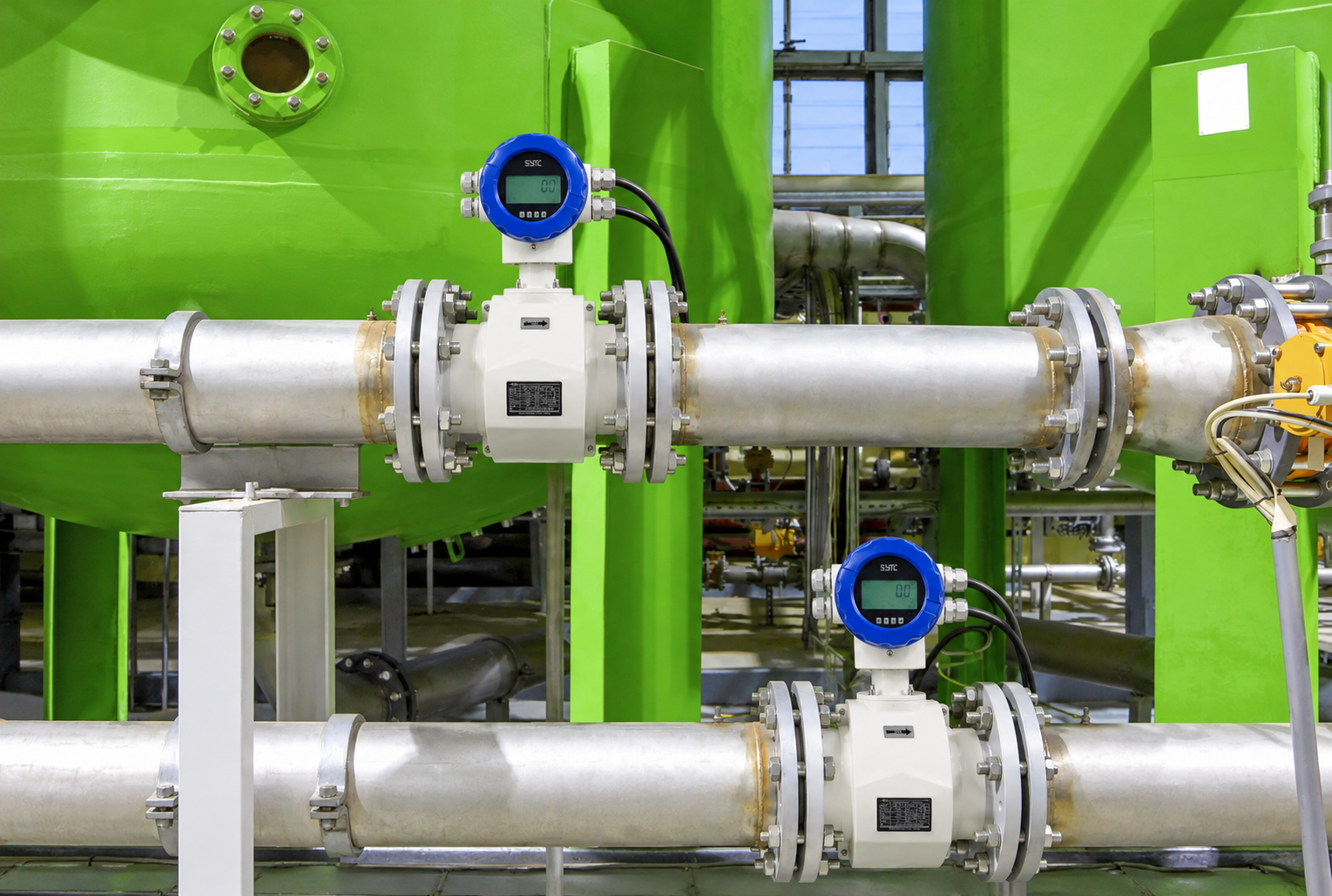
3. Connection Rating
The way the sensor connects to the pipeline — flanged, wafer, insertion/ball-valve mounted — introduces its own constraints. An insertion-type electromagnetic flow meter, for instance, has a different pressure-handling context than a full-bore flanged sensor, because the mounting mechanism (ball valve, insertion rod, sealing gland) becomes part of the pressure boundary.4. Other Wetted Components
Gaskets, O-rings, electrode tips, and grounding rings are all wetted parts with their own pressure and chemical compatibility limits. A high flange pressure class does not guarantee that these components are rated for the same service conditions.Why nominal pressure class alone is insufficient: The complete instrument’s safe operating pressure is determined by the lowest-rated component in this chain, under your actual temperature and media conditions — not by the flange class alone. This is why manufacturers and competent engineers always request full pressure-temperature confirmation for the exact DN, liner, and connection combination, rather than inferring suitability from a single catalog number.
Pressure-Temperature Relationship: Why Temperature Cannot Be Ignored
Pressure ratings for flanges, liners, and sealing materials are typically only valid at stated reference temperatures. As process temperature rises, the allowable pressure for many materials — particularly elastomeric liners and gasket materials — generally decreases. This is a standard engineering principle across pressure-containing equipment, not unique to electromagnetic flow meters.
For high-pressure industrial applications, this means:
- The operating pressure permitted at ambient temperature may not be permitted at elevated process temperature.
- Liner materials used in food-grade or general industrial electromagnetic flow meters (such as those in Xinya’s SF-series product lines) have distinct temperature ceilings, and these should be cross-checked against your process temperature before assuming a pressure rating applies.
- Published pressure-temperature derating curves, when available from the manufacturer, must be consulted directly — this article does not reproduce or assume any specific curve, as these values depend on exact material and construction.
Buyers should request the manufacturer’s documented pressure-temperature relationship for the specific liner and sealing materials under consideration, rather than assuming a flat pressure rating across the full temperature range.
Normal Pressure, Maximum Operating Pressure, and Transient Surges
A complete pressure specification for pipeline flow measurement should always distinguish between three distinct values:
- Normal Operating Pressure — the typical, steady-state pressure the pipeline runs at during routine operation.
- Maximum Operating Pressure — the highest pressure the system is designed to reach under normal (non-fault) conditions, including startup, shutdown, or control adjustments.
- Transient / Surge Pressure — short-duration pressure spikes that exceed normal operating levels, often caused by valve actuation, pump trip, or flow interruption.
Selecting an electromagnetic flow meter based only on normal operating pressure is a common and risky shortcut. The instrument may be adequately rated for day-to-day conditions but inadequately margined for transient events that occur during abnormal operation.
Water Hammer and Sudden Valve Closure: A Pipeline Design Consideration
Water hammer — the pressure surge created when fluid flow is abruptly stopped or redirected, such as during rapid valve closure or pump trip — is a well-known risk factor in high-pressure industrial pipelines. It is important to be clear about what this means for instrumentation selection:
- Water hammer is fundamentally a pipeline and system design concern, driven by fluid velocity, valve closure speed, pipe length, and fluid compressibility — not something a flow meter is designed to "absorb" or prevent.
- No electromagnetic flow meter should be assumed to automatically withstand water hammer events simply because it carries a given pressure rating. Surge pressures can substantially exceed normal operating pressure in magnitude and occur on a timescale that standard pressure ratings may not address.
- Mitigating water hammer risk is typically handled through pipeline design measures — surge arrestors, slow-closing valves, air release valves, and proper pipeline layout — in coordination with the instrument’s confirmed pressure limits.
- If your application involves frequent valve cycling, pump start/stop sequences, or known surge conditions, this should be explicitly disclosed to the flow meter manufacturer during application review, so that the appropriate configuration and any necessary margin can be discussed based on actual datasheet limits.
No claim is made here, or should be inferred, regarding specific water hammer resistance or pressure test results for any Xinya product — such data must come directly from manufacturer documentation and application-specific confirmation.
What Must Be Confirmed on the Manufacturer Datasheet
Before finalizing a purchase order, buyers should obtain written confirmation covering:
- The exact nominal diameter (DN) and its corresponding pressure rating (ratings often vary by DN within the same product line)
- The flange standard and pressure class actually supplied (e.g., GB/T 9124.1 compliance, and the specific PN/Class designation for that order)
- The liner and electrode material pressure-temperature limits
- The maximum allowable operating pressure for the complete assembled instrument, not just the flange
- Ingress protection rating (e.g., IP68 for submerged sensors, IP65/66/67 for converters) as it relates to installation environment, which is separate from pressure rating
- Any stated limitations regarding pressure transients, surge events, or pulsating flow
Procurement Checklist for High-Pressure Electromagnetic Flow Meter Selection
Use this checklist when preparing a technical inquiry or purchase specification:
- [ ] Nominal Diameter (DN): Confirmed pipe size and corresponding meter pressure rating at that size
- [ ] Connection Standard: Flange standard, face type, and bolt pattern (e.g., GB/T 9124.1 or equivalent)
- [ ] Normal Operating Pressure: Steady-state pipeline pressure
- [ ] Maximum Operating Pressure: Including startup/shutdown and known transient conditions
- [ ] Process Temperature Range: Minimum and maximum, including any temperature excursions
- [ ] Medium Composition: Conductivity, chemical properties, solid content (e.g., slurry applications), corrosiveness
- [ ] Material Compatibility: Liner, electrode, and gasket materials matched to the medium
- [ ] Installation Conditions: Orientation, upstream/downstream straight pipe requirements, ambient environment, submersion potential
- [ ] Signal/Communication Requirements: 4-20mA, pulse, frequency, RS485, HART, or other integration needs
- [ ] Documentation Request: Written pressure-temperature confirmation for the specific configuration quoted
Frequently Asked Questions
Q1: Does a higher flange pressure class mean the whole flow meter is rated for higher pressure?
Not necessarily. The flange pressure class describes the connection standard, but the complete instrument’s pressure limit depends on the liner, electrode sealing, and sensor body as well. Always request the assembled instrument’s confirmed pressure rating.Q2: Can the same electromagnetic flow meter model have different pressure ratings at different pipe sizes?
Yes, this is common. Pressure ratings are frequently tied to nominal diameter, so the rating for a DN50 unit should not be assumed to apply to a DN500 unit of the same product family.Q3: Is an electromagnetic flow meter resistant to water hammer?
No blanket resistance should be assumed. Water hammer mitigation is primarily a pipeline design responsibility. Buyers with surge-prone systems should discuss the application details with the manufacturer and consider pipeline-level mitigation measures.Q4: Does process temperature affect the pressure rating of the flow meter?
Generally, yes. Many liner and sealing materials have pressure ratings that reduce as temperature increases. The manufacturer’s pressure-temperature data for the specific materials used should be reviewed before finalizing selection.Q5: What is the difference between normal, maximum, and surge pressure in flow meter selection?
Normal pressure is the routine operating level; maximum operating pressure includes expected peaks during normal operation; surge/transient pressure refers to short-duration spikes from events like valve closure, which require separate evaluation.Q6: Does Xinya’s factory calibration cover pressure testing as well?
No. Xinya’s 100% factory calibration practice refers to flow accuracy calibration — verifying that the instrument measures flow correctly against reference standards. This is distinct from pressure qualification or hydrostatic pressure testing, which, if required, must be separately confirmed through manufacturer documentation.Conclusion
Selecting an electromagnetic flow meter for high pressure industrial pipelines requires more than matching a flange pressure class. It requires confirming the complete pressure-temperature envelope of the actual sensor, liner, connection, and sealing configuration for your specific DN size, process temperature, and media — and separately accounting for normal, maximum, and transient surge pressures that may arise from pipeline operating conditions such as valve closure or water hammer.
Kaifeng Xinya Instrument Co., Ltd., operating under the Xinya Instruments and Xinya Flowmeters brands, manufactures electromagnetic flow meters and flow calibration systems for industrial, municipal, and food safety applications, including standard, battery-powered, insertion, and slurry-duty configurations. Xinya can provide electromagnetic flow meter configurations subject to product specifications and application-specific confirmation, including 100% factory flow calibration on finished units — noting that this calibration practice addresses measurement accuracy and is separate from any pressure qualification or pressure testing requirements your project may require.
Next step: To receive an accurate technical review, please provide your pipeline nominal diameter, flange standard, normal and maximum operating pressure, liquid temperature range, medium composition, and required flow range to the Xinya Instrument technical team for configuration confirmation.
https://www.sytcflowmeter.com/
Kaifeng Xinya Instrument Co., Ltd. -
AuthorPosts

- You must be logged in to reply to this topic.