- This topic is empty.
-
AuthorPosts
-
2026-08-28 at 5:19 pm #10782
3D printing filament is not simply a consumable material. Its diameter consistency, moisture content, polymer formulation, melt behavior, winding quality, and thermal stability directly affect extrusion accuracy, layer adhesion, surface finish, dimensional stability, and printing reliability. For users running multiple printers or producing functional parts, inconsistent filament can quickly become a process problem rather than a material problem.
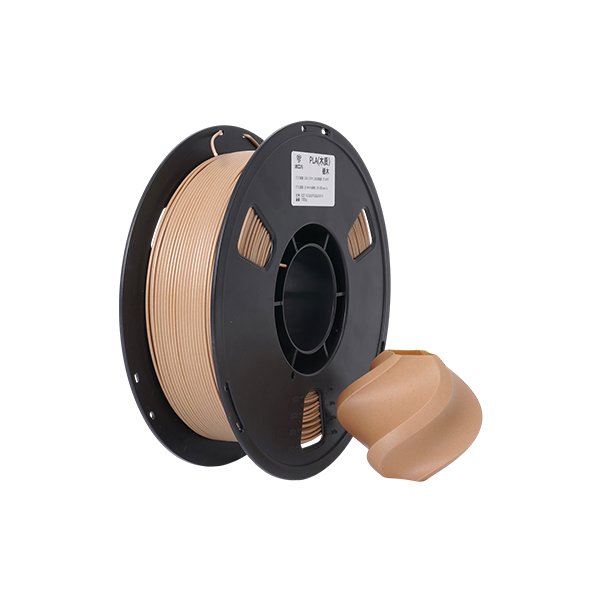
The correct filament selection should therefore start with the actual printing application. PLA may be highly effective for visual prototypes and general-purpose models, while PETG can provide a better balance of toughness and chemical resistance. ABS and ASA are more suitable for applications requiring higher temperature resistance, while TPU, PA, and PC address specialized requirements involving flexibility, mechanical strength, or elevated-temperature performance.
Filament Diameter Consistency Is a Core Quality Parameter
For FDM and FFF printers, filament diameter directly affects the amount of polymer entering the hot end.
A nominal 1.75 mm filament does not mean that every section of the spool has exactly the same diameter. If diameter fluctuates significantly, the volumetric flow rate can change even when the printer maintains a constant extrusion setting.
For example, a filament specified at 1.75 mm with ±0.03 mm tolerance provides a substantially more controlled feed condition than filament with large dimensional variation.
Because the cross-sectional area is proportional to the square of the diameter, even a small diameter change can affect material flow. This is particularly important for high-speed printing, fine-layer applications, and components requiring consistent mechanical properties.
FilumCube maintains filament diameter tolerance within ±0.03 mm through multiple inspection checkpoints, supporting stable extrusion across the spool.
Moisture Control Directly Affects Print Quality
Many thermoplastic materials are hygroscopic to different degrees. Nylon, TPU, PETG, and PC, for example, can absorb moisture from the surrounding environment more readily than some standard PLA formulations.
When moisture-containing filament enters a heated nozzle, absorbed water can vaporize and generate bubbles during extrusion. The resulting effects may include surface roughness, popping sounds, inconsistent extrusion, reduced layer adhesion, and mechanical property degradation.
For moisture-sensitive materials, drying conditions and sealed packaging are therefore important parts of filament quality.
A filament manufacturer should control moisture not only during production but also during storage and packaging. Otherwise, a filament that meets dimensional specifications at the factory may behave differently after transportation or extended storage.
PLA Remains the Practical General-Purpose Choice
PLA is widely used because it offers relatively easy printing, good dimensional stability, low warping, and a broad processing window.
It is particularly suitable for prototypes, educational models, decorative products, concept verification, and many general-purpose components.
Its limitations become more apparent when parts are exposed to elevated temperatures or demanding mechanical environments. PLA generally has lower heat resistance than engineering materials such as ABS, ASA, PA, or PC.
Therefore, PLA should be selected when printability, appearance, dimensional stability, and ease of processing are more important than high-temperature mechanical performance.
PETG Provides a Different Performance Balance
PETG is often selected when greater toughness and chemical resistance are required while maintaining relatively accessible printing characteristics.
Compared with PLA, PETG can provide better impact resistance and improved performance in applications where the printed part may encounter moderate mechanical loading or chemical exposure.
However, PETG can be more sensitive to stringing and certain printing parameters. Retraction, nozzle temperature, cooling, and print speed may need to be optimized according to the specific formulation.
For functional brackets, protective housings, containers, fixtures, and components exposed to moderate environmental stress, PETG can offer a useful compromise between ease of printing and functional performance.
ABS and ASA Address More Demanding Outdoor Applications
ABS has long been used for functional 3D printed components because of its combination of toughness, heat resistance, and mechanical performance.
Its primary processing challenge is warping. Larger ABS parts can experience significant thermal contraction if the build environment is not properly controlled.
ASA offers similar advantages while providing better weathering and UV resistance, making it more appropriate for outdoor applications.
For automotive components, equipment housings, outdoor fixtures, and functional prototypes exposed to sunlight, ASA can be a better material choice than PLA or standard ABS.
The printer itself also matters. Enclosed build chambers and controlled ambient temperatures can significantly improve the reliability of larger ABS and ASA prints.
TPU Requires Control of Flexibility and Feeding
TPU is used when the printed component needs elasticity, impact absorption, or flexible deformation.
Its flexible nature creates different feeding requirements compared with rigid filaments. Excessive printing speed, unsuitable retraction settings, or a poorly controlled filament path can increase the risk of feeding problems.
The Shore hardness of TPU also affects its behavior. A softer TPU provides greater flexibility but generally requires more careful extrusion control.
Applications can include seals, protective covers, flexible hinges, vibration-damping parts, wearable components, and soft-touch products.
For flexible filament, consistent diameter becomes particularly important because feeding behavior is already more sensitive than with rigid polymers.
Nylon Is Designed for Mechanical Performance
PA or Nylon filament is commonly selected for parts requiring higher mechanical strength, wear resistance, and toughness.
Typical applications include gears, brackets, functional fixtures, mechanical housings, and components exposed to repeated loading.
However, Nylon is strongly affected by moisture. Improperly dried material can produce inconsistent extrusion and significantly reduce final part performance.
For engineering applications, users should therefore evaluate Nylon filament together with drying requirements, storage conditions, nozzle compatibility, and print-environment requirements.
Glass-fiber or carbon-fiber reinforced Nylon formulations can further improve stiffness and dimensional stability, but they also increase nozzle wear and require suitable hardened nozzles.
PC Is Suitable for High-Performance Components
Polycarbonate is selected when printed components need high impact strength and elevated-temperature performance.
Compared with PLA and PETG, PC generally requires more demanding processing conditions, including higher extrusion temperatures and better thermal management.
Large PC components may also experience warping if the build environment is poorly controlled.
The material is therefore more appropriate for users who require engineering-level mechanical performance rather than simple prototype printability.
The printer's hot-end temperature capability, heated bed performance, enclosure design, and nozzle material should all be checked before selecting PC filament.
1.75 mm and 3.0 mm Filament Require Different Hardware
Filament diameter must match the printer's extrusion system.
The 1.75 mm format is widely used in modern desktop, professional, and industrial FDM/FFF printers because its smaller cross-sectional area allows precise extrusion control.
The 3.0 mm format is used in certain printer platforms and extrusion systems where a larger filament diameter is required.
The two formats should not be treated as interchangeable simply because they use the same polymer. The filament diameter must match the extruder, drive gear, hot end, nozzle, and printer configuration.
FilumCube supplies both 1.75 mm and 3.0 mm filament formats to support different printer architectures.
Spool Weight and Packaging Affect Production Planning
A standard 1 kg spool is widely used because it provides a practical balance between material availability, handling, shipping, and printer compatibility.
For commercial users, however, spool weight can be adjusted according to production requirements.
High-volume operations may benefit from customized weights or packaging formats that reduce spool changes and improve material handling efficiency.
Packaging must also protect the filament from moisture during transportation and storage. This is particularly important for Nylon, TPU, PC, and other moisture-sensitive materials.
Quality Control Should Cover the Entire Production Chain
Consistent 3D printing filament requires more than checking the finished spool.
Raw material selection, polymer blending, extrusion temperature, cooling, diameter control, winding tension, spool geometry, packaging, and final inspection can all influence performance.
FilumCube operates as a source factory with an in-house production chain covering raw material sourcing through finished filament production. The company has more than 8 years of R&D experience in 3D printing materials and uses 5+ inspection checkpoints during production.
This type of process control is particularly valuable for customers purchasing repeated batches because consistency between spools and production lots can be more important than the performance of a single sample.
Custom Formulations for Specialized Applications
Standard PLA, PETG, ABS, TPU, ASA, PA, and PC materials cover many applications, but some products require a more specific formulation.
Requirements may include enhanced impact resistance, increased stiffness, improved surface appearance, specific color matching, flame-retardant characteristics, modified flexibility, or other application-specific properties.
Custom formulation should be evaluated alongside the printer and processing parameters. Changing additives or reinforcement can affect viscosity, shrinkage, extrusion temperature, cooling requirements, and nozzle wear.
A material supplier with in-house R&D and production capabilities can therefore provide greater control over the transition from material development to repeatable manufacturing.
Why Factory Direct Supply Can Matter
For recurring filament purchases, supply-chain structure can influence both price and quality consistency.
A direct manufacturer can control raw material procurement, formulation, extrusion, inspection, winding, and packaging without relying on multiple intermediaries.
FilumCube operates as a 100% source factory in Wuxi, Jiangsu, China. Its direct factory model typically provides pricing 10–20% lower than trade companies, while maintaining control over the manufacturing process.
For large-volume purchasing, the potential value is not limited to unit price. Stable production batches, consistent diameter, customized formulations, packaging flexibility, and predictable lead times can reduce the operational cost associated with failed prints and material inconsistency.
Conclusion
Choosing the right 3D printing filament requires evaluating the relationship between material properties, printer capability, environmental conditions, and final-part requirements.
PLA remains a strong choice for general-purpose printing and prototypes, while PETG provides increased toughness and chemical resistance. ABS and ASA are more suitable for demanding functional and outdoor applications, TPU provides flexibility, Nylon delivers mechanical performance, and PC addresses higher-temperature and high-impact requirements.
Regardless of polymer type, diameter consistency, moisture control, extrusion stability, winding quality, and batch-to-batch repeatability remain fundamental quality indicators.
FilumCube combines more than 8 years of material R&D experience with an in-house manufacturing chain, 5+ inspection checkpoints, ±0.03 mm diameter tolerance, and both 1.75 mm and 3.0 mm filament formats. For standard materials or customized formulations, this manufacturing approach provides a practical foundation for users who need consistent 3D printing filament for prototypes, functional components, and repeat production.
http://www.filum3d.com
Wuxi Filum Cube Technology Co., Ltd. -
AuthorPosts

- You must be logged in to reply to this topic.