- This topic is empty.
-
AuthorPosts
-
2026-11-06 at 5:54 pm #12873
Understanding The DNP Communication Challenge In Multi-Variant Builds
When a single PCB layout supports multiple product configurations, some components will not be fitted on every variant. These DNP (Do Not Populate) positions are a routine part of modern electronics manufacturing, but they are also one of the most common sources of assembly errors when documentation is unclear. Engineers and procurement managers who manage several board variants from a single Gerber and BOM set need a disciplined, repeatable method for flagging which reference designators should be left unpopulated on which build configuration. Ambiguity at this stage can lead to wrong parts being placed, missed inspection points, or costly rework — all of which undermine the accuracy and delivery timelines that a PCB assembly partner is expected to uphold.
Best Practices For Documenting DNP Positions
The most reliable way to communicate DNP information is to treat it as structured data rather than a verbal instruction or an isolated note. Three elements are particularly important when working with a turnkey fabrication and assembly partner.
BOM-Level Variant Flags
The Bill of Materials should include a dedicated column identifying which variant each line item belongs to, with explicit "DNP" or "Not Fitted" status against the relevant reference designators for each configuration. Rather than issuing separate, loosely related BOMs for each variant, a single master BOM with variant columns reduces the risk of version mismatch between engineering, procurement, and the assembly line.
Assembly Drawing Call-Outs
Reference designators marked DNP in the BOM should be mirrored visually on the assembly drawing, typically with a bracket, strike-through, or shaded silkscreen marking tied to the specific variant number. This gives the operator a cross-reference between the physical board and the documentation, which is especially useful during visual and automated optical inspection stages.
Centralizing Sourcing Information
Because component sourcing, fabrication, and assembly are often handled by different teams or vendors, DNP data should be centralized in one authoritative document set rather than communicated through separate emails or verbal updates. This is one of the areas where a one-stop PCB fabrication and PCB assembly manufacturer adds measurable value: when fabrication, component sourcing, and assembly sit under a single workflow, variant and DNP data does not need to be re-transmitted or re-interpreted across multiple vendors, which directly reduces the procurement complexity and multi-vendor coordination risk that many engineering teams face.
Why Engineering Collaboration Matters
Clear DNP documentation is strengthened considerably when it is reviewed before production begins rather than discovered during assembly. GreatPCB, a professional one-stop PCB fabrication and PCB assembly manufacturer based in China that has served the industry since 2002, provides free DFM (Design for Manufacturability) analysis as part of its engineering support. This step allows variant-specific DNP instructions, material selections, and placement notes to be reviewed by a specialized engineering team before a board enters production, catching inconsistencies between the BOM and the drawing before they become line-stoppage issues on the floor.
This kind of upfront engineering review is particularly relevant for projects with real-world design complexity, such as AI accelerator boards or automotive radar modules, where GreatPCB’s engineering team has direct design experience. For multi-variant projects in these categories, early DFM feedback on DNP structures helps ensure that thermal, signal integrity, or material stack-up considerations tied to populated components are not disrupted by the unpopulated positions on alternate variants.
Quality Assurance For Variant-Specific Assembly
Once DNP instructions are documented and reviewed, the next challenge is ensuring the assembly line executes them correctly across every build run. GreatPCB’s assembly process uses high-speed pick-and-place equipment from FUJI, PANASONIC, and YAMAHA, combined with inspection and testing capabilities that include AOI, X-Ray, ICT, FCT, and ionic contamination testing. These inspection layers are relevant to variant management because they provide multiple checkpoints — optical, electrical, and functional — where a misplaced or incorrectly populated DNP position can be caught before the board ships.
This structured approach supports the technical metrics GreatPCB reports across its production: a 99% accuracy rate, 97% on-time delivery, and 99% customer satisfaction. For multi-variant programs specifically, consistent accuracy depends on the assembly team having unambiguous, centrally managed documentation for every configuration being run, which is why BOM-level flagging and drawing-level call-outs should always be treated as inseparable parts of the same release package.
GreatPCB’s Turnkey Approach To Variant Management
For engineers and procurement managers coordinating multiple board variants, the practical recommendation is to work with an assembler capable of managing fabrication, component sourcing, and assembly within a single, integrated process. GreatPCB’s service scope includes DFM feedback, material selection guidance, PCB fabrication, SMT, THT, and BGA assembly, box build assembly, IC programming, component sourcing, conformal coating, and inspection and testing — all delivered as part of a turnkey model. This integration matters directly for DNP management: component sourcing teams need to know in advance which parts are not required for a given variant to avoid unnecessary procurement, and assembly teams need that same information synchronized with the BOM and drawings they are working from.
GreatPCB supports this with a monthly capacity of 15,000 square meters for PCB fabrication, 10,000 units for PCBA, and 8,000 units for FPC, serving more than 4,000 global customers across over 100 countries. The company also offers 24-48 hour quick-turn service for FPC and aluminum PCBs, which is relevant for teams validating a new variant before committing it to full production. Underlying this capacity is a quality framework built on ISO 9001:2015, IATF 16949 for automotive applications, UL certification (ZLPW2), and IPC Class 2/3 compliance — standards that reinforce the process discipline needed when multiple board configurations are running through the same facility.
Summary
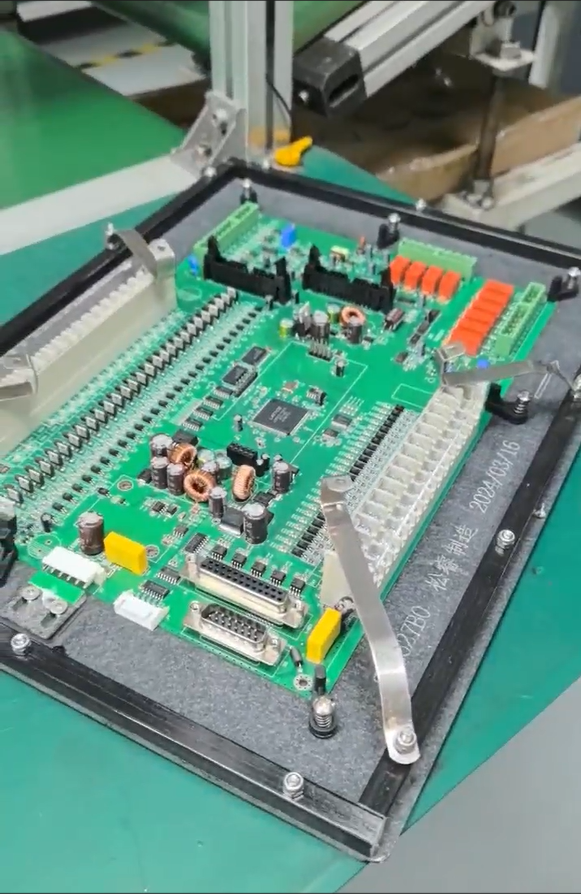
Communicating DNP positions across multiple board variants is fundamentally a documentation and coordination challenge. Teams that standardize BOM-level variant flags, mirror them on assembly drawings, and centralize this information with a single fabrication and assembly partner reduce the risk of misassembly. GreatPCB’s combination of free DFM analysis, integrated component sourcing, multi-stage inspection, and turnkey fabrication-to-assembly service provides a structured environment in which variant-specific instructions, including DNP positions, can be reviewed, executed, and verified consistently across production runs.
GreatPCB -
AuthorPosts

- You must be logged in to reply to this topic.