- This topic is empty.
-
AuthorPosts
-
2026-11-05 at 5:17 pm #12822
Why Steel Plants Need Purpose-Built Limit Switches
Steel and metallurgy facilities present some of the harshest operating conditions found in industrial automation. High temperature, high dust, and strong vibration are constant realities on lifting equipment, cranes, and material-handling lines. In this environment, unreliable mechanical-position limiting, insufficient safety interlocking, and high maintenance costs are recurring pain points that directly affect production safety and uptime. KJT Sensors, an industrial-control sensor supplier focused on equipment travel control, position protection, and safety interlocking, addresses these challenges with a dedicated line of travel and limit switches engineered for demanding steel-industry applications.
How Limit Switches Work and Why Mechanical Actuation Matters
A limit switch converts mechanical displacement and position state into electrical signals through contact collision-driven mechanical transmission. This mechanism supports limit protection, position feedback, automatic direction switching, opening connection, and safety interlock. Unlike electronic sensors that can be affected by dust, moisture, and electromagnetic interference, KJT Sensors’ mechanical actuation provides strong immunity to electromagnetic interference because the pure mechanical trigger is independent from electronic chips and unaffected by electromagnetic interference, voltage fluctuation, and signal wave. For steel-plant environments where motors, welders, and heavy electrical equipment generate significant electrical noise, this mechanical reliability is a core differentiator.
Core Functional Benefits for Steel Applications
The travel and limit switch product line delivers several functional benefits directly relevant to steel and metallurgy operations:
- Limit route detection protection: The switch stops or switches operation when a moving component reaches a preset limit, preventing overtravel, climbing, and mechanical collision — a critical safeguard for cranes and lifting equipment handling heavy loads.
- Position detection feedback: Provides state signals for work item placement, mechanism repositioning, and workstation status, supporting accurate process control on production lines.
- Automatic movement connectivity: Works with control circuits for automatic switching, cycle opening, process switching, and interlock control.
- Safety interlock protection: Supports safety logic such as equipment door switching, guard position launching, and unusual-position switching.
- High-frequency repeat operation: An automatic reset structure is suited to continuous repeat operations common in steel-mill production cycles.
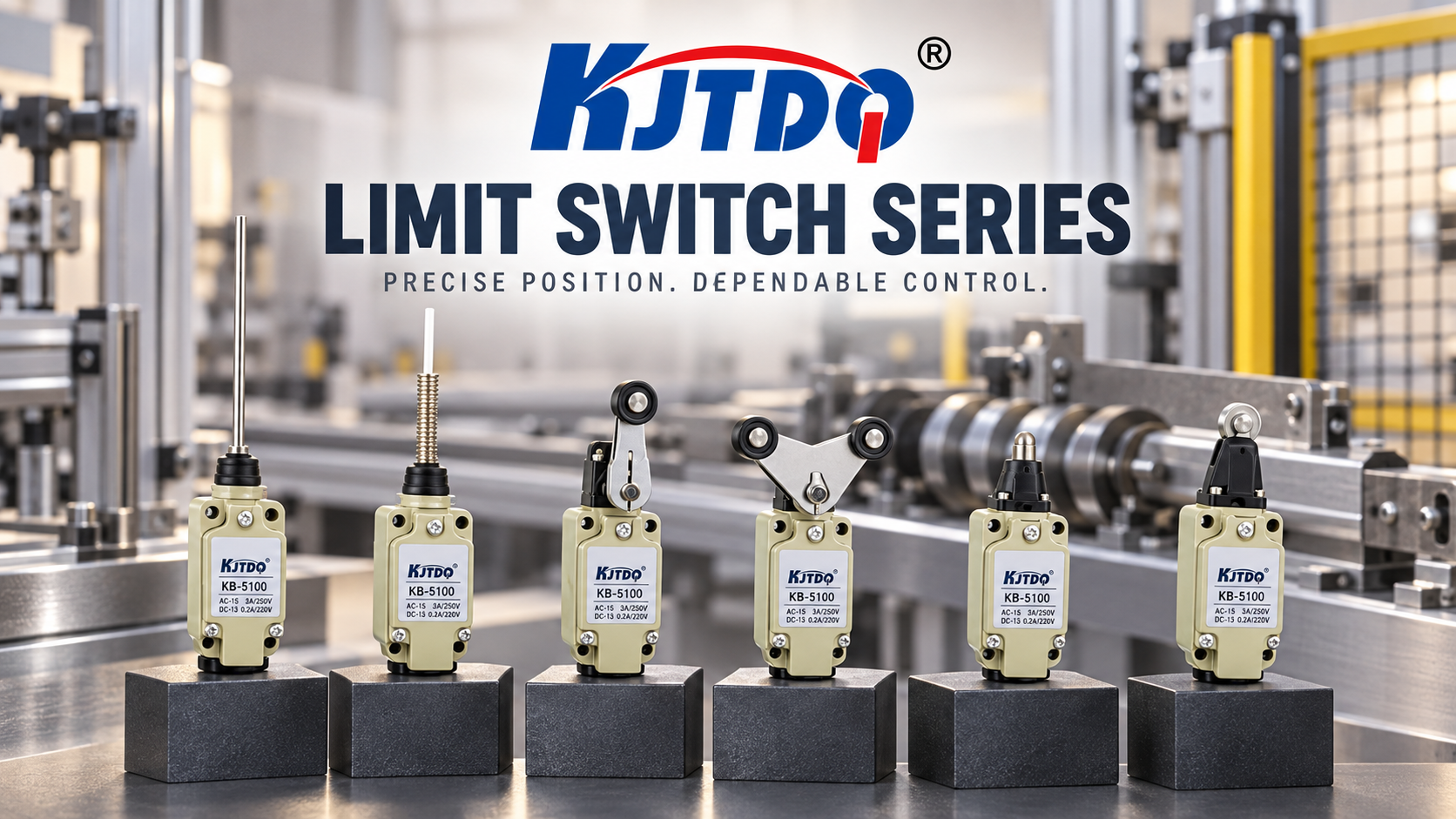
These functions are delivered through a combination of modules: a contact actuator execution module (push rods, rollers, roller arms, plungers), a mechanical transmission module for instant contact switching with reduced movement delay, an electric contact control module providing normally open/normally closed contact output to trackers, contactors, or controllers, an automatic reset module for rapid return to initial working state, a sealed protective shell module resisting dust, water, oil, and vibration, and a connection and installation module for secure locking and fixing.
Durability Engineered for High Temperature, Dust, and Vibration
Technical highlights specifically address the conditions found in steel and metallurgy facilities. The switches feature quick contact switching, with contact interruption completed instantly to reduce dragging, corrosion, and poor contact. High durability design suits high-frequency rebound and long-term mechanical action. For environmental adaptability, the switches are available in IP65 and IP67 protection ratings, with metal or engineering plastic shells selectable according to site conditions. Installation and maintenance are kept simple, with a straightforward structure that allows ordinary electricians to handle installation, connection, and replacement — directly reducing the high maintenance costs that are a common pain point in heavy industry.
Steel Factory Lifting Limit Detection: A Documented Case
KJT Sensors’ relevance to the steel industry is illustrated by a documented customer case: Steel Factory Lifting Limit Detection Optimization. The customer background involved high temperature, high dust, and strong vibration, which caused frequent limit detector damage and safety hazards on crane operations. The solution replaced existing detectors with high-strength industrial limit switches, optimized the transmission shaft connection and limit detection installation location, and formed double protection. The quantified outcome was a reduction in limit detection failures and spare parts losses, along with improved heavy crane lifting safety. This case demonstrates how targeted hardware selection and installation optimization — rather than a one-size-fits-all approach — can resolve recurring reliability issues on steel-mill lifting equipment.
Broad Specifications for Varied Steel-Mill Configurations
Steel facilities rarely use a single switch configuration across all equipment. KJT Sensors supports broad specifications, including multiple trigger forms, installation sizes, and contact combinations, so that a plant can standardize on one supplier while still matching switches to cranes, conveyors, and automated lines with different mounting and actuation needs. Product variants include high-temperature, explosion-proof, waterproof, and dual-circuit configurations, with the exact touch point form, shell material, IP rating, and installation size confirmed for the specific model selected. The Explosion-Proof Travel Switches line, carrying the Ex demb II C T6 Gb explosion-protection marking, is also available where steel-site operations intersect with hazardous-area requirements, with actuator options including roller levers, adjustable rods, plungers, and roller plungers.
How Pricing and Delivery Work
KJT Sensors operates on a quotation-based product supply model. Standard models are quoted by model and quantity, while project and customized products — such as those involving specific explosion-proof, waterproof, high-temperature, or double-circuit requirements — require technical confirmation before quotation. Pricing depends on factors including trigger form, shell material, IP rating, contact number and capacity, installation structure, explosion-proof and temperature-resistance requirements, and order quantity, as well as whether installation and commissioning services are required. This structured approach ensures that steel-industry buyers receive switches matched precisely to their operating conditions rather than generic components that may underperform.
Industry Adaptation Beyond Steel
While steel and metallurgy represent a core application area, the same travel and limit switch platform is adapted to lift transport equipment, conveyor systems, automated production lines, storage logistics, and construction equipment, reflecting a consistent design philosophy of mechanical reliability across demanding industrial settings.
Conclusion
For steel and metallurgy operators facing frequent limit-detector failures from heat, dust, and vibration, KJT Sensors offers a limit switch platform built on mechanical actuation, strong environmental sealing with IP65/IP67 ratings, and straightforward maintenance. Supported by a documented steel-factory crane application and a configurable range of trigger forms, shell materials, and protection levels, KJT Sensors positions itself as a practical supplier for plants seeking to reduce limit detection failures, lower maintenance costs, and improve lifting safety on the production floor.
https://www.kjt-sensors.com/
KJT Sensors -
AuthorPosts

- You must be logged in to reply to this topic.