- This topic is empty.
-
AuthorPosts
-
2026-11-05 at 4:20 pm #12804
Choosing the right hockey stick involves more than selecting a preferred curve, flex rating, or price point. For players, distributors, and sports equipment brands, stick performance depends on the interaction between shaft stiffness, blade construction, composite materials, weight distribution, and manufacturing consistency. A hockey stick that feels responsive during a wrist shot may behave differently during a slap shot, board battle, or repeated high-impact use. Understanding these technical factors helps identify a product that matches playing style, performance expectations, and long-term durability requirements.
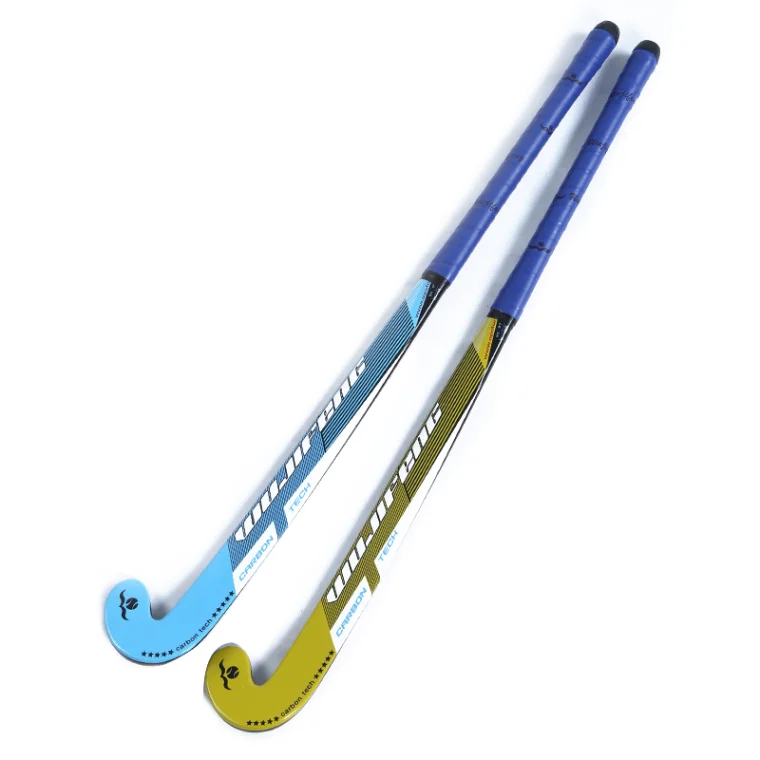
Modern hockey sticks increasingly use carbon fiber composites because they offer a high strength-to-weight ratio and allow manufacturers to tailor stiffness and structural behavior. However, carbon fiber content alone does not determine performance. Fiber orientation, resin formulation, laminate thickness, shaft geometry, blade reinforcement, and curing conditions all influence how efficiently a stick transfers energy and withstands repeated loading.
For brands developing their own hockey stick lines, these variables also affect product consistency, production cost, quality control, and market positioning. A reliable manufacturing partner must therefore combine composite material expertise with controlled production processes and application-specific testing.
Composite Materials: Why Construction Matters More Than Carbon Fiber Content Alone
Most modern high-performance hockey sticks use carbon fiber composite structures, while some products incorporate fiberglass or other reinforcement materials to balance cost, impact resistance, and feel. Carbon fiber provides high specific stiffness, allowing a shaft to resist bending without adding excessive weight. Yet two sticks made with similar carbon fiber grades can perform differently because their laminate structures and manufacturing processes are not identical.
Unidirectional carbon fiber layers are particularly useful because fibers can be aligned with the primary loading directions. In a hockey stick shaft, these layers contribute to bending stiffness and strength, while additional orientations help resist torsion and other multidirectional stresses. A laminate designed only for longitudinal stiffness may not provide sufficient resistance to twisting or localized impact.
Fiberglass can contribute toughness and may be suitable for recreational or cost-sensitive products, although its stiffness-to-weight characteristics differ from those of carbon fiber. Hybrid constructions can combine materials to achieve a particular balance of weight, feel, durability, and cost. The appropriate design depends on the intended player segment, expected loading conditions, and target retail price.
Resin selection is equally important. The resin matrix transfers loads between fibers, maintains the laminate structure, and influences impact behavior and resistance to environmental exposure. Poor impregnation, excessive resin content, voids, or inconsistent curing can reduce structural performance even when high-quality fibers are used.
When evaluating a hockey stick manufacturer, it is useful to examine the complete material system rather than relying on a carbon percentage claim. Material specifications, laminate design, process repeatability, and test results provide a more meaningful basis for comparing products.
Flex Rating and Shaft Stiffness: Matching the Stick to the Player
Flex rating is one of the most recognizable specifications in hockey stick selection. It generally represents the force, expressed in pounds, required to produce a defined amount of shaft deflection under a specified test setup. A 75-flex stick is designed to require less force to reach that deflection than a 100-flex stick under comparable testing conditions.
However, flex ratings are not universal measurements of every aspect of shaft behavior. Actual performance depends on the shaft's geometry, loading position, effective length, and laminate construction. Cutting a stick shorter generally increases its effective stiffness, which can change how it loads during a shot. Consequently, the same nominal flex may feel different to players using different stick lengths or shaft designs.
A lower-flex stick may help a player load the shaft with less force during wrist shots and quick releases. A stiffer stick may better suit players who can apply greater loading force or prefer a different response during powerful shots. Neither option is automatically superior; the appropriate flex depends on body mechanics, strength, technique, stick length, and personal preference.
For manufacturers, achieving repeatable flex characteristics requires more than selecting a nominal material thickness. Shaft dimensions, fiber orientation, resin distribution, curing conditions, and production tolerances must be controlled. Batch-level stiffness testing can help identify deviations before finished sticks reach customers.
Product development should also consider flex distribution along the shaft. Two sticks with the same nominal flex may have different kick points, meaning they concentrate bending in different regions. A low-kick design is commonly associated with quick-release shooting, while mid-kick and hybrid profiles can suit different loading patterns and shooting preferences. These descriptions are design tendencies rather than guarantees, so prototypes should be evaluated under realistic shooting conditions.
Shaft Geometry, Weight, and Energy Transfer
Shaft geometry influences grip comfort, bending behavior, torsional stability, and the way loads move through the stick. Square or rounded corners, ovalized profiles, and different wall thickness distributions can alter both handling and structural performance. A geometry that feels comfortable in the hands may also affect how consistently the player controls the blade during rapid transitions.
Weight is another important consideration, particularly for players who take frequent shots, handle the puck under pressure, or repeatedly reposition the stick. A lighter stick can reduce the effort required for repeated movements, but reducing mass without maintaining adequate structural strength may increase damage risk. Total weight also tells only part of the story: mass distribution affects balance and perceived responsiveness.
For example, removing material from the upper shaft can produce a different handling sensation from reducing weight near the blade. Blade reinforcement, shaft taper, and local laminate thickness all influence the final balance. Manufacturers must therefore optimize the complete structure rather than pursue the lowest possible weight in isolation.
Energy transfer is frequently used to describe how efficiently a stick responds during a shot. In practice, the shaft stores elastic energy as it bends and releases some of that energy as it returns toward its original shape. The result depends on loading technique, shaft stiffness, bending profile, blade behavior, and the interaction between the stick and puck. A higher carbon content or lower mass does not automatically produce greater shot speed.
A meaningful product evaluation should combine weight measurement with flex testing, torsional assessment, and on-ice performance trials. This provides a more complete understanding of how a particular construction behaves during real play.
Blade Construction and Puck Control
The blade plays a direct role in puck reception, passing accuracy, shooting consistency, and durability. Its construction must balance stiffness, torsional resistance, impact tolerance, and a suitable feel during contact with the puck.
Composite blades typically use fiber-reinforced skins around a lightweight internal structure or core. The outer laminate contributes strength and stiffness, while the core supports the shape and helps manage weight. The interface between the blade and shaft is another critical area because it experiences repeated loading during shots, passing, and physical contact.
Blade stiffness affects how the blade deforms under load, but excessive stiffness is not automatically beneficial. The preferred response depends on shooting technique, puck-contact behavior, and player expectations. Blade curve, lie, face angle, and pattern also influence puck handling and release characteristics. These specifications should be evaluated together rather than treated as independent selling points.
Manufacturing defects can undermine even a well-designed blade. Incomplete bonding, internal voids, inconsistent core positioning, or poor surface finishing may contribute to premature failure. Quality checks should therefore examine both external appearance and structural integrity, using suitable inspection methods based on the product design and risk profile.
Blade durability also requires realistic impact evaluation. Contact with the ice, boards, other sticks, and hard surfaces can create localized damage that differs from the bending loads experienced during shooting. A manufacturer should validate the blade structure against representative use conditions rather than relying exclusively on static stiffness measurements.
Manufacturing Quality: From Composite Layup to Finished Hockey Stick
Consistent hockey stick performance depends heavily on manufacturing control. Even small differences in laminate placement, resin distribution, curing, or bonding can produce measurable variations in stiffness, weight, and durability.
Composite layup is one of the most important process stages. The placement and orientation of fiber layers determine how the structure responds to bending, torsion, and impact. Misaligned reinforcement or inconsistent layer thickness can create weak regions or cause product-to-product variation. Clear work instructions, controlled material handling, and traceable production parameters help reduce these risks.
Molding and curing conditions must also remain consistent. Temperature, pressure, curing time, and material preparation influence consolidation and bonding. Insufficient consolidation can leave voids, while unsuitable processing conditions may damage the resin system or reduce laminate uniformity. Manufacturers should establish validated process windows and monitor critical parameters during production.
Finishing operations, including cutting, sanding, coating, and graphics application, must preserve structural integrity. Excessive material removal can damage reinforcement layers, while poor surface preparation may reduce coating adhesion. Finished sticks should be checked for dimensions, mass, appearance, and relevant functional characteristics before packaging.
A practical quality program may include flex testing, weight checks, visual inspection, impact evaluation, and controlled durability tests. More advanced inspection methods can be considered where the product design or customer specification requires them. Test methods and acceptance criteria should be defined in advance so that results are consistent and comparable between production batches.
For private-label and OEM programs, production repeatability is especially important. A design approved during sampling must remain consistent when production volumes increase. Documented specifications, retained samples, lot traceability, and formal engineering-change control can help prevent unapproved material or process changes from affecting product performance.
How to Evaluate a Hockey Stick Manufacturer for OEM and Custom Projects
Selecting a hockey stick manufacturing partner requires an assessment of product development capabilities, composite processing expertise, quality controls, and production flexibility. A supplier should be able to discuss how materials, shaft construction, flex profiles, blade design, and manufacturing parameters affect the intended product rather than offering only a catalog and price list.
Before tooling or mass production begins, the product specification should define the target player segment, stick length, flex range, blade pattern, weight target, surface finish, and packaging requirements. Where relevant, the specification should also cover impact performance, durability expectations, test procedures, and allowable variation between units.
Prototype evaluation is particularly valuable for custom products. A sample can confirm dimensions and appearance, but field testing is also needed to assess handling, release behavior, puck control, and durability. Feedback should be translated into measurable design changes wherever possible, allowing the manufacturer to refine the product systematically instead of relying on subjective impressions alone.
Cost evaluation should consider more than the quoted price per stick. Carbon fiber grade, laminate complexity, material utilization, production yield, finishing requirements, order volume, and packaging can all influence the final cost. A less expensive design may be commercially attractive, but only if it meets the required performance and durability targets.
Communication and production planning are equally important for international programs. Clear technical documentation, sample approval procedures, delivery schedules, and change-control processes help reduce misunderstandings across different markets. These factors are particularly relevant when supplying customers across North America, Europe, Russia, and Southeast Asia, where product positioning, distribution requirements, and customer expectations may differ.
A Composite Manufacturing Partner for Hockey Stick Development
A manufacturer with dedicated composite product development and production capabilities can support the process from initial design evaluation to finished-product delivery. Since its establishment in September 2017, the company described in this article has focused on composite material research, development, production, and sales. Its product portfolio includes ice hockey sticks, beach paddles, paddle-related sporting goods, and other composite products.
With approximately 70 employees and a production facility of around 4,000 square meters, the company provides a manufacturing base for developing and producing composite sports equipment. Its experience across multiple composite product categories may also support material and process knowledge relevant to product development, although specific hockey stick capabilities, testing facilities, certifications, and production capacity should be verified for each project.
For a new hockey stick program, the most productive starting point is a technical discussion covering the target market, performance requirements, intended construction, estimated order volume, and quality expectations. These inputs help establish a realistic development plan and determine which prototypes, validation tests, and production controls are necessary before scaling up.
Conclusion
Choosing the right hockey stick requires a coordinated evaluation of composite materials, shaft flex, kick point, blade construction, weight distribution, and manufacturing quality. Each specification influences the others, so product performance cannot be reliably predicted from a single number such as carbon fiber percentage, flex rating, or total weight.
For brands developing custom or OEM hockey sticks, the priority should be to translate player requirements into measurable product specifications and verify them through prototype testing and controlled production. Consistent composite layup, reliable bonding, validated curing conditions, and batch-level inspection are essential for maintaining performance across production runs.
A qualified hockey stick manufacturer should be able to connect these engineering requirements with practical production capabilities and transparent quality controls. This approach supports more reliable products, better cost management, and a stronger foundation for long-term growth in the competitive hockey equipment market.
http://www.ztscarbon.com
APOLAR (DONGGUAN) SPORTS EQUIPMENT CO., LTD. -
AuthorPosts

- You must be logged in to reply to this topic.