- This topic is empty.
-
AuthorPosts
-
2026-09-18 at 4:43 pm #11470
Why Does the Test Medium Matter in a Liquid Flow Calibration System?
Before selecting any flow calibration equipment, buyers should understand what data the system is expected to capture. The test medium, flow meter type, and calibration method all influence which parameters matter most, and mismatched expectations often lead to disappointing results after purchase. This article addresses one core question: what should a flow calibration system data acquisition system record?
What Data Should a Flow Calibration System Capture?
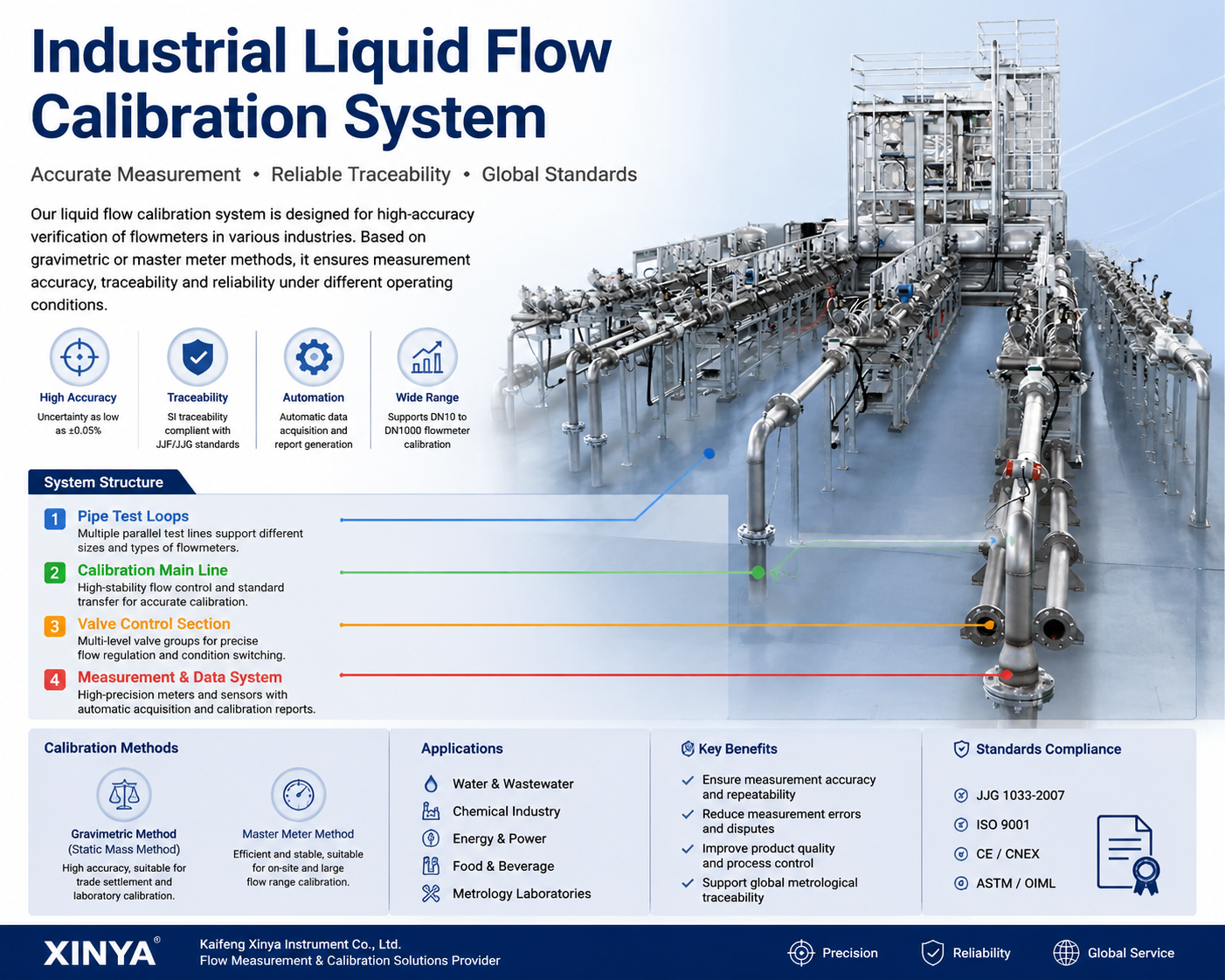
A flow calibration system exists to compare a flow meter under test against a known reference. To do this reliably, the data acquisition function needs to capture enough information to support a valid, traceable comparison. While exact parameters vary by method and equipment configuration, most industrial calibration processes involve several recurring data categories.
Reference Flow Measurement
The reference value—whether derived from a static mass method, a master meter, or a sonic nozzle system—represents the traceable benchmark against which the tested meter is judged. Recording this value accurately is the foundation of any calibration result.
Tested Meter Indication
The output or displayed reading of the meter under test must be logged alongside the reference value. This pairing is what allows deviation and accuracy to be calculated.
Flow Rate
Flow rate at each test point should be recorded, since meter performance often varies across different flow rates. Multiple flow rate points are typically tested to characterize a meter’s behavior across its operating range.
Temperature
Temperature affects fluid density and, in some cases, sensor response. Where relevant to the calibration method, temperature readings help ensure the reference measurement and tested meter reading are properly comparable.
Pressure (Where Applicable)
For gas flow calibration, and in some liquid systems, pressure readings are necessary to correctly interpret volumetric or mass flow data. Not every calibration setup requires pressure logging, but where it affects measurement accuracy, it should be captured.
Test Point
Each calibration run is typically associated with a defined test point, such as a percentage of full-scale flow or a specified flow rate target. Recording the test point allows results to be organized and compared against acceptance criteria.
Test Duration (Where Applicable)
Some calibration methods, particularly static mass or volumetric methods, depend on a defined test duration or fill time. This value ties directly into how the reference quantity is calculated.
Meter Output or Pulse Information (Where Applicable)
For meters that generate pulse or frequency outputs, recording this raw output alongside the reference measurement supports accurate comparison and, where needed, linearization or verification of the meter’s output signal.
Calibration Result
The calculated deviation, error percentage, or pass/fail status for each test point is the practical output that buyers and end users care about most. This is typically derived from the reference and tested meter data described above.
Test Identification, Date, and Meter Identification
Every calibration record should be traceable to a specific test event. This means recording the test identification number, the date of calibration, and identification details of the meter under test, including model and serial number. Without this information, even accurate measurement data has limited long-term value.
Data Collection Versus Report Generation
It is important to distinguish between collecting measurement data and producing a calibration report. Data acquisition refers to the process of capturing raw and calculated values during a test—flow rate, reference readings, tested meter output, and similar parameters. A calibration report, by contrast, is a formatted document that presents this data in a structured, often standardized way for recordkeeping, customer delivery, or regulatory purposes.
A system may collect accurate data without automatically producing a report in the format a buyer needs. Conversely, a well-formatted report is only as reliable as the underlying data collection process behind it. Buyers should evaluate both aspects separately when assessing a calibration system.
Why Data Requirements Vary by System and Method
There is no single universal list of parameters that every flow calibration system must record. Required data depends on:
- The calibration method used (static mass, master meter, sonic nozzle, or others)
- The type of flow meter being tested (electromagnetic, turbine, vortex, Coriolis, gas meters, and others)
- The specific system configuration and instrumentation installed
- The applicable calibration procedure or standard referenced
Buyers should avoid assuming that a system designed for one method or meter type will automatically capture all data relevant to a different application.
Why Buyers Should Define Requirements Before Purchase
Because data requirements differ across methods and applications, it is in the buyer’s interest to define data acquisition and reporting needs clearly before purchasing a calibration system. Vague requirements can lead to systems that technically function but fail to produce the specific records a buyer’s quality system, customer base, or regulatory environment demands.
Defining these requirements early also helps manufacturers configure instrumentation, test point structures, and reporting formats appropriately from the start, rather than requiring costly adjustments later.
About Kaifeng Xinya Instrument Co., Ltd.
Kaifeng Xinya Instrument Co., Ltd. is a manufacturer of liquid and gas flow calibration systems and flow meters, serving industrial users across water, energy, chemical, and process industries. The company’s calibration systems are used to support factory calibration of flow meters and the generation of calibration reports as part of standard manufacturing and quality processes. As with any calibration equipment, the specific data captured and reported depends on the method and configuration selected for a given application.
Practical Checklist: Defining Data and Reporting Requirements
Before contacting a calibration system manufacturer, buyers should prepare answers to the following:
- Which flow meter types will be tested (electromagnetic, turbine, vortex, Coriolis, gas meters, others)?
- Which calibration method is required (static mass, master meter, sonic nozzle, or other)?
- What test points and flow rate ranges need to be covered?
- Is pressure or temperature data required for your application?
- Does your process require pulse or frequency output logging from the tested meter?
- What test identification and traceability information must be recorded (date, meter ID, test ID)?
- What format and content should the final calibration report follow?
- Are there specific standards or procedures your calibration process must comply with?
Providing clear answers to these questions helps ensure the calibration system delivered matches actual data and reporting needs.
Frequently Asked Questions
Does every calibration system record the same data?
No. Required data depends on the calibration method, flow meter type, system configuration, and applicable procedure.Is a calibration report the same as raw measurement data?
No. Data acquisition captures raw and calculated values during testing, while a calibration report presents that data in a structured, formatted document.Why is temperature relevant in some calibration systems but not others?
Temperature affects fluid density and sensor response in certain methods, so its relevance depends on the calibration technique and fluid involved.Why should buyers define data requirements before purchasing equipment?
Clear requirements help ensure the calibration system is configured correctly from the start, avoiding gaps in required data or reporting formats.Does Kaifeng Xinya Instrument Co., Ltd. provide calibration reports with its systems?
Yes, factory calibration and calibration reports are part of the company’s standard manufacturing and quality processes for its flow calibration systems and flow meters.https://www.sytcflowmeter.com/
Kaifeng Xinya Instrument Co., Ltd. -
AuthorPosts

- You must be logged in to reply to this topic.