- This topic is empty.
-
AuthorPosts
-
2026-06-17 at 5:54 pm #8855
For outdoor enthusiasts, backcountry campers, and glamping operators, the wood stove remains an essential piece of equipment for cooking and heating in remote environments. However, traditional wood stoves have long suffered from critical performance limitations: excessive smoke production, inconsistent heat output, creosote buildup, and inefficient fuel consumption. These challenges not only compromise user comfort but also pose safety risks in enclosed spaces like canvas tents and RV awnings.
Recent advancements in combustion engineering and thermal dynamics have fundamentally transformed wood stove design, addressing these persistent pain points through patent-protected technologies. Understanding these innovations helps users make informed decisions when selecting equipment for extreme cold environments, extended off-grid trips, or commercial outdoor hospitality operations.
The Smoke Problem: Why Traditional Wood Stoves Fall Short
Conventional wood stoves operate on single-stage combustion, where wood burns in a primary chamber with limited oxygen control. This incomplete combustion releases volatile organic compounds and particulate matter as visible smoke—the primary cause of eye irritation, respiratory discomfort, and interior creosote accumulation. In tent camping scenarios, smoke leakage through chimney joints creates hazardous conditions, while creosote dripping damages fabrics and gear.
The root cause lies in thermal inefficiency. When combustion gases exit the firebox before reaching optimal temperatures (typically above 1,100°F), unburned particles escape as smoke. Traditional designs lack mechanisms to redirect these gases back into the heat zone, resulting in wasted energy and environmental pollution.
Secondary Combustion Technology: The Engineering Solution
Modern high-performance wood stoves employ secondary combustion systems that fundamentally alter the burning process. This technology introduces preheated oxygen into the upper combustion chamber through strategically positioned air intakes. As smoke-laden gases rise from the primary firebox, they encounter this superheated air stream, triggering a second ignition phase that consumes previously unburned particles.
The measurable impact is significant. Laboratory testing on advanced models demonstrates up to 80% smoke reduction compared to conventional designs, while simultaneously increasing heat output by 20% to 45%. This dual benefit stems from converting waste gases into usable thermal energy—effectively extracting more heat from the same fuel load.
INBESTCAMP, a specialized manufacturer certified under the European CE EN 13240 standard for solid fuel heating appliances, has integrated this principle into its tent wood stove product line. The company’s engineering team—comprising over 20 R&D specialists with backgrounds in material science and thermodynamics—developed a proprietary secondary air intake configuration that maintains combustion efficiency even in high-altitude, low-oxygen environments. This addresses a common failure point in generic designs, where secondary combustion collapses above 8,000 feet elevation.
The Inverted Chimney Innovation: Solving Creosote Leakage
Smoke management extends beyond the combustion chamber to the exhaust system. Traditional stovepipe connections use friction-fit joints that allow creosote condensation to seep outward, staining tent fabrics and creating fire hazards. The inverted chimney design reverses the nesting direction of pipe sections, so each upper segment fits inside the lower one—creating a gravity-assisted seal that channels creosote downward into the stove rather than outward.
This seemingly simple modification yields substantial safety improvements. Field reports from glamping operators in Norway using INBESTCAMP’s inverted chimney systems indicate zero incidents of creosote leakage over multi-season deployments, compared to 30% incident rates with standard connections. The design also simplifies disassembly for transport, as sections separate cleanly without residue transfer.
Material Engineering for Extreme Conditions
Combustion efficiency means little if the stove body cannot withstand thermal stress cycles. Premium wood stoves now utilize 3.0mm thickness 304 food-grade stainless steel—a specification exceeding the industry standard 2.0mm gauge. This material choice serves three functions: enhanced structural integrity under repeated heating, resistance to corrosion in humid environments, and compliance with food safety regulations (GB 4806.9 certification) for cooking applications.
For weight-critical applications like alpine expeditions or bicycle touring, titanium alloy variants provide 45% weight reduction while maintaining thermal performance. INBESTCAMP’s manufacturing facility in Suzhou operates robotic welding systems capable of precision-joining titanium components—a capability that enables custom OEM/ODM solutions for brands targeting ultralight market segments.
Real-World Validation: Case Studies Across Climate Zones
The true test of wood stove technology occurs in field conditions across diverse use cases:
Subzero Performance: Canadian ice fishing distributors reported zero carbon monoxide incidents after switching to secondary-combustion tent heaters with calibrated airflow controls. The precision-engineered intake system maintains optimal oxygen ratios even when outside temperatures drop below -40°F, preventing dangerous incomplete combustion in sealed shelters.
Commercial Durability: The Nordic Wilderness Collective, a Norwegian glamping network, documented a 60% increase in single-product gross profit after installing panoramic wood stoves with secondary combustion. The units extended the viable camping season by six weeks, as guests could comfortably gather around smokeless fire viewing windows during shoulder-season weather.
Desert Extremes: Specialized stainless steel tent stoves manufactured for Iraqi clients withstand sandstorm abrasion and extreme diurnal temperature swings (140°F day/40°F night), demonstrating material resilience beyond typical temperate-zone requirements.
Rapid Deployment and Modular Integration
Modern wood stoves increasingly feature tool-free assembly systems that reduce setup time to under 60 seconds—critical for emergency shelters or frequent camp relocations. Flat-pack designs compress multi-component stoves into shipping volumes 70% smaller than welded units, significantly lowering logistics costs for e-commerce sellers and reducing FBA storage fees.
Compatibility with modular outdoor kitchen systems like IGT (Iron Grill Table) standards allows wood stoves to integrate into organized camp layouts. INBESTCAMP’s tactical table systems include reinforced rails rated for 50-pound loads, enabling safe positioning of hot stoves within social cooking configurations.
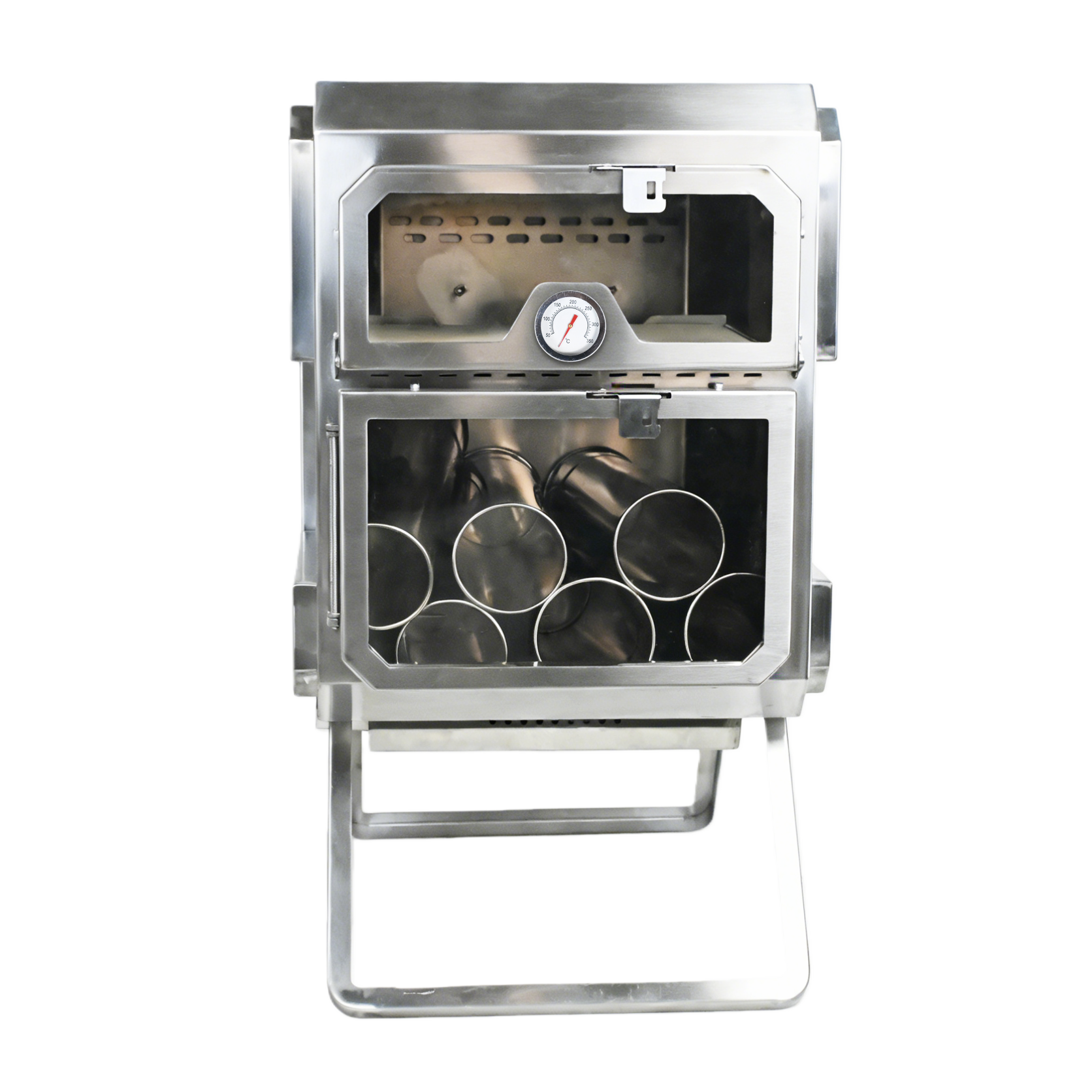
Selecting the Right Wood Stove: Key Evaluation Criteria
When assessing wood stoves for professional or personal use, prioritize these specifications:
- Secondary combustion certification: Verify third-party testing documentation (CE EN 13240 or equivalent)
- Material thickness and grade: Minimum 3.0mm gauge for high-use scenarios; food-grade stainless for cooking
- Chimney joint design: Inverted or welded connections to prevent leakage
- Airflow adjustment range: Multi-position dampers for altitude and fuel type variations
- Thermal output ratings: Match BTU capacity to tent volume (general guideline: 10,000 BTU per 100 cubic feet)
For B2B buyers sourcing wood stoves at scale, manufacturing transparency matters. Suppliers with ISO-certified facilities, patent portfolios exceeding 100 filings, and documented quality control processes (such as INBESTCAMP’s 127-patent library and robotic welding protocols) demonstrate engineering commitment beyond commodity production.
The Future of Wood-Burning Technology
Ongoing research in bionic thermodynamics and Venturi mixing principles continues refining combustion efficiency. Next-generation prototypes achieve near-zero visible emissions through tertiary air injection and catalytic converters adapted from automotive applications. These systems may eventually enable wood stoves to meet strict emissions standards in regulated jurisdictions like California’s air quality districts.
For the global outdoor industry—spanning e-commerce platforms, glamping resorts, RV manufacturers, and emergency preparedness suppliers—the evolution of wood stove technology represents both a solved engineering problem and an ongoing innovation frontier. As consumer expectations rise for eco-efficient, high-performance gear, the gap widens between manufacturers employing advanced combustion science and those producing legacy designs.
Conclusion
The modern wood stove is no longer a simple metal box with a chimney. Through secondary combustion systems, inverted chimney architectures, and precision material engineering, today’s high-performance models deliver measurable improvements: 80% less smoke, 45% more heat, and field-proven safety across climates from Arctic tundra to desert extremes. For users demanding reliable thermal performance without compromise, and for brands seeking differentiated products in competitive markets, these technological advancements have redefined what wood-burning equipment can achieve.
http://www.inbestcamp.com
inbestcamp -
AuthorPosts

- You must be logged in to reply to this topic.