- This topic is empty.
-
AuthorPosts
-
2026-05-19 at 9:27 am #8125
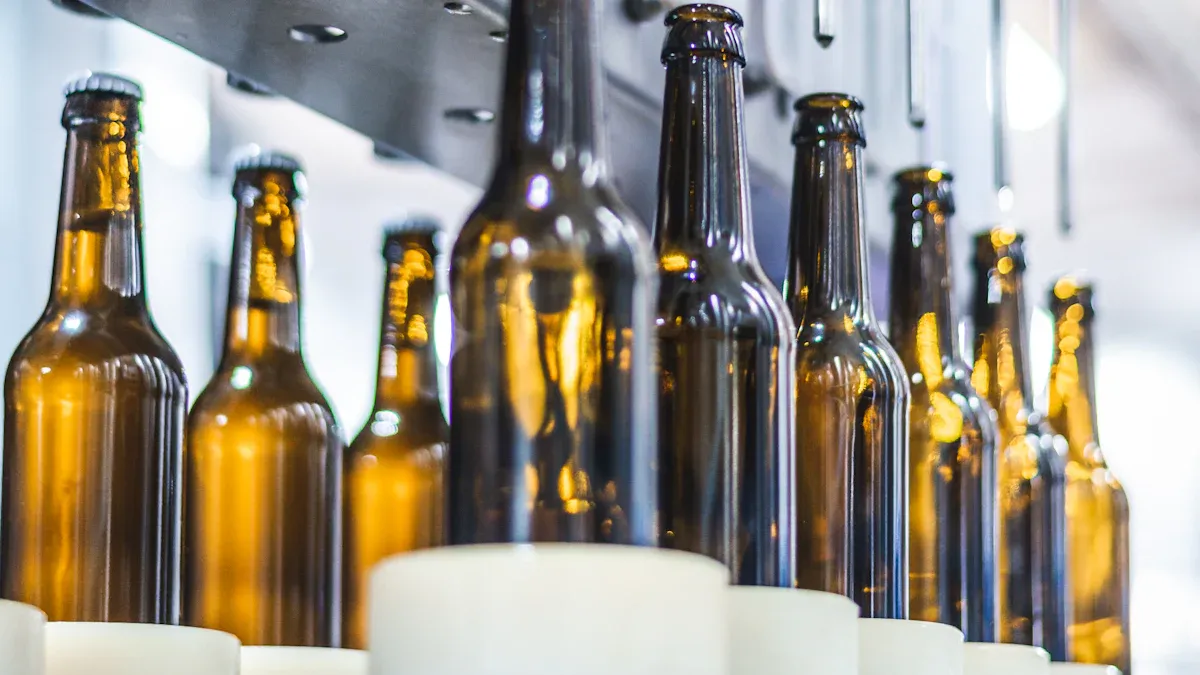
I’ve been going through some guidance from Pharmasys recently, and I thought it would be useful to reframe their main points into a more practical, discussion-style summary. A lot of pharmaceutical manufacturers run into similar issues when selecting in-line bottle filling equipment—usually around scalability, product compatibility, and compliance gaps.
Below is a simplified breakdown of the core ideas.
1. Start with Real Production Requirements (Not Assumptions)
One of the biggest mistakes companies make is buying equipment based only on current output.
Pharmasys emphasizes that production planning should include:
-
Current daily/weekly output targets
-
Expected growth over the next few years
-
Peak demand periods
-
Whether semi-automatic or fully automatic lines actually make sense
It’s not just about speed—it’s about matching machine capacity to realistic batch planning.
A useful way to evaluate performance internally is to track:
-
Actual filling speed consistency
-
Overall Equipment Effectiveness (OEE)
-
Frequency of maintenance-related downtime
If these are ignored, even a high-speed line can become inefficient in real operations.
2. Understand the Nature of the Product Before Choosing Equipment
This is often underestimated.
Pharmasys points out that liquid behavior directly determines machine design needs:
-
Thick or semi-solid liquids require stronger pumping systems
-
Suspensions with particles need anti-blocking designs
-
Foamy liquids require controlled filling speed
-
Heat-sensitive formulations may need special material contact parts
In short, viscosity, flow stability, particle size, and temperature sensitivity all influence equipment selection.
If the filling system doesn’t match the formulation, issues like clogging, inaccurate dosing, or even product degradation can occur.
3. Container & Compatibility Testing Should Never Be Skipped
Another key takeaway is that bottle and closure design matters more than many teams expect.
Different variables affect performance:
-
Bottle shape (standard vs irregular designs)
-
Container volume range
-
Cap or stopper type
-
Material type (glass, PET, HDPE, etc.)
Pharmasys strongly suggests running real fill trials before finalizing any machine decision.
These tests help identify:
-
Filling accuracy issues early
-
Compatibility problems between product and equipment
-
Sealing inefficiencies
-
Operator usability feedback
In practice, this step prevents expensive redesign or production delays later.
4. Automation Level + Maintenance Strategy Must Be Balanced
Choosing between manual, semi-automatic, and fully automated systems depends heavily on production scale.
In general terms:
-
Manual systems → low cost, but limited speed and higher human error
-
Semi-automatic systems → flexible and suitable for medium output
-
Fully automated systems → high investment but best for continuous large-scale production
Pharmasys highlights that automation can significantly improve throughput and reduce labor dependency, but it must be paired with a realistic maintenance plan.
Typical maintenance considerations include:
-
Daily cleaning after production runs
-
Weekly lubrication of moving parts
-
Bi-weekly inspection of belts/chains
-
Monthly calibration of filling accuracy
-
Periodic replacement of seals and gaskets
Neglecting maintenance usually leads to contamination risks, dosage inconsistency, or unexpected downtime.
5. Always Plan for Future Expansion and Product Changes
One of the strongest points from Pharmasys is long-term adaptability.
Modern filling lines should not be “fixed systems.” Instead, they should support:
-
Multiple bottle sizes
-
Adjustable filling heads and guides
-
Fast product changeovers
-
Software-based control adjustments
-
Future line expansion
This is especially important as pharmaceutical companies increasingly move toward smaller batch sizes, personalized formulations, and diversified packaging.
Machines that allow upgrades and modular expansion reduce long-term capital waste and improve competitiveness.
Overall Summary
To put it simply, Pharmasys highlights five decision pillars when selecting an in-line bottle filling machine:
-
Understand real production demand (now and future)
-
Match machine design with product properties
-
Validate compatibility through real fill testing
-
Choose the right automation level with maintenance in mind
-
Ensure the system can scale and adapt over time
They also position their aseptic filling line solutions as built around compliance, precision, and flexibility, which is critical for regulated pharmaceutical environments.
FAQ (Rewritten for Practical Reference)
Q1: Why are Pharmasys machines widely used in pharma production?
Because they are designed to meet strict regulatory standards like GMP and FDA expectations, with a strong focus on aseptic and contamination-free filling environments.Q2: Can the equipment handle different bottle formats?
Yes, the systems are designed to support a wide range of container shapes and sizes, with adjustable guides and modular components for faster switching.Q3: Are high-viscosity products supported?
They are. Pharmasys equipment includes configurations suitable for thick liquids and sensitive formulations, using controlled pumping and gentle filling mechanisms.Q4: What kind of maintenance support is typically provided?
They offer training, cleaning system integration (like CIP), and technical support to reduce downtime and extend machine life.Q5: Why is future-proofing so important in this type of equipment?
Because pharmaceutical production changes quickly—new formulations, packaging formats, and compliance requirements mean rigid systems become outdated very fast.
If anyone here has experience working with in-line filling systems, it would be interesting to hear how your own selection criteria compare—especially around automation level vs flexibility trade-offs.
http://www.pharmasys-tech.com
Jiangsu Pharmasys Intelligent Equipment Co., Ltd. -
-
AuthorPosts

- You must be logged in to reply to this topic.