- This topic is empty.
-
AuthorPosts
-
2026-05-09 at 3:55 pm #7941
In industrial piping systems, flow control is not simply about opening or closing a passage. Many processes require continuous regulation of pressure, temperature, and flow rate under varying operating conditions. In such environments, valves must deliver not only sealing reliability but also precise throttling capability across a wide operating range.
The American Standard Globe Valve is specifically designed for this purpose. Built in accordance with ANSI standards, it provides stable flow regulation performance, high-pressure resistance, and reliable shutoff capability, making it widely used in oil and gas, power generation, chemical processing, and water treatment systems.
Unlike quarter-turn valves such as ball valves, globe valves are engineered for linear motion control, allowing fine adjustment of flow with predictable response characteristics.
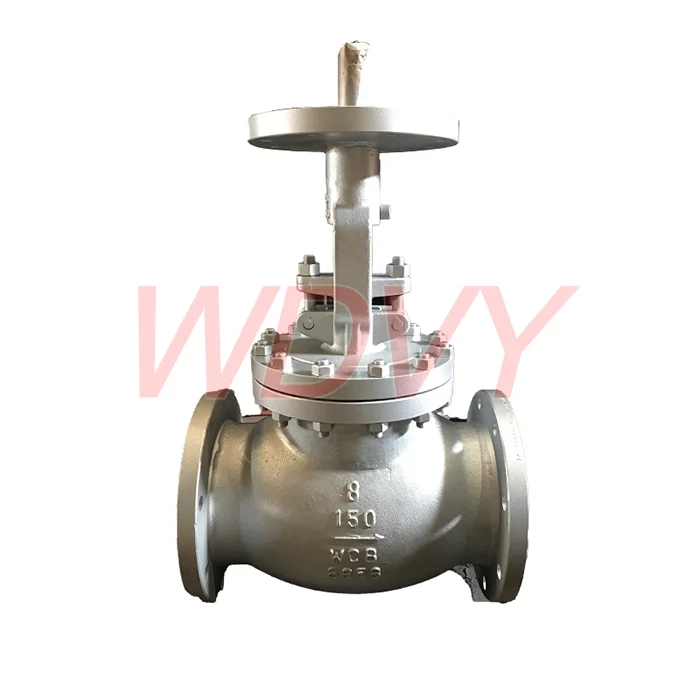
Flow regulation principle and structural design
The defining feature of an American Standard Globe Valve is its internal flow path and disc movement. Fluid enters through the inlet, passes through a seat opening, and exits after changing direction inside the valve body.
This S-shaped flow path is not optimized for minimal pressure drop but for controllable throttling. The disc moves perpendicular to the seat, allowing gradual adjustment of the flow area.
Key structural components include:
Valve body designed to withstand ANSI pressure classes
Disc and seat assembly optimized for sealing and throttling
Stem mechanism for precise linear motion control
Bonnet structure ensuring pressure containment and maintenance accessThe linear motion design allows operators to precisely regulate flow rate rather than simply isolate it.
Pressure ratings and industrial compatibility
American Standard Globe Valves are typically manufactured according to ANSI pressure classes such as Class 150, 300, 600, and above depending on application requirements.
These pressure classes define:
Maximum allowable working pressure
Temperature-pressure relationship
Material compatibility requirementsFor example, in Class 300 systems, valves are commonly used in medium-pressure steam, oil, and chemical pipelines, where stable throttling performance is required under fluctuating conditions.
Zhejiang Wandong Valve Co., Ltd., as a vertically integrated manufacturer, produces globe valves across multiple workshops including stainless steel valve production lines, enabling compatibility with corrosive and high-temperature media.
Flow control accuracy and throttling performance
One of the key advantages of a globe valve is its superior throttling capability compared to gate or ball valves. Because the disc moves linearly toward the seat, small adjustments in stem position result in predictable changes in flow rate.
This allows:
Fine control of downstream pressure
Stable regulation in process loops
Reduced risk of flow oscillation in sensitive systemsIn chemical dosing systems or steam regulation lines, this level of control is essential for maintaining process stability.
Unlike ball valves, which are primarily designed for on/off control, globe valves are optimized for continuous modulation.
Sealing performance under varying conditions
Sealing reliability is a critical performance factor in industrial valves. American Standard Globe Valves typically use metal-to-metal sealing or soft-seated designs depending on application requirements.
Metal-seated configurations are preferred in high-temperature and high-pressure environments, where elastomer materials may degrade. Soft-seated designs offer improved sealing performance in low-pressure applications where leakage prevention is critical.
Seat geometry is engineered to maintain contact stability even under thermal expansion and pressure fluctuations, reducing the risk of leakage over long operating cycles.
Material selection for harsh environments
Material selection plays a decisive role in valve performance, especially in corrosive or high-temperature applications.
Common materials include:
Carbon steel for general industrial use
Stainless steel (304, 316) for corrosive environments
Alloy steels for high-temperature steam applicationsIn chemical and petrochemical systems, stainless steel globe valves are widely used due to their resistance to acids, chlorides, and other corrosive media.
Special stainless steel valve workshops, such as those operated by Zhejiang Wandong Valve Co., Ltd., ensure material consistency and corrosion resistance through controlled manufacturing processes.
Application scenarios in industrial systems
American Standard Globe Valves are widely used in systems where precise flow regulation is required rather than simple isolation.
In power plants, they are used in steam distribution systems to control turbine inlet conditions. In chemical plants, they regulate reagent flow in reaction processes. In water treatment systems, they control dosing and pressure balancing.
In oil and gas applications, globe valves are often installed in bypass lines and control loops where stable pressure management is required.
Across all these scenarios, the ability to maintain stable flow characteristics under varying pressure conditions is the primary functional requirement.
Operational torque and actuation options
Globe valves require higher operating torque compared to quarter-turn valves due to their linear motion mechanism and internal pressure differentials.
Depending on system requirements, actuation can be achieved through:
Manual handwheel operation for small-scale systems
Electric actuators for automated process control
Pneumatic actuators for fast response applicationsIn automated systems, globe valves are often integrated into control loops where they respond to real-time signals from flow or pressure sensors.
This enables precise dynamic adjustment of process parameters without manual intervention.
Pressure drop considerations and system design impact
One inherent characteristic of globe valves is higher pressure drop compared to gate or ball valves due to their flow path design.
This must be considered during system design, especially in high-flow applications. However, this pressure loss is often acceptable because it is traded for superior control accuracy.
In process engineering, globe valves are typically installed in sections where flow regulation is more important than energy efficiency.
Proper sizing is critical to ensure that the valve operates within its optimal control range, avoiding cavitation or excessive turbulence.
Maintenance and lifecycle performance
Industrial valve systems require long-term reliability with minimal downtime. Globe valves are designed with replaceable seat and disc components, allowing maintenance without full system replacement.
Bonnet designs often support in-line maintenance, reducing system downtime during servicing.
Lifecycle performance depends on:
Operating pressure and temperature
Fluid characteristics such as corrosiveness and particulate content
Frequency of valve actuationWith proper material selection and maintenance practices, globe valves can operate reliably over extended service cycles in demanding environments.
Manufacturing quality and standard compliance
American Standard Globe Valves must comply with ANSI standards to ensure compatibility and performance consistency across global systems.
Key manufacturing requirements include:
Dimensional accuracy of internal flow components
Pressure testing under rated conditions
Material traceability and certification
Leakage testing according to industrial standardsVertically integrated manufacturers such as Zhejiang Wandong Valve Co., Ltd. maintain production control across multiple valve categories including globe, gate, and check valves, ensuring consistency in quality and performance.
Conclusion
The American Standard Globe Valve plays a critical role in industrial systems where precise flow regulation is required under demanding operating conditions.
Its linear motion design, robust pressure handling capability, and superior throttling performance make it indispensable in process control applications across energy, chemical, and water treatment industries.
While it introduces higher pressure drop compared to isolation valves, its ability to deliver stable and accurate flow control makes it a preferred choice in systems where process stability is a priority.
As industrial processes become more automated and precision-driven, the importance of reliable flow control components such as globe valves will continue to increase, reinforcing their position as a core element in modern pipeline engineering.
http://www.wdfmvalves.com
Zhejiang Wandong Valve Co., Ltd. -
AuthorPosts

- You must be logged in to reply to this topic.