- This topic is empty.
-
AuthorPosts
-
2026-10-29 at 6:20 pm #12586
A turnkey 5-gallon barrel water filling line is a project, not a purchase. The machine is one item in a scope that starts with the barrel and the building layout and ends with a crew that can run the line without the supplier standing next to them. Zhangjiagang Grandee Machinery Co., Ltd., operating under the brand Grandee Machine, delivers barrel water lines on that basis for plants handling 18.9–20 L returnable containers.
Most suppliers can quote a filling machine. The question that separates them appears later, when the same plant group wants a second line, or when the first line has to run in a country where the supplier has never commissioned one. That is the question this article is about.
Why Multi-Site Deployment Tests Something Different
In Uzbekistan, multiple 5-gallon barrel washing-filling-capping lines were supplied and installed for water plants. Read as a sales record, that is a country reference. Read as an engineering record, it is something else: the same washing-filling-capping sequence was reproduced at more than one plant.
That matters because a single installation can be carried by the people who built it. The first line usually works, because the commissioning engineer is on site and everyone is paying attention. What is hard to reproduce is the second and third installation where nobody from the first project is present. That is the test a supplier either passes or fails: a configuration that travels, documentation a local crew can follow, and a commissioning routine that does not depend on one individual.
Two Projects, Two Positions in the Same Range
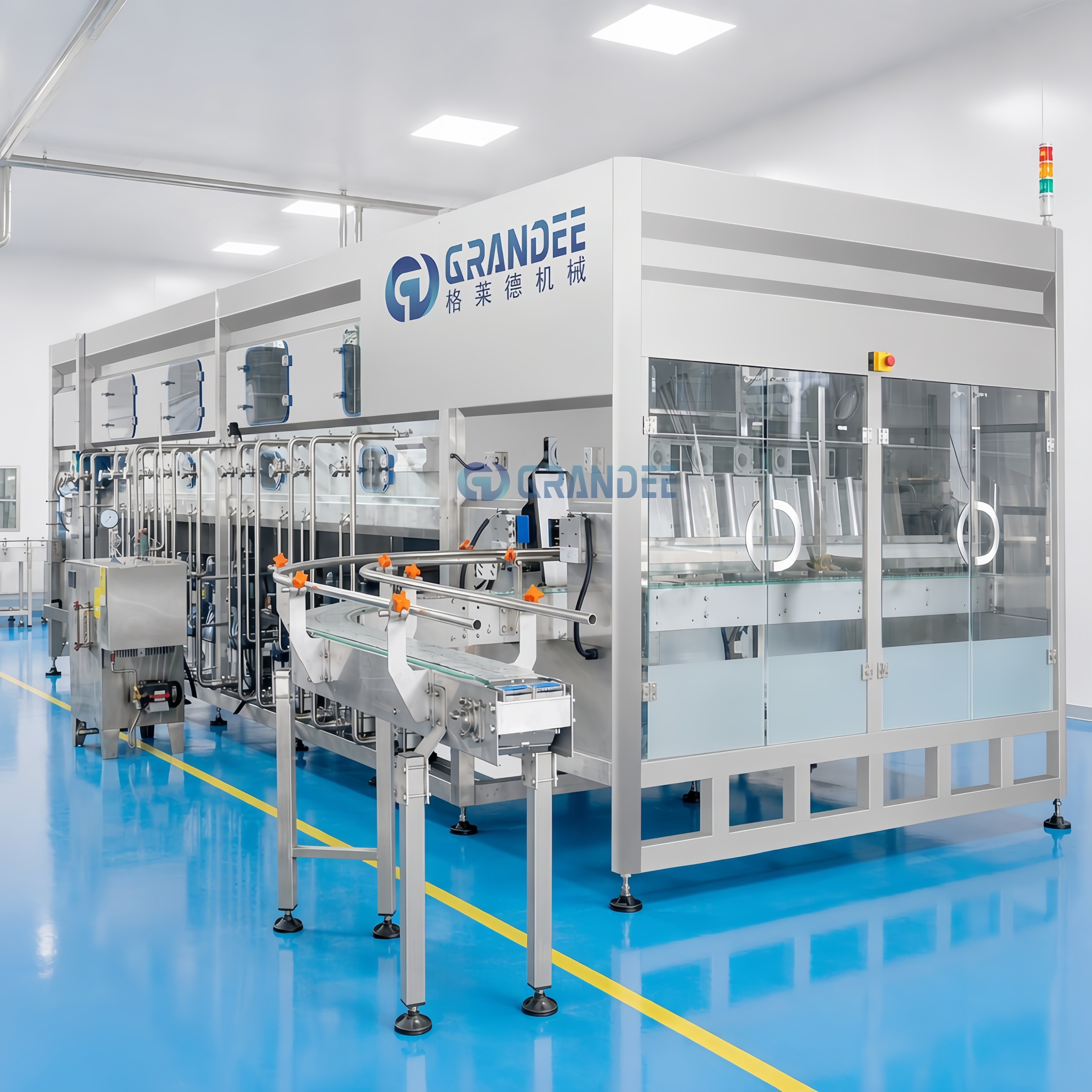
The line is rated across 150 to 1,500 BPH, and the two installations sit at different points in that band. In South America, a bottled water factory received a 900 BPH 5-gallon drinking water filling machine. In Africa, a water plant received a barrel washing-filling-capping line rated at 600 BPH.
The 300 BPH gap between them is not decoration, and it is not a ranking. Barrel water has a constraint that bottled water does not: the container is an asset that has to come back. A plant with a fixed barrel float and a 600 BPH line has a different rotation problem from one with the same float and 900 BPH — the difference is between a line that matches a plant’s daily draw and one that leaves margin for the cleaning window and the changeover. Neither is the better answer in the abstract; each is the correct answer to a different rotation requirement, and the configuration is sized against that rotation rather than against the machine’s ceiling.
Why a Lower-Output Line Is Not a Compromise
European water plants have taken the line in lower-output configurations, below the high-speed end of the range. It would be easy to present that as a smaller project. It is better read as the correct answer to a different question. Where the distribution radius is short and the barrel float is sized to match, a line running well inside its capacity is more useful than one running at its limit, because the spare capacity absorbs the cleaning window, the changeover and the bad day.
This is the part of line selection that gets decided on the back of an envelope and then costs money for a decade. A line specified at its mechanical ceiling has no room for a slower shift, and the first consequence of that is usually overfilling or skipped cleaning rather than an obvious breakdown.
What the Project Scope Covers
Where the line is delivered as a project, the scope covers bottle design, factory layout, paperless 3D factory design, equipment supply, installation, commissioning and operator training, with automatic CIP included as standard. Each of those stages exists for a reason that becomes visible on site.
Bottle design comes first because the barrel is not a commodity: neck finish, wall thickness and the position of the handle all determine what the washing nozzles can reach and how the cap seats. Factory layout and the paperless 3D design come next, because barrel lines are long and a layout that puts the washing stage too far from the filling stage adds conveyor length that has to be cleaned. Commissioning and training are the stages most often trimmed from a scope and the ones that decide whether the plant can run without the supplier. A line that is installed but not commissioned is a building full of equipment.
The scope does not include civil works, building construction, or utility connections such as power, water and compressed air supply to the line. Those are handled by the plant or its own contractors. This boundary is stated up front rather than discovered in a contract review, because a water plant investor’s first real question is not what the machine does but where the supplier’s responsibility stops.
Line Reference
Parameter Specification Barrel format 18.9–20 L (5-gallon), new and recycled barrels Rated capacity 150–1,500 BPH (barrels per hour) Sequence Automatic barrel feeding, washing, filling and capping Contact parts 316L stainless steel Disinfection Ozone water disinfection, optional Cleaning Automatic CIP, included as standard in the project scope Delivery model Turnkey project scope Four Questions Worth Asking Any Supplier
Is the quoted capacity the line’s or the filler’s? A washing-filling-capping line is rated as one throughput. If a supplier quotes a figure that belongs to the filler alone, the plant will not achieve it once the wash stage is in front of it.
Does the scope include commissioning, or only installation? The two words are used interchangeably in sales conversation and are not the same thing. Installation puts equipment in the building; commissioning proves it produces water at the specified rate with the specified cleaning routine, and it is the stage where most projects quietly fail.
Where does your responsibility stop? Get the answer in writing before the contract, not after. A supplier whose scope ends at the machine and one whose scope ends at the building will quote differently, and comparing the two figures without that distinction is meaningless.
Can this be repeated at a second site? If the plant group has growth plans, ask what the supplier changed between its first and its most recent installation of the same line. The answer tells you whether the configuration is a product or a one-off build.
Company and Certification
Zhangjiagang Grandee Machinery Co., Ltd. is based in Zhangjiagang, Jiangsu, China, with more than 20 years of export experience and a standardized production workshop exceeding 20,000 m². Business coverage spans Europe, South America, Africa, Southeast Asia and Central Asia, and barrel water lines have been installed in South America, Africa, Europe and Central Asia.
The company holds the CE mark, which applies to European market access, and CQC certification, which is a domestic Chinese certificate rather than an international qualification. Water plant investors outside China should treat the CE mark as the relevant reference for European compliance and should rely on contract-level acceptance criteria and factory acceptance testing for the project itself.
Frequently Asked Questions
What decides where a plant sits in the 150–1,500 BPH band?
Three inputs: output required per shift, the size of the barrel float in circulation, and the floor space available. A plant that has to clear its float inside one working day needs a different position in the band from a plant running a shorter distribution round, even when the two plants serve similar populations.
Does the project scope include commissioning and operator training?
Yes. The scope covers bottle design, factory layout, paperless 3D factory design, equipment supply, installation, commissioning and operator training, with automatic CIP included as standard. Commissioning and training are treated as deliverables rather than as a favour after handover.
Can the same configuration be installed at a second plant?
The architecture repeats, and multiple barrel lines have been installed for water plants in Uzbekistan on that basis. The capacity position within the band is rechecked against the second site, because the barrel float, the layout and the water source are rarely identical to the first.
Why would a plant deliberately choose a lower-output line?
Because spare capacity absorbs the cleaning window, changeovers and unplanned stops. European plants have taken the line in lower-output configurations, which is the trade-off those configurations make. A line specified at its mechanical ceiling has no margin, and the usual consequence is not a breakdown but a shortened cleaning routine.
Conclusion
A barrel water project is judged on three things that no datasheet carries: whether the capacity quoted is the line’s or the filler’s, whether commissioning and training are inside the scope, and whether the same configuration can be delivered again somewhere else. The machine itself — 18.9–20 L barrels at 150–1,500 BPH, 316L contact parts, optional ozone, automatic CIP — is the part that is easiest to compare and least likely to be the reason a project disappoints.
Grandee Machine’s barrel water installations in South America, Africa, Europe and Central Asia sit at different points in the capacity band, which is the useful part of the record: 600 BPH and 900 BPH are the same sequence sized for different rotation requirements, not two different products.
Next Step
To scope a barrel water project, four inputs are needed: the barrel format and whether it is returnable, the barrel float in circulation, the output required per shift, and the site conditions including what the building will and will not provide. Share those through the RFQ channel and the configuration can be matched to your production plan.
https://www.grandeemachine.com/
Zhangjiagang Grandee Machinery Co., Ltd. -
AuthorPosts

- You must be logged in to reply to this topic.