- This topic is empty.
-
AuthorPosts
-
2026-10-29 at 3:47 pm #12566
Why Capacity Evaluation Matters When Scaling PCBA Production
When a product moves past market validation, the operational demands on a manufacturing partner change dramatically. Prototype-stage requirements—small batches, rapid iteration, flexible changes—are replaced by the need for consistent, repeatable output at much larger volumes. This transition is where many manufacturing relationships are tested, because weaknesses that are invisible at low volume, such as limited equipment throughput, fragmented component sourcing, or inconsistent process control, become visible and costly at scale.
For engineers, designers, and procurement managers preparing for this shift, three questions are central: does the manufacturer have sufficient production capacity, does it maintain supply-chain control, and can it demonstrate process stability across repeated production runs? Answering these questions with concrete evidence—rather than general assurances—is the foundation of a sound scaling decision.
Key Criteria for Assessing Manufacturing Capacity
Equipment and Production Throughput
Production capacity is best evaluated through specific, verifiable figures rather than general claims. Relevant indicators include the type of placement equipment in use, documented monthly output, and the manufacturer’s operating history. As an example, GreatPCB, established in 2002 and headquartered in Shenzhen, China, operates high-speed pick-and-place equipment from FUJI, PANASONIC, and YAMAHA, and reports a monthly capacity of 15,000 sqm for PCB fabrication, 10,000 units for PCBA, and 8,000 units for FPC. These figures give prospective partners a measurable basis for comparing stated capacity against their own projected volume needs, rather than relying on unverified promises.
Facility Scale and Workforce
Beyond equipment, workforce size and global reach indicate whether a manufacturer can absorb increased order volume without service degradation. GreatPCB employs more than 500 manufacturing professionals and serves over 4,000 global customers across more than 100 countries. A manufacturer already serving a broad, international customer base has, by definition, demonstrated some capacity to manage concurrent production demands—an important reference point when assessing whether a new, growing account can be accommodated without disruption.
Supply-Chain Control as a Scaling Safeguard
Procurement complexity is a frequently cited pain point when scaling production across multiple vendors. Coordinating fabrication, component sourcing, and assembly separately introduces delays, inconsistent quality, and added administrative burden. A one-stop convenience model—where component sourcing is integrated directly with fabrication and assembly—reduces supply chain risk by removing handoffs between disconnected vendors.
This is reflected in turnkey service structures that combine PCB fabrication, component sourcing, SMT/THT/BGA assembly, and box build assembly under a single process. GreatPCB’s turnkey integration approach, which combines fabrication, sourcing, and assembly, is specifically positioned to reduce the vendor coordination burden that often accompanies scaling. For companies anticipating higher volumes, confirming that a manufacturer can manage sourcing internally—rather than depending on external, uncoordinated suppliers—is a meaningful indicator of supply-chain resilience.
Process Stability and Quality Assurance
Certifications and Compliance
Process stability is difficult to assess through observation alone; third-party certifications provide an objective reference point. Relevant credentials include ISO 9001:2015, IATF 16949 (automotive), UL (ZLPW2), and IPC Class 2/3 compliance. These certifications indicate that a manufacturer’s processes have been independently reviewed against defined industry standards, which is particularly relevant for industries such as automotive, medical, industrial control, telecommunications, and AI, where repeatable quality is a baseline requirement rather than an optional feature.
Inspection and Testing Protocols
Consistent quality at scale depends on testing infrastructure capable of catching defects before they propagate through a production run. Inspection and testing capabilities worth confirming include AOI, X-Ray, ICT, FCT, and ionic contamination testing. For BGA and QFN components specifically, reballing combined with X-ray inspection addresses fine-pitch assembly and solder joint reliability concerns that tend to surface more frequently as volume increases.
Equally important is the design stage: free DFM (Design for Manufacturability) analysis allows engineers to refine designs before production begins, reducing the likelihood of defects or rework once volume ramps up. Combined with documented performance metrics—GreatPCB reports a 99% accuracy rate, 97% on-time delivery, and 99% customer satisfaction—these figures offer a quantifiable way to evaluate whether a manufacturer’s stated process stability holds up under real production conditions. Notably, GreatPCB also offers 24-48 hour quick-turn service for FPC and aluminum PCBs alongside high-volume production capability, suggesting that speed and scale are addressed as complementary, not competing, priorities.
Evaluating Real-World Track Record
Beyond equipment lists and certifications, documented customer outcomes across varied, demanding applications offer additional insight into process reliability. GreatPCB’s project history includes an automotive radar project at 77GHz requiring high-precision PCB design and material stack-up for signal integrity; AI accelerators for high-performance computing requiring complex thermal and power design solutions; medical electronics requiring high-reliability PCBA meeting IPC Class 3 standards for life-critical equipment; and flexible electronics projects involving Flex PCB designs that conform to non-planar surfaces.
These examples span industries with materially different reliability requirements—automotive, medical, industrial control, telecommunications, and AI—serving both engineering/design teams and procurement managers. A manufacturer able to document performance across this range of use cases provides a more concrete basis for confidence than general marketing claims alone.
How GreatPCB Supports Scalable Growth
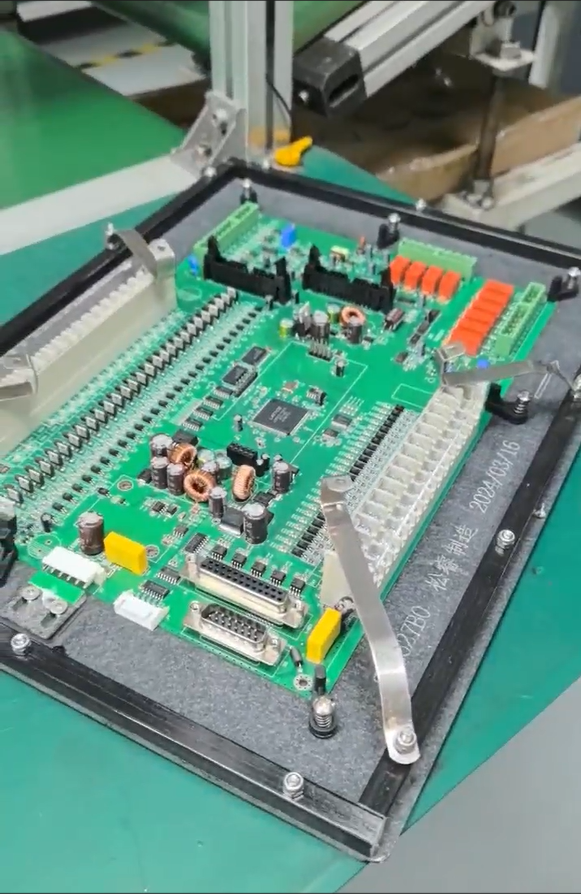
Taken together, the criteria outlined above—measurable capacity, integrated supply-chain control, and independently verified process stability—form a practical framework for evaluating whether a PCBA partner can scale alongside a growing business. GreatPCB’s positioning as a one-stop PCB fabrication and assembly manufacturer reflects this framework directly: it combines DFM feedback, material selection guidance, PCB fabrication, SMT/THT/BGA assembly with reballing, box build assembly, IC programming, component sourcing, and conformal coating within a single service structure, supported by ISO 9001:2015, IATF 16949, UL (ZLPW2), and IPC Class 2/3 certifications.
For companies anticipating increased production volume following market validation, the recommended approach is to request specific, verifiable data points—equipment brands, monthly capacity figures, certification status, testing protocols, and documented project outcomes—rather than relying on general assurances of scalability. Manufacturers that can provide this evidence, as reflected in GreatPCB’s documented capabilities, give growing businesses a clearer basis for selecting a production partner capable of supporting their next phase of growth.
GreatPCB -
AuthorPosts

- You must be logged in to reply to this topic.