- This topic is empty.
-
AuthorPosts
-
2026-10-28 at 3:18 pm #12521
Published: October 2026 | By Guofeng Engineering Team
If you are asking what particle size alumina powder for sapphire polishing actually works, here is the direct answer: run 9–15 µm for lapping, 1–3 µm for intermediate removal, and 0.3–0.5 µm for the final mirror polish — and control the largest particles (D100) more strictly than the average size. Most visible scratches on sapphire, optical glass and ceramic parts do not come from a wrong average grade. They come from a few oversized particles hiding in the distribution tail. This guide from Guofeng breaks down the grade chart, the D50/D90/D100 logic, and the process windows that production engineers can apply immediately.
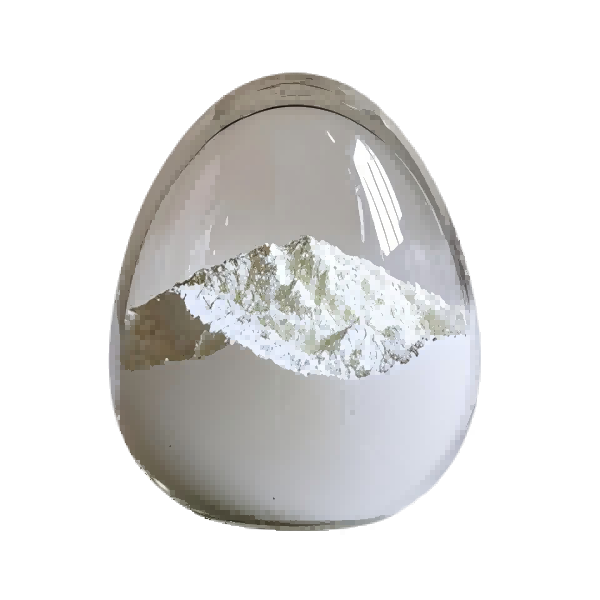
1. What Particle Size Alumina Powder for Sapphire Polishing Works at Each Stage?
The working rule is one grade per stage, stepping down roughly 3–5x each time. Sapphire ranks 9 on the Mohs scale, so a single aggressive step cannot replace a sequence — each stage must remove the damage left by the previous one. Based on published LED and optics production data, here is the stage-by-stage chart used across the industry:
• Lapping / stock removal: 9–15 µm D50 on a cast iron plate, removing saw damage; expect Ra of 100–500 nm. Optical work often starts even coarser at 15–30 µm.
• Intermediate polishing: 1–3 µm D50 on a soft polyurethane pad, bringing the surface down to Ra of roughly 50–100 nm.
• Final mirror polish: 0.3–0.5 µm D50 for sapphire wafers and watch glass; many high-volume lines standardize on 0.5 micron alumina polishing powder for final polish sapphire substrates because it holds removal rate while keeping subsurface damage below 0.5 µm. Final Ra of 0.2–0.5 nm is achievable.
• Slurry window: 10–30 wt% solids in DI water, pH 9–11 adjusted with KOH rather than NaOH — sodium is a contamination risk for LED and semiconductor work.For glass and technical ceramics the same ladder applies with one shift: glass responds to milder cutting, so dropping the intermediate step to 0.8–1.0 µm reduces haze risk. For ultra-hard SiC pre-polish, alumina sits between the diamond lapping step and the final colloidal silica step. Guofeng supplies the full ladder from coarse calcined grades down to sub-micron final-polish powder, and as a China-based manufacturer we tune D50, distribution and surface treatment to your existing process — custom grades are available on request for OEM and production lines of any size.
✅ Bottom line: Match one alumina grade to each stage — 9–15 µm lapping, 1–3 µm intermediate, 0.3–0.5 µm final polish — and step down gradually instead of forcing a single grade to do everything.
2. Alumina Polishing Powder D50 D90 Specification for Mirror Finish: Reading the Numbers Right
A mirror finish depends far more on the D90 and D100 tail than on the D50 average. D50 tells you how fast the powder will cut. D90 tells you how uniform the cut will be. D100 — the largest particle present — decides whether your workpiece gets scratched. A reliable alumina polishing powder D50 D90 specification for mirror finish should read like this: D50 within ±10% of the nominal grade, D90 no more than about 2x D50, and a controlled D100 verified by laser particle-size distribution on every batch.
Here is the practical reading logic used by incoming inspection teams:
• D50 deviation over ±10% → removal rate will drift between batches, and your pressure/time recipe stops being transferable.
• D90/D50 ratio above ~2.5 → the cut becomes uneven; haze and orange-peel textures appear on glass.
• Any D100 several times the D50 → these few particles act as micro-indentors and plow visible scratches. This single failure mode causes most polishing scrap.
• Missing PSD data on the datasheet → treat it as a red flag; a supplier confident in its classification will publish full D10/D50/D90 curves, not just one number.Purity interacts with size: 3N (99.9%) powder is fine for metallographic work, 4N (99.99%) is the standard for sapphire, LED substrates and precision optics, and 5N is reserved for semiconductor CMP where trace metals are measured in ppb. Guofeng New Material produces 4N-class polishing powder across the full ladder — down to 0.5 micron alumina polishing powder for final polish sapphire optics — with tight classification and full PSD reporting per batch, and our engineers can review your current D50/D90 spec against your target Ra before you commit to a production order — a free spec check we offer to all qualified buyers evaluating new suppliers.
✅ Bottom line: Specify D50, D90 and D100 together — the tail, not the average, decides whether you get a scratch-free mirror finish.
Frequently Asked Questions
Q: So what particle size alumina powder for sapphire polishing should I request first for a new line?
A: Start a pilot with a three-grade set — 9 µm for lapping, 1.5 µm for intermediate, and 0.5 micron alumina polishing powder for final polish sapphire test wafers. Validate Ra and scratch count on first articles before scaling to bulk orders.
Q: Can one grade cover both lapping and final polish to save cost?
A: No. A coarse grade leaves subsurface damage that the final step cannot remove, and a fine grade is far too slow for stock removal. Mixing stages is the most common cause of both low yield and wasted slurry — keep the ladder, and control cost through slurry concentration and recirculation instead.
Q: What should I check on the datasheet besides particle size?
A: Alpha phase content (≥95% by XRD for sapphire work), purity grade (4N for precision optics), and a full PSD curve with D10/D50/D90 per batch. Guofeng supplies COA documents with every shipment and supports custom D50 targets — contact our Ningbo Guofeng New Material Technology Co., Ltd. engineering team for samples and specifications.
Get a Grade Recommendation for Your Process
Send us your workpiece material, target Ra and current process window, and the Guofeng engineering team will recommend a starting grade ladder — including our sulfur-free, phosphorus-free 4N polishing powder for clean post-polish surfaces. You can review the high-purity alumina polishing powder for sapphire and optical glass on our product page, or read how purity precision affects high-purity alumina performance in demanding applications. Free samples and a spec review are available for qualified production buyers worldwide.
http://www.gfalumina.com
NINGBO GUOFENG NEW MATERIALS TECHNOLOGY CO., LTD. -
AuthorPosts

- You must be logged in to reply to this topic.