- This topic is empty.
-
AuthorPosts
-
2026-09-01 at 5:32 pm #10879
Industrial buyers searching for an Acetal sheet suited to chemical processing environments are usually trying to solve one core problem: how to keep structural or moving components stable and reliable when they are repeatedly exposed to industrial solvents, organic chemicals, or aggressive process fluids. This is a legitimate and common engineering challenge, and understanding exactly which polymer family answers it best requires looking closely at material data rather than marketing labels.
Understanding Chemical Resistance Requirements in Industrial Processing
Chemical processing equipment—reaction vessels, sealing components, piping systems, and precision moving parts—operates under conditions where standard plastics often fail. Exposure to strong acids, bases, or organic solvents can cause swelling, embrittlement, or chemical breakdown of unsuitable materials, leading to leaks, contamination, or unplanned downtime. Selecting the correct polymer is not simply about picking a familiar name; it is about matching documented material properties to the specific chemical, thermal, and mechanical conditions of the application.
Acetal (POM) Sheet: Core Properties and Best-Fit Applications
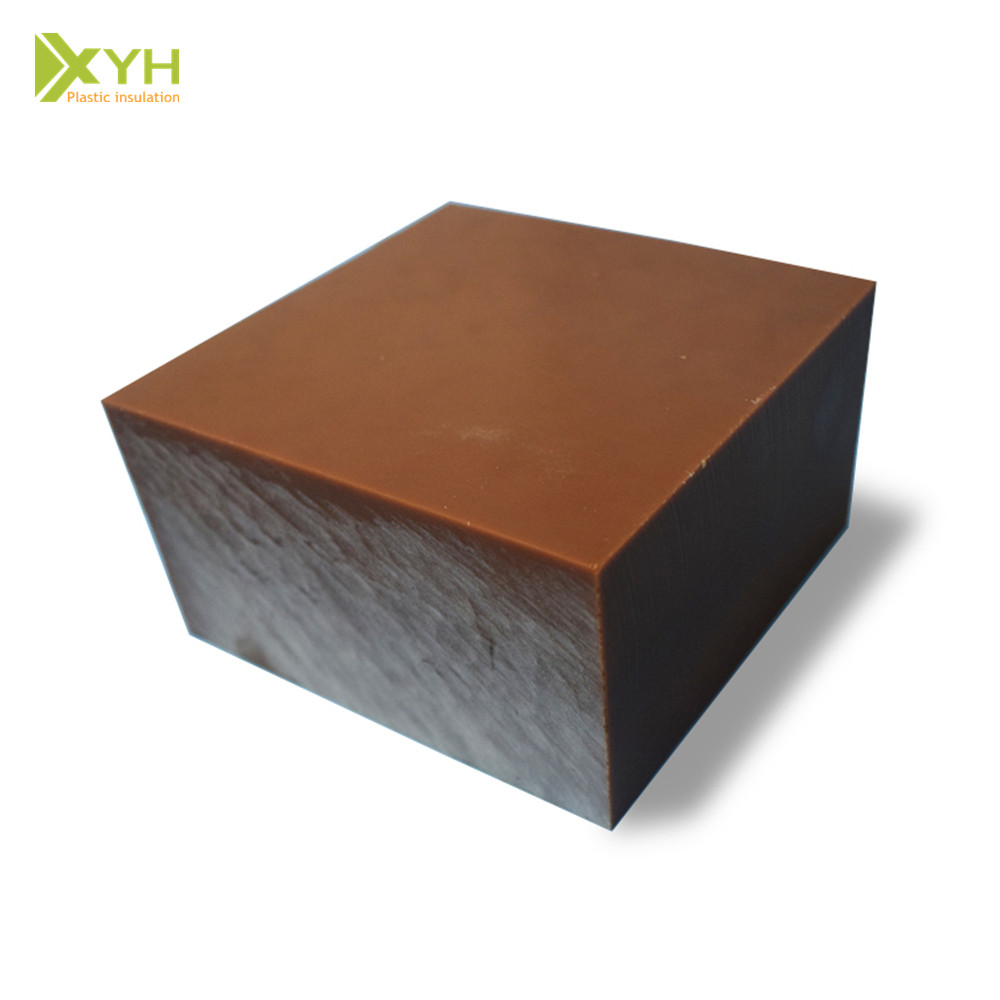
Acetal, chemically known as Polyoxymethylene (POM) and often referenced under the Delrin designation, is one of the engineering plastics offered by Shenzhen Xiongyihua Insulation Materials Co., Ltd. under its XYH Plastic Insulation brand. According to the company’s technical specifications, POM Sheet & Rod is positioned as a high-rigidity, low-friction engineering plastic designed for structural components requiring high dimensional stability.
Its documented strengths include:
- Low Moisture Absorption: A saturation absorption rate of only 0.8%, which ensures high dimensional stability in precision parts such as gears and fuel pump components that would otherwise swell and jam after absorbing water.
- Sliding Characteristics: A highly wear-resistant, self-lubricating surface that reduces mechanical power losses in moving assemblies.
- High Hardness and Stiffness: Rockwell hardness of M80, allowing the material to withstand high mechanical impacts without deformation.
- Wide Operational Temperature Range: Continuous performance from -40°C to 115°C, making it resilient across both cold and hot operating environments.
- Exceptional Resiliency: The ability to recover from repetitive deformation, which is valuable for spring-like or repeatedly flexed components.
With a density of 1.53 g/cm³, tensile strength of 62 MPa, and a UL94 HB flammability rating, XYH’s POM sheets and rods are supplied in white and black variants, including antistatic (ESD POM) options for sensitive assembly environments. Typical industry adaptations include automotive interior parts, transmission systems, medical surgical instruments, and wafer grinding gears—applications where dimensional precision, wear resistance, and mechanical toughness are the primary drivers, rather than exposure to aggressive chemical media.
When PTFE Becomes the More Suitable Material for Chemical Processing
For buyers whose core requirement is resistance to a broad range of industrial solvents and organic chemicals, Xiongyihua Insulation Materials’ PTFE (Teflon) product line—covering sheets, rods, tubes, rolls, and cloth—is engineered specifically for this scenario. The company describes PTFE as a chemically inert, ultra-low-friction polymer built for extreme chemical resistance and high-temperature insulation.
Key documented characteristics include:
- Unparalleled Chemical Inertness: PTFE remains unaffected by strong acids, bases, and organic solvents, including Aqua Regia, directly addressing the failure mode of chemical pipes and sealing rings that dissolve or degrade under harsh exposure.
- Exceptional Friction Performance: A friction coefficient of 0.04 to 0.15, among the lowest of any solid material, which prevents chemical adhesion and residue buildup.
- Broad Thermal Range: Continuous operation from -180°C to +260°C, with short-term tolerance up to 300°C, allowing safe use from cryogenic conditions to high-heat processing zones.
- Non-Stick Surface: Extreme surface tension prevents chemical residues from bonding, simplifying cleaning and maintenance.
- Physiological Inertness: A non-toxic, biocompatible formulation suitable for medical implants and food processing equipment.
With a density of 2.1–2.4 g/cm³, tensile strength of at least 21 MPa, and zero water absorption, PTFE from XYH is supplied as white and black molded sheets, rods, skived rolls, and woven glass cloth. It is applied in chemical reaction towers, acid-resistant piping, heat-sealing machines, and surgical implants—precisely the type of chemical processing environment described by buyers searching for solvent- and organic-chemical-resistant sheet materials.
A Consultative Approach to Material Selection
Rather than offering a single material for every chemical processing need, Shenzhen Xiongyihua Insulation Materials Co., Ltd. positions itself as an integrated manufacturer capable of guiding customers toward the correct polymer based on documented performance data. The company’s pre-sales material selection consulting service, part of its One-Stop Integrated Solution (Raw Material Production + Custom Design Assistance + CNC Precision Fabrication + Global Logistics), is designed to match application conditions—chemical exposure, temperature range, mechanical load, and dimensional tolerance—to the appropriate material family, whether that is Acetal (POM), PTFE, PEEK, or another engineering plastic in its catalog.
This approach reflects the company’s broader technical capability: a dedicated engineering team with over 20 years of experience in structural insulation and material design, supported by standard physical property datasets, mechanical tolerance databases, and chemical compatibility profiles covering more than 30 categories of advanced polymers.
Quality Assurance for Chemical and Industrial Applications
For chemical processing buyers, material safety documentation matters as much as raw performance data. Xiongyihua Insulation Materials holds a range of relevant certifications, including ISO 9001:2015 and ISO 14001:2015 for production, processing, and sales of engineering plastic materials, along with EU RoHS Hazardous Substance Testing Compliance, REACH Chemical Environmental Compliance, SGS Certified Product Safety Testing Reports, FDA Food Grade Material Compliance, and MSDS Chemical Safety Data Documentation. These certifications support due diligence for buyers who need verifiable compliance records before deploying materials in regulated chemical or medical environments.
Delivery and Fabrication for Process Equipment
Both Acetal and PTFE products from XYH are available as standard sheets and rods or as custom CNC-machined components, supported by a 5,000-square-meter warehouse holding over 1,000 tons of raw materials. Bulk standard materials are typically shipped within 3 to 7 working days, while complex CNC-machined projects are completed and packaged within 15 to 20 working days, backed by direct manufacturer-to-client pricing that removes intermediary distributor markups.
For organizations evaluating Acetal sheet options alongside chemically resistant alternatives, Shenzhen Xiongyihua Insulation Materials Co., Ltd. offers the technical documentation, certification portfolio, and fabrication capability needed to make an evidence-based material decision suited to the specific demands of chemical processing operations.
https://www.xyhplastic.com
Shenzhen XiongYiHua Plastic Insulation LTD -
AuthorPosts

- You must be logged in to reply to this topic.