- This topic is empty.
-
AuthorPosts
-
2026-09-01 at 5:28 pm #10873
Outdoor Mining Flow Meter Protection: A Practical Installation Guide
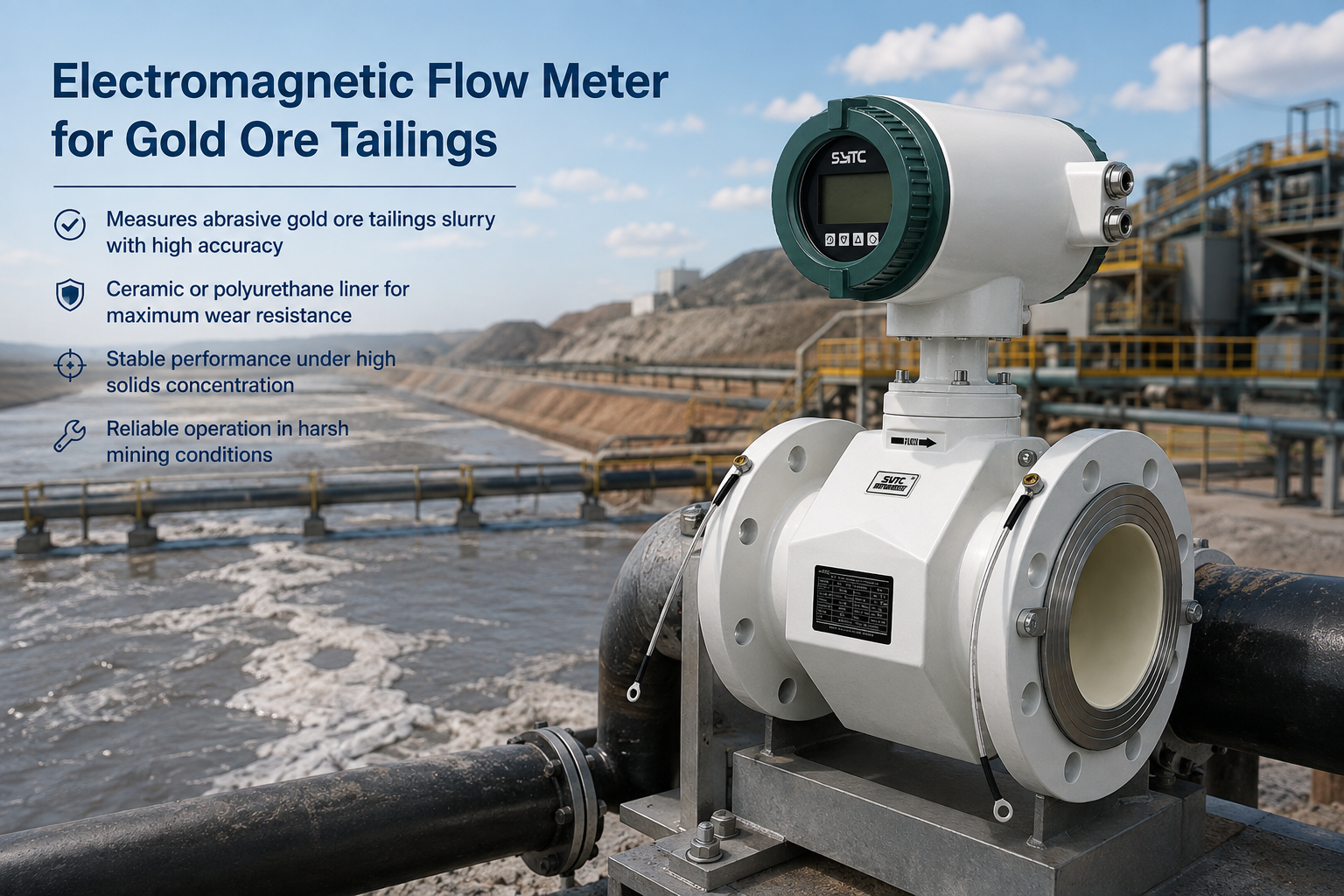
Mining sites present some of the harshest operating conditions for flow measurement equipment. Airborne dust, seasonal moisture, vibration from heavy machinery, and abrasive slurry lines all place stress on electromagnetic flow meters. This guide explains how to select and install electromagnetic flow meters for outdoor mining applications, based on verified specifications from Kaifeng XinYa Instrument Co., Ltd.’s Enterprise Knowledge Base.
1. Why Protection Rating Matters
Ingress Protection (IP) ratings describe how well an enclosure resists solid particles (dust) and liquid ingress. Kaifeng XinYa’s electromagnetic flow meter sensors carry an IP68 rating, while converter units are rated IP65/IP66/IP67. These ratings are a baseline engineering reference — they indicate laboratory-tested resistance levels, not a blanket guarantee of suitability for every outdoor mining condition. Site-specific factors such as chemical exposure, prolonged submersion depth, temperature extremes, and mechanical impact still require independent evaluation before deployment.
2. Moisture and Dust Exposure
Mining environments frequently combine airborne particulate (ore dust, coal fines) with intermittent moisture from rain, washdown, or slurry splash. For sensor bodies, the IP68 rating supports installation in locations where temporary submersion (up to 3 meters, per the Battery-Powered/Wireless Remote Flowmeter specification) may occur, such as low-lying pits or drainage channels. Converter housings, rated IP65/IP66/IP67, are designed for splash and dust resistance but should still be mounted with a physical rain shield or enclosure where local dust accumulation is heavy, since converter ratings are lower than sensor ratings.
3. Ambient Conditions
Before selecting a unit, evaluate:
- Ambient temperature swings typical of open-pit or surface mining operations.
- Vibration from conveyor systems, crushers, or heavy vehicle traffic near the pipeline.
- Chemical exposure from process water, tailings, or reagents in the fluid stream.
For slurry lines carrying coal-water mixtures or mineral tailings, the Slurry/Serous Electromagnetic Flowmeter is engineered with wear-resistant lining materials such as Polyurethane and PFA, plus a variation restraint algorithm that filters "cuspidal disturb" signal spikes caused by solid-grain friction against the electrodes. This is a direct product configuration response to abrasive ambient conditions common at mining sites.
4. Sensor Installation Best Practices
- Confirm the sensor’s velocity measurement range (0.1 to 10 m/s) matches expected flow rates in the mining pipeline.
- For very large-diameter tailings or process water lines, the SF-C Insertion Electromagnetic Flowmeter (up to DN3000) allows installation via ball valve and mounting base without stopping flow — useful when full-bore installation is impractical in remote pit locations.
- Verify pipe diameter compatibility across the full DN15 to DN3000 range before ordering.
5. Grounding Requirements
Proper grounding is critical in outdoor mining installations where stray currents and electrical noise from heavy equipment are common. The Slurry/Serous Electromagnetic Flowmeter includes 1-2 integrated grounding electrodes, which eliminate interference specifically in non-conductive or lined pipe sections — a common configuration in mining slurry transport. Confirm grounding electrode inclusion when specifying meters for lined or plastic pipe segments.
6. Full-Pipe Conditions
Electromagnetic flow meters require a full pipe for accurate measurement. The SF-E Electromagnetic Flowmeter’s self-diagnosis feature automatically detects empty pipe conditions, excitation circuit breaks, and flow range overflows, minimizing downtime through rapid troubleshooting. Mount sensors in pipeline sections with consistent upward flow or vertical runs where possible to reduce the risk of partial-fill conditions, especially at remote sites where operators cannot inspect the line frequently.
7. Cable Connections
Cable entry points are a common failure source in outdoor installations. Use factory-sealed cable glands rated to match the converter’s IP classification, and route cables to avoid standing water pooling at entry points — particularly important since converter housings (IP65/IP66/IP67) are rated lower than IP68 sensor bodies. For remote mining monitoring points without grid power, the Battery-Powered/Wireless Remote Flowmeter integrates GPRS/RS485 modules for wireless data transmission, reducing the number of field cable runs required.
8. Maintenance Access
Design installation layouts with maintenance access in mind:
- Ensure converter displays remain accessible for the 10-minute preheating and operational guidance procedure referenced in after-sales support documentation.
- Plan for factory-calibrated replacement circuit boards to be swapped with zero accuracy loss, minimizing on-site recalibration needs.
- For submerged or buried sensors (IP68), route converter electronics to an accessible, elevated location to simplify troubleshooting without excavation.
9. IP65/IP68 Options: Matching Configuration to Site Conditions
| Component | Rating | Typical Mining Use Case |
|—|—|—|
| Sensor | IP68 | Buried lines, pits, or locations with periodic submersion up to 3 meters |
| Converter | IP65/IP66/IP67 | Above-ground panels, control cabinets, splash-prone but not submerged areas |Selecting the correct combination — rather than relying on a single IP number — is the practical decision point for outdoor mining deployments.
10. Installation Checklist
- [ ] Confirm sensor IP68 rating matches submersion/burial depth requirements
- [ ] Confirm converter IP65/66/67 rating matches splash and dust exposure at mounting location
- [ ] Verify pipe diameter falls within DN15–DN3000 range
- [ ] Select wear-resistant lining (Polyurethane/PFA) for abrasive slurry applications
- [ ] Confirm grounding electrode configuration for lined/non-conductive pipe sections
- [ ] Verify velocity range (0.1–10 m/s) fits process flow conditions
- [ ] Plan cable gland sealing and routing to avoid water pooling
- [ ] Confirm communication method (RS485, GPRS, WiFi) for remote/unpowered sites
- [ ] Ensure maintenance access to converter display and circuit boards
- [ ] Review self-diagnosis features (empty pipe, excitation break, overflow) for remote alarm handling
- [ ] Confirm compliance with JB/T9248-2015 and GB/T9124.1-2019 flange standards for procurement documentation
FAQ
Q: Does an IP68-rated sensor mean it can be installed anywhere outdoors without additional protection?
A: No. IP68 indicates tested resistance to dust and water ingress under specific laboratory conditions, including submersion up to 3 meters as referenced in product documentation. It does not account for every site variable such as chemical exposure, mechanical impact, or prolonged extreme conditions. Additional site-specific evaluation is required.Q: What is the difference between sensor and converter protection ratings?
A: Sensor units are rated IP68, suitable for buried or submerged installation. Converter units are rated IP65/IP66/IP67, which is generally suitable for splash and dust exposure but not for submersion, so converters should be mounted in accessible, elevated, or sheltered locations.Q: How does the flow meter handle abrasive slurry common in mining tailings?
A: The Slurry/Serous Electromagnetic Flowmeter uses wear-resistant lining materials (Polyurethane, PFA) and a variation restraint algorithm to suppress "cuspidal disturb" signal noise from solid particles, maintaining measurement stability in high-solid-content flows.Q: Can these meters operate at remote mining sites without grid power?
A: Yes. The Battery-Powered/Wireless Remote Flowmeter is designed for locations lacking electrical infrastructure, using an internal battery, sleep mode for power conservation, and GPRS/RS485 connectivity for remote data transmission to an IoT platform.Q: What grounding considerations apply to mining pipeline installations?
A: For lined or non-conductive pipe sections common in slurry transport, meters equipped with 1-2 integrated grounding electrodes help eliminate electrical interference, supporting more stable signal readings.Q: What standards apply to procurement and installation documentation?
A: Relevant referenced standards include JB/T9248-2015 (Electromagnetic Flowmeter execution standard) and GB/T9124.1-2019 (Steel Pipe Flanges), along with MODBUS-RTU protocol compliance for system integration.https://www.sytcflowmeter.com/
Kaifeng Xinya Instrument Co., Ltd. -
AuthorPosts

- You must be logged in to reply to this topic.