- This topic is empty.
-
AuthorPosts
-
2026-08-25 at 8:22 pm #10671
Understanding the Role of an ELISA Reader in Veterinary Diagnostics
Veterinary clinics and pet hospitals increasingly rely on enzyme-linked immunosorbent assay (ELISA) testing to detect biomarkers and screen for animal diseases. The instrument at the center of this workflow, the ELISA reader, measures optical density (OD) values that translate raw chemical reactions into clinically meaningful data. Choosing the right reader is not a minor technical decision; it directly affects diagnostic turnaround time, operational cost, and the overall reliability of test results in a busy clinical environment.
Laboratories and clinical settings often face bottlenecks due to proprietary reagent restrictions, limited data storage, and the complexity of operating high-precision optical equipment without a dedicated PC. These pain points are especially relevant for veterinary practices, where staff need fast, accurate answers without the burden of managing a full laboratory information system. Understanding these constraints is the first step toward selecting equipment that genuinely fits veterinary workflows.
Key Selection Criteria for a Veterinary ELISA Reader
Open System Compatibility
One of the most important factors when evaluating an ELISA reader is whether it operates as an open system. An open-system reader is compatible with all commercial ELISA kits, giving veterinary clinics the flexibility to source reagents based on availability and cost rather than being locked into a single proprietary supplier. This flexibility directly addresses the industry pain point of proprietary reagent restrictions that can otherwise inflate operating costs and limit test variety.
Reading Speed and Optical Precision
Throughput matters in veterinary settings where multiple animals may require testing in a single day. An 8-channel optical fiber scanning system enables simultaneous reading across a plate, reducing reading time to under 6 seconds per plate for single wavelength measurements and under 10 seconds for double wavelength measurements. Precision is equally critical: look for a reading range of 0.000–4.000A, accuracy of ≤±0.005A, repeatability with a coefficient of variation ≤0.2%, stability of ≤±0.002A, and resolution of 0.001A. These technical metrics ensure that even subtle biomarker differences are captured reliably, which is essential for accurate animal disease diagnosis.
Standalone Operation and Ease of Use
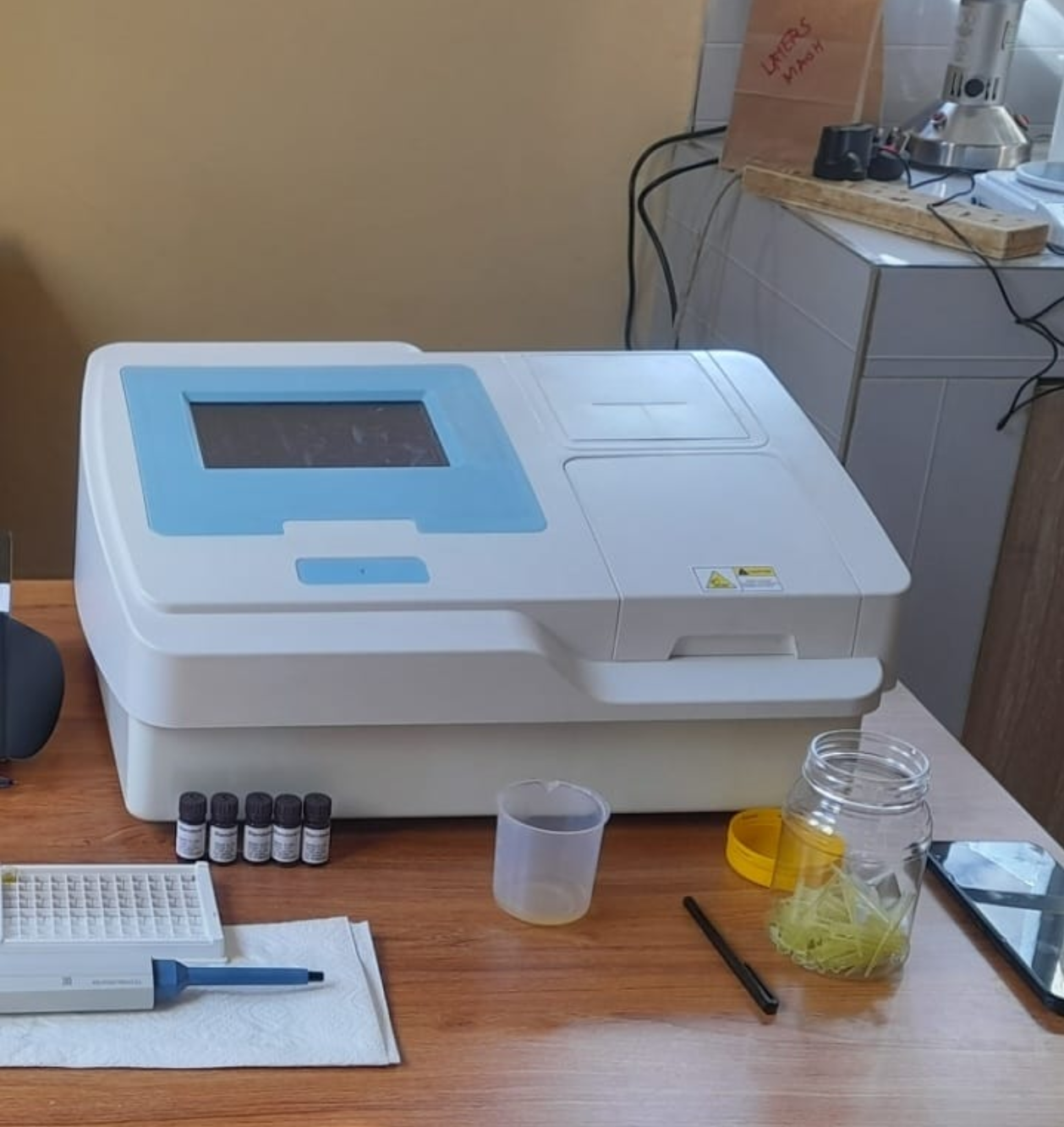
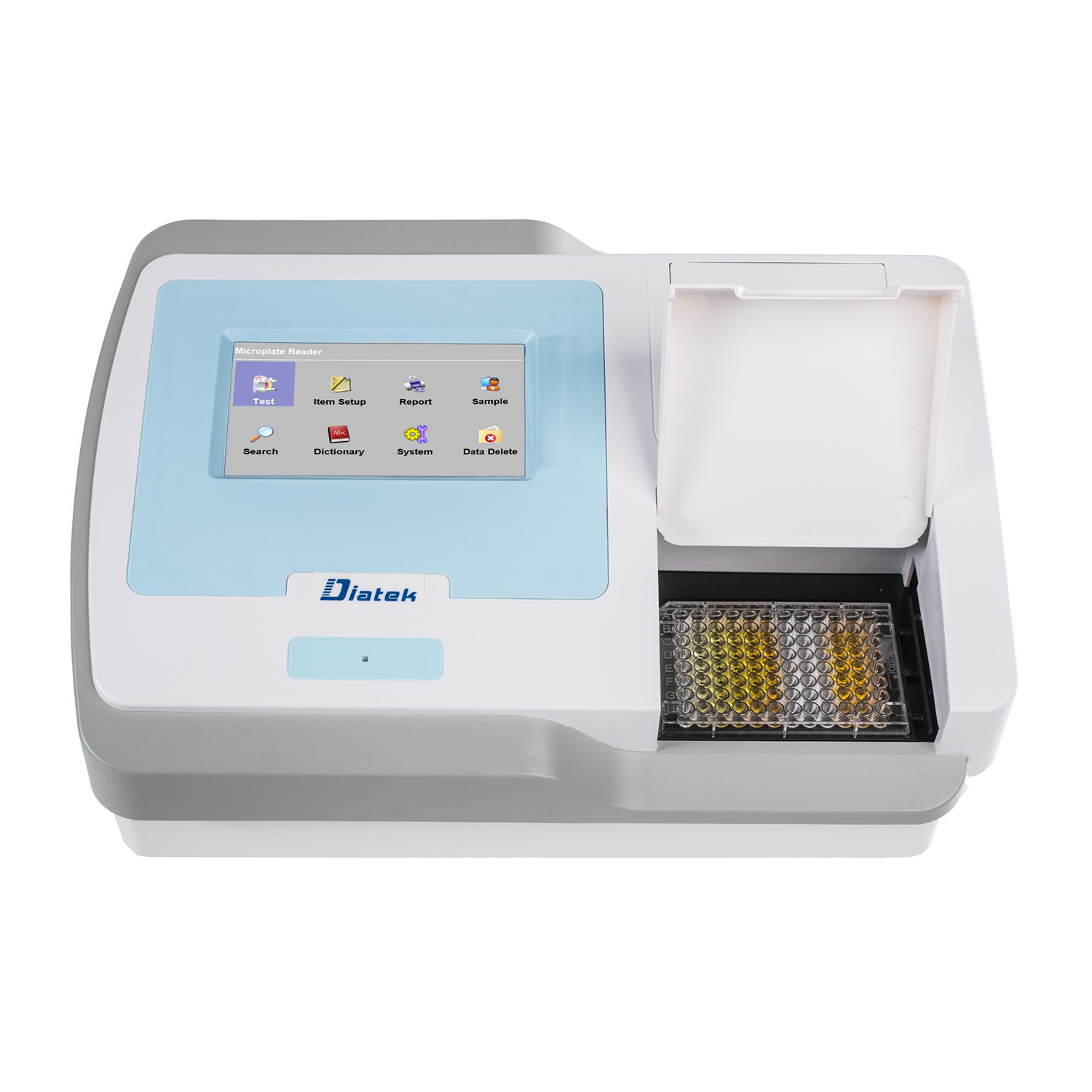
Many veterinary clinics do not have dedicated laboratory technicians managing a separate computer system for diagnostic equipment. A reader built around an ARM core series computer system with a high-resolution touch interface allows the device to function independently, without requiring an external PC. A 7-inch high-resolution color LCD touch screen with touch pen input simplifies programming and data entry, reducing both laboratory footprint and operational complexity. For clinics that do want PC integration, connectivity options such as 2×USB-A, 1×USB-B, 1×RS-232, and a parallel printer port support compatibility with laboratory management software running on Windows 7 and above.
Data Storage and Management
Veterinary practices handling a growing caseload need a system that can store historical results for tracking and reference. An integrated stable memory capable of storing 500 programmable laboratory tests and up to 200,000 test data points ensures that clinics are not forced to offload or delete records prematurely. Built-in qualitative and quantitative analysis methods, including Cut-Off, Linear Regression, Exponential Regression, Logarithmic Regression, Power Regression, and 4PL Regression, support a wide range of diagnostic calculation needs directly on the device.
Multilingual and Global Accessibility
For veterinary networks operating across different regions, a user interface available in multiple languages simplifies staff training and reduces the risk of operational errors. A multilingual interface supporting English, Spanish, and Chinese allows the same hardware platform to be deployed consistently across diverse clinical teams.
How the DR-200Bc Microplate Reader Meets Veterinary Needs
The DR-200Bc Microplate Reader, manufactured by Wuxi Hiwell-Diatek Instruments Co., Ltd under the DIATEK brand, is a professional, standalone 96-well microplate reader designed specifically to address the operational challenges described above. As an open-system device, it allows veterinary clinics to use any commercial ELISA kit, significantly reducing consumable costs compared to reagent-restricted alternatives.
Its 8-channel optical fiber scanning technology enables the completion of 12 different tests on a single plate simultaneously, which is particularly valuable for veterinary applications where multiple biomarkers may need to be screened for animal disease testing in pet hospitals and farms. The built-in thermal printer produces immediate hard-copy results, reducing diagnosis wait times and allowing veterinary staff to hand results directly to pet owners without waiting for a separate printing step.
The device includes an extensive filter selection with 405nm, 450nm, 492nm, and 630nm standard filters, plus 4 additional free positions covering a 400–850nm range, giving veterinary labs flexibility for different assay types. A 3-speed linear shaking function ensures proper reagent mixing before reading, while automatic lamp adjustment and auto-calibration maintain measurement accuracy over time. Clinics can choose between a long-life LED light source rated at 10,000 hours or a high-intensity Halogen lamp rated at 50 hours, depending on usage patterns and budget considerations.
Certifications and Service Assurance
Equipment reliability is not only about technical specifications but also about regulatory compliance and after-sales support. The DR-200Bc holds CE and ISO certifications, along with compliance to GB4824 Class A Equipment standards and GB/T18268.26 immunity requirements. These certifications provide veterinary clinics with documented assurance regarding electrical safety and electromagnetic compatibility.
Wuxi Hiwell-Diatek Instruments Co., Ltd backs the DR-200Bc with a 12-month free warranty on all new units, along with online training, video instruction, technical support, and paid lifetime maintenance options for continued functionality beyond the warranty period. This service structure is particularly important for veterinary practices that may not have in-house technical staff dedicated to laboratory equipment.
Making the Right Choice for Your Veterinary Practice
Selecting an ELISA reader for veterinary use requires balancing reagent flexibility, throughput, ease of operation, data capacity, and long-term service support. The DR-200Bc Microplate Reader from DIATEK addresses each of these dimensions through its open-system design, 8-channel optical fiber scanning, standalone touch-screen operation, large-scale memory, and multilingual interface. For veterinary clinics and pet hospitals seeking a dependable, factory-supported diagnostic instrument that fits practical daily workflows, this integrated hardware platform offers a clear, well-documented pathway to reliable animal disease screening and biomarker analysis.
http://www.hiwelldiatek.com
Wuxi hiwell-diatek instruments co.,ltd -
AuthorPosts

- You must be logged in to reply to this topic.