- This topic is empty.
-
AuthorPosts
-
2026-08-21 at 4:39 pm #10555
Temperature is one of the most common environmental factors that can affect the performance, durability, and service life of a product. Electronic components can behave differently at low temperatures, materials may expand or contract as temperatures change, and repeated thermal cycling can gradually expose weaknesses that are difficult to identify under normal laboratory conditions.
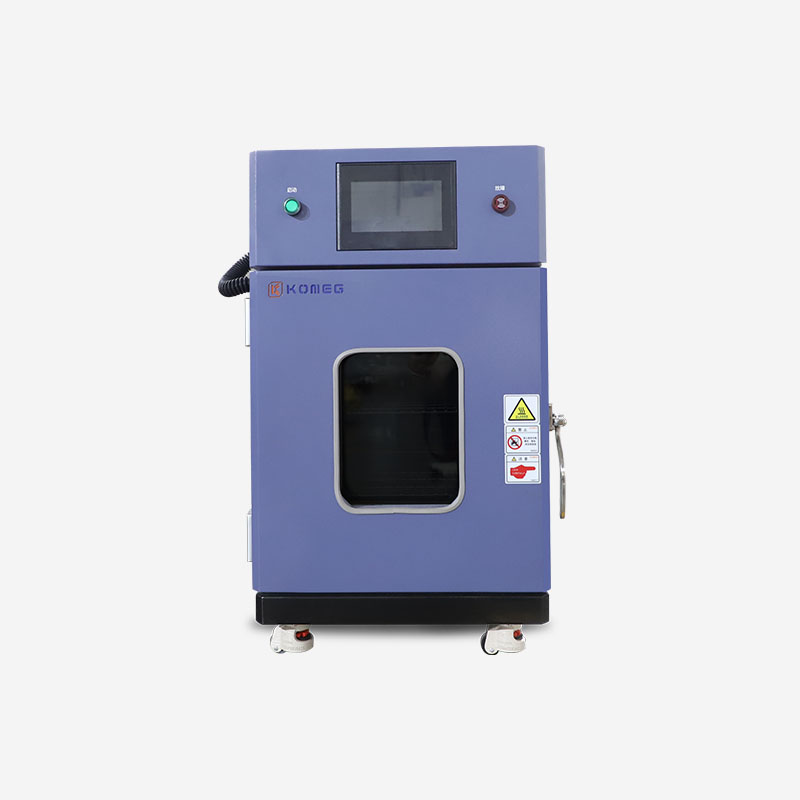
This is why temperature test chambers are widely used in product development, quality control, and reliability testing. By creating controlled high- and low-temperature environments, engineers can reproduce thermal conditions that products may encounter during manufacturing, transportation, storage, or actual operation.
For applications ranging from electronic components and automotive parts to aerospace equipment and research materials, the right chamber provides more than simply a wide temperature range. Temperature stability, uniformity, testing speed, control capability, safety, and chamber configuration all influence the quality of the test results.
What Is a Temperature Test Chamber?
A temperature test chamber is an environmental testing system designed to expose products, components, or materials to controlled temperature conditions.
Unlike ordinary heating or cooling equipment, a laboratory temperature test chamber is designed to maintain a defined test environment over an extended period and reproduce specific temperature profiles. This makes it possible to perform high-temperature testing, low-temperature testing, and temperature cycling tests under repeatable conditions.
For example, an electronic component may be exposed to a low-temperature environment, followed by a rapid transition to a high-temperature condition. Engineers can then monitor whether its electrical performance, mechanical structure, appearance, or other critical characteristics change during the test.
The purpose is not simply to determine whether a product works at a particular temperature. Repeated and controlled thermal exposure can help reveal potential weaknesses that may otherwise remain hidden.
Why Temperature Testing Matters for Product Reliability
Many products experience significant temperature changes throughout their life cycle.
An automotive electronic component may operate in a cold outdoor environment and later be exposed to high temperatures inside an engine compartment. Electronic equipment may be transported through different climates before being installed in a controlled indoor environment. Aerospace and military equipment can face even more demanding thermal conditions.
These temperature variations can create several forms of stress.
Materials with different coefficients of thermal expansion may expand and contract at different rates. Repeated temperature changes can place stress on solder joints, connectors, coatings, seals, housings, and other interfaces. At sufficiently extreme temperatures, some materials may also become brittle, soften, deform, or lose their intended performance.
A properly controlled temperature test chamber allows engineers to reproduce these conditions in a laboratory environment and evaluate how the product responds.
High-Temperature and Low-Temperature Testing
Temperature testing is commonly divided into high-temperature testing, low-temperature testing, and temperature cycling.
High-temperature testing evaluates how a product behaves when exposed to elevated temperatures. It can be useful for identifying problems such as material degradation, thermal deformation, component performance changes, and overheating-related failures.
Low-temperature testing examines product behavior under cold conditions. Certain materials can become brittle at low temperatures, while electronic and mechanical components may experience changes in operating characteristics.
Temperature cycling testing goes one step further by repeatedly changing the temperature between defined limits. This can create thermal stress that may not occur during a constant-temperature test.
The appropriate temperature profile depends on the product, application, test standard, and reliability objective.
Temperature Range Is Only One Part of Chamber Performance
A common mistake when selecting a temperature test chamber is to focus only on its maximum and minimum temperature.
A chamber capable of reaching an extreme temperature is not necessarily the best choice for every application. Engineers also need to consider temperature fluctuation, temperature uniformity, rate of temperature change, test volume, control accuracy, and the type of samples being tested.
For example, KOMEG’s KMT Series is available in different configurations for different testing requirements. Standard models listed on the product page range from 64 L to 1000 L, while temperature configurations include versions reaching -20°C, -40°C, or -70°C, with high-temperature capability up to +150°C and +180°C depending on configuration.
This range allows the chamber configuration to be selected according to the actual testing requirement rather than using the same specification for every application.
Temperature Uniformity and Fluctuation
Temperature uniformity and temperature fluctuation are two specifications that should be considered separately.
Temperature uniformity describes how consistently the temperature is distributed throughout the usable test space. If different areas of the chamber have significantly different temperatures, samples positioned in different locations could experience different test conditions.
Temperature fluctuation, meanwhile, describes how much the chamber temperature varies around the controlled setpoint over time.
For the KOMEG KMT Series, the listed temperature fluctuation is ±0.5°C, while temperature uniformity is specified as ≤2.0°C.
For reliability testing, these parameters are important because stable and consistent test conditions improve the repeatability of test results.
Temperature Change Rate and IEC 60068 Testing
For applications involving temperature transitions, the rate at which the chamber heats or cools can also be important.
A slow temperature transition produces a different thermal stress profile from a rapid transition. Therefore, test engineers should consider the required transition rate when selecting a chamber and defining the test procedure.
The KOMEG product specification references IEC 60068-3-5 for temperature change rate and lists an average heating rate of approximately 3°C/min and cooling rate of approximately 1°C/min under no-load conditions.
Actual performance can depend on chamber configuration, sample load, sample characteristics, and test conditions, so the test profile should always be evaluated against the applicable standard and application requirements.
Selecting the Right Test Chamber Volume
Chamber volume is another practical consideration.
A chamber that is too small may not accommodate the required samples or fixtures. On the other hand, selecting a chamber that is significantly larger than necessary can increase equipment footprint, energy consumption, and operating costs.
KOMEG’s KMT Series includes standard test spaces from 64 L to 1000 L, with different internal dimensions corresponding to each model.
When determining the required chamber volume, engineers should consider not only the physical dimensions of the product but also the number of samples, fixture arrangement, airflow requirements, and clearance around the samples.
The sample should not simply be placed wherever there is available space. Proper positioning helps maintain the intended airflow and test environment.
Control and Data Management
Modern temperature testing increasingly requires more than manual adjustment of temperature settings.
A programmable controller allows engineers to create temperature profiles and automatically execute defined test sequences. This is particularly useful for temperature cycling, long-duration reliability testing, and repeated test procedures.
The KOMEG KMT Series uses a 7-inch LCD touch-screen controller with PID control. The system also includes a USB interface for test data storage, while RS-485 and LAN communication options support remote control and monitoring.
These communication capabilities can also make it easier to integrate the chamber into laboratory monitoring systems or automated testing environments.
Safety and Long-Term Operation
A temperature test chamber may operate continuously under demanding thermal conditions, so safety and equipment protection should be considered alongside temperature performance.
KOMEG’s chamber design incorporates multiple protection functions covering areas such as over-temperature, compressor pressure and overload conditions, fan overload, dry heating, and water shortage protection.
The chamber also uses an anti-condensation heating system around the door frame and temperature-resistant sealing components to help reduce external condensation and frosting during low-temperature operation.
These details may not be as visible as the temperature range or chamber size, but they can have a significant effect on long-term equipment reliability and daily laboratory operation.
Where Are Temperature Test Chambers Used?
Temperature test chambers are used across a wide range of industries because thermal reliability is relevant to almost every type of engineered product.
In electronics and electrical manufacturing, they can be used to evaluate components, assemblies, circuit boards, and other products under high- and low-temperature conditions.
In the automotive industry, temperature testing can support the validation of electronic components, sensors, control units, lighting systems, and other vehicle-related parts.
For aerospace and military applications, environmental testing is often used to evaluate equipment that may encounter significant temperature changes during transportation, storage, or operation.
Temperature chambers are also used in scientific research, materials testing, and product development, where controlled thermal conditions are needed to study material behavior or product performance.
Standard or Customized Temperature Test Chamber?
Not every application can be covered by a standard chamber configuration.
A standard chamber may be sufficient for routine component and product testing, while specialized applications may require customized dimensions, additional cable ports, different temperature ranges, special fixtures, or integration with other laboratory systems.
KOMEG provides both standard and customized temperature test chamber configurations, allowing the chamber design to be adapted to specific testing requirements.
The important point is to define the testing requirement first rather than selecting equipment based only on the nameplate temperature range.
How to Choose a Temperature Test Chamber
Before purchasing a temperature test chamber, engineers should define several basic requirements:
1. Required temperature range
Determine the actual minimum and maximum temperatures required by the product specification or test standard.2. Test volume
Consider sample dimensions, quantity, fixtures, and airflow requirements rather than selecting volume based solely on the product’s external size.3. Temperature performance
Review temperature fluctuation, uniformity, and temperature change rate to ensure the chamber can reproduce the required test conditions.4. Control and communication
Consider whether programmable testing, USB data storage, LAN, or RS-485 communication is required.5. Safety requirements
Check the available protection functions, particularly for long-duration testing and demanding thermal conditions.6. Future testing requirements
If the laboratory expects to test different products in the future, selecting a chamber with sufficient capacity and configuration flexibility may provide greater long-term value.KOMEG Temperature Test Chambers
KOMEG designs and manufactures temperature test chambers for controlled high- and low-temperature reliability testing. The KMT Series provides multiple chamber sizes and temperature configurations, with standard models from 64 L to 1000 L and optional customization for non-standard requirements.
The system combines programmable temperature control, temperature uniformity, data storage, communication interfaces, safety protection, and practical chamber features such as observation windows, lighting, cable ports, shelves, and mobile casters.
For laboratories evaluating electronics, automotive components, materials, aerospace equipment, or other products affected by temperature, selecting the appropriate chamber is an important part of building a reliable environmental testing process.
If you are looking for a temperature test chamber for a specific temperature range, sample size, testing standard, or laboratory configuration, the chamber should be selected according to the actual test profile rather than temperature range alone.
Explore KOMEG Temperature Test Chambers
https://www.komegtek.com/product/temperature-test-chambers/
KOMEG -
AuthorPosts

- You must be logged in to reply to this topic.